A research team at the University of Massachusetts Amherst recently announced that a new vaccine based on nanoparticles successfully prevented a variety of aggressive cancers, including melanoma, pancreatic cancer and triple-negative breast cancer in mouse experiments. Studies have shown that, depending on the type of cancer, up to 88% of vaccinated mice remained tumor-free throughout the entire trial period, and this strategy significantly reduced or even completely prevented cancer metastasis in the body in multiple trials.
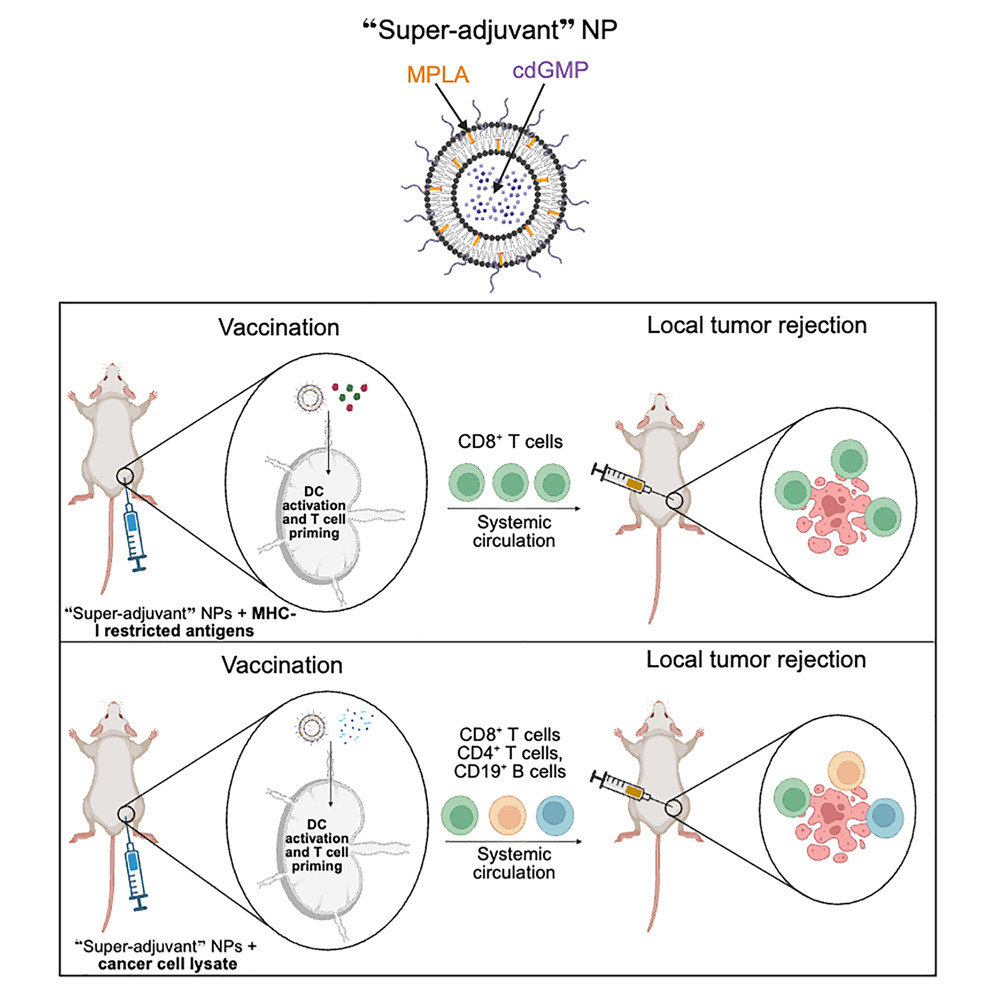
The core of this vaccine candidate is a "super-adjuvant" platform composed of lipid nanoparticles that can simultaneously encapsulate and stably deliver two different immune-stimulating molecules, and then combine them with specific cancer antigens or "tumor lysates" from the tumor itself. According to the research team, this design simulates the way pathogens send multiple "danger signals" to the immune system, thereby more effectively activating innate immune cells, driving them to efficiently present antigens and initiate T cell killing responses against tumors, while establishing lasting immune memory.
In the first phase of the study, the researchers paired the nanoparticle platform with known melanoma peptide antigens, vaccinated mice, and then injected melanoma cells three weeks later to simulate a tumor challenge. The results showed that 80% of the mice that received this "super-adjuvanted" nano-vaccine maintained tumor-free survival during the observation period of up to 250 days, while the control group that received traditional vaccines, non-nano formulas, or no vaccination all developed tumors and died within 35 days. At the same time, in experiments simulating hematogenous dissemination and metastasis, no metastasis appeared in the lungs of mice vaccinated with the nanovaccine, while obvious tumor nodules were found in the lungs of all control animals, highlighting its potential in blocking metastasis.
Research leader Prabhani Atukorale, assistant professor of the school's Department of Biomedical Engineering, pointed out that the team described this protection as "memory immunity". Its advantage is that immune memory is not limited to a certain part, but spreads throughout the body, thus maintaining long-term patrols and vigilance against cancer cells that may appear in the future. Her previous work has shown that similar nanodrug designs can shrink or even eliminate existing pancreatic tumors in mice, and this further shows that the same platform can also be used as a preventive vaccine to build a line of defense before tumors form.
However, developing specialized antigens for each cancer often requires complex and expensive genetic sequencing and bioinformatics analyses. To overcome this obstacle, the team tried to use "tumor lysates" from more direct sources as antigens in the second phase, that is, combining the entire components of the killed cancer cells with nano-"super adjuvants" to make a vaccine, and tested its protective effect against melanoma, pancreatic ductal adenocarcinoma and triple-negative breast cancer in mice. The results were striking: In a pancreatic cancer model, 88% of vaccinated mice rejected tumor formation; in a breast cancer model, this was 75%, and in a melanoma model, 69%. All vaccinated mice that remained tumor-free during the initial challenge also showed strong resistance to metastasis when they were subsequently reinfused with cancer cells systemically.
Griffin Kane, the first author of the paper and a postdoctoral researcher at the school, said that a strong tumor-specific T cell response is the key to extending survival and preventing recurrence. The reason why this nanoplatform can significantly enhance T cell responses is that it solves the "incompatible" compatibility problem between many promising immune adjuvants: in traditional preparations, multiple immune stimulating molecules often have difficulty coexisting stably due to differences in molecular properties, while lipid nanoparticles can act like a "carrier capsule" to co-encapsulate and coordinately release different adjuvants, thereby achieving multi-channel innate immune activation and efficient antigen presentation.
Researchers believe that this nanoparticle system provides a solid foundation for the construction of a "platform" vaccine that can be adapted to a variety of cancers. In the future, it is expected to be used as a therapeutic cancer vaccine to help diagnosed patients control their disease and reduce the risk of recurrence and metastasis. It may also provide preventive immunization programs for high-risk groups. Focusing on this core technology, Atukorale and Kane co-founded the start-up company NanoVax Therapeutics, which is committed to promoting the clinical transformation of this platform, completing "de-risking" verification of safety and effectiveness, and expanding to more cancer types and treatment scenarios.
Relevant research has been published in the journal "Medicine" with a paper titled "Super-adjuvant nanoparticles for platform cancer vaccination". The team currently plans to further develop therapeutic cancer vaccines based on the existing foundation and has begun early-stage translational research. The researchers also emphasized that this progress relies on the support of multiple institutions such as the Department of Biomedical Engineering, the Institute of Applied Life Sciences, and the Collaborating Medical School on campus. Multidisciplinary intersection is the key to promoting nanoimmunization technology from the laboratory to the clinic.