An international scientific research team recently successfully sequenced RNA molecules from the remains of a woolly mammoth about 40,000 years ago, setting the earliest record for ancient RNA research and opening a new window for reconstructing the physiological state of ancient animals in their last moments of life. This specimen comes from a woolly mammoth nicknamed "Yuka" and is well preserved in the Siberian permafrost. Its leg soft tissue provides rare material for this study.
Unlike DNA, which records the genetic blueprint, RNA reflects the genes that are "on" at a certain point in time, so it is closer to a "live record of life." But RNA is much more fragile than DNA and usually breaks down within days if it is not properly preserved, which is why it is so difficult to find credible evidence of RNA in ancient remains in the past. The researchers speculated that intracellular RNase was the main destroyer, so they deliberately selected mammoth samples that were quickly frozen after death to increase the possibility of intact RNA.
The team collected samples from the muscles and skin and soft tissues of 10 woolly mammoths, which spanned approximately 10,000 to 50,000 years ago. Under strict contamination-free conditions, they used an extraction process specifically designed for severely degraded nucleic acids to isolate RNA, and extracted DNA from the same batch of samples to compare and verify that the RNA signal obtained indeed belonged to the mammoth itself and was not contaminated by external sources such as humans, microorganisms, or sediment plants. The analysis results showed that these RNA sequences were highly consistent with the characteristics of muscle tissue, which greatly enhanced the reliability of the data.
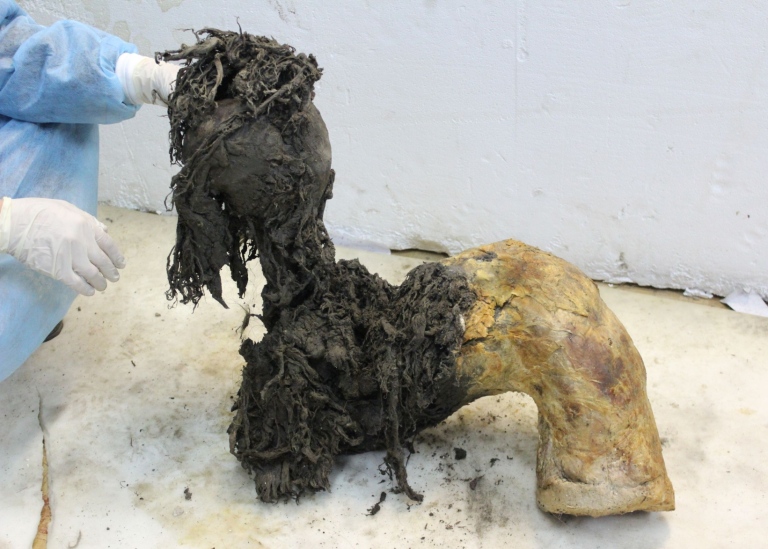
After sequencing, researchers identified more than 340 types of messenger RNAs with coding functions, as well as more than 900 types of non-coding RNAs and about 60 types of microRNAs. The gene expression map of muscle tissue showed that the samples were dominated by slow-twitch muscle fiber-related genes, suggesting that the muscles of woolly mammoths were better at endurance activities and adapted to trekking long distances on cold grasslands. At the same time, molecular signals related to metabolic regulation and stress also appeared in the RNA, indicating that the animal may have experienced physiological stress before death. This echoes the previous speculation that "Yuka" was attacked or eaten by a cave lion.
The study also unexpectedly resolves a long-running controversy over the gender of the yuka. Early results based on appearance and partial DNA analysis labeled it a female, but the latest RNA and DNA data both detected Y-chromosome markers, confirming that the mammoth was actually a male. Members of the research team said it was a relief to draw this conclusion because "Yuka" had the best RNA data quality among all samples and happened to be the only individual whose previous gender records were inconsistent with the new results.
Love Dalén, one of the leaders of the study, pointed out that if RNA can be successfully extracted from more ancient biological samples in the future, it will help answer the core question of "which genes really shaped the appearance and adaptability of these extinct species." For example, he said that if the RNA expression pattern in mammoth hair follicles could be analyzed, there would be a chance to identify key genes that are active during hair growth and further narrow down the range of candidate genes related to the "furry" characteristics of mammoths. Relevant research papers have been published in the journal Cell and were jointly completed by Stockholm University and other institutions.