Amazon announced that its upgraded AI digital assistant Alexa+ has officially landed on the web, launched a new website Alexa.com, and is open to Alexa+ early experience users. In the future, users do not need to rely on smart speakers or screen devices such as Echo. As long as they log in to their account through a browser, they can talk to Alexa+ online just like using ChatGPT or Google Gemini. The move marks Amazon's expansion of Alexa from home devices to mobile phones and the web, hoping to make it ubiquitous and maintain an advantage in a new round of AI assistant competition.
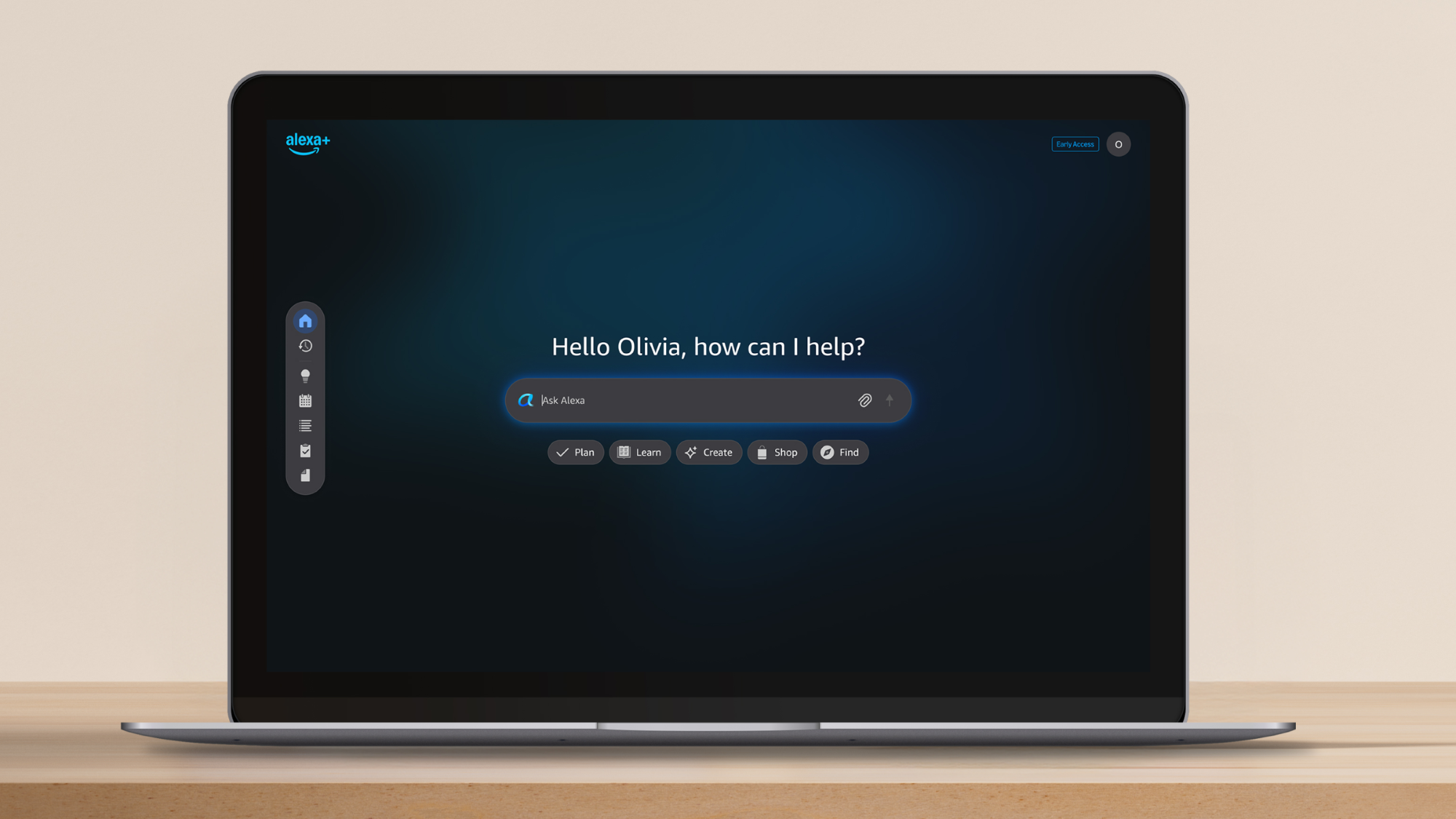
Amazon said that the global sales of Alexa devices have exceeded 600 million units, but for the AI assistant to be truly competitive, it must break the limitation of "only speaking in the living room and kitchen" and allow users to access Alexa+ in any scenario and on any terminal. The launch of Alexa.com not only provides a new entrance for existing device users, but also opens an experience channel for new users who have not yet purchased any Alexa hardware.
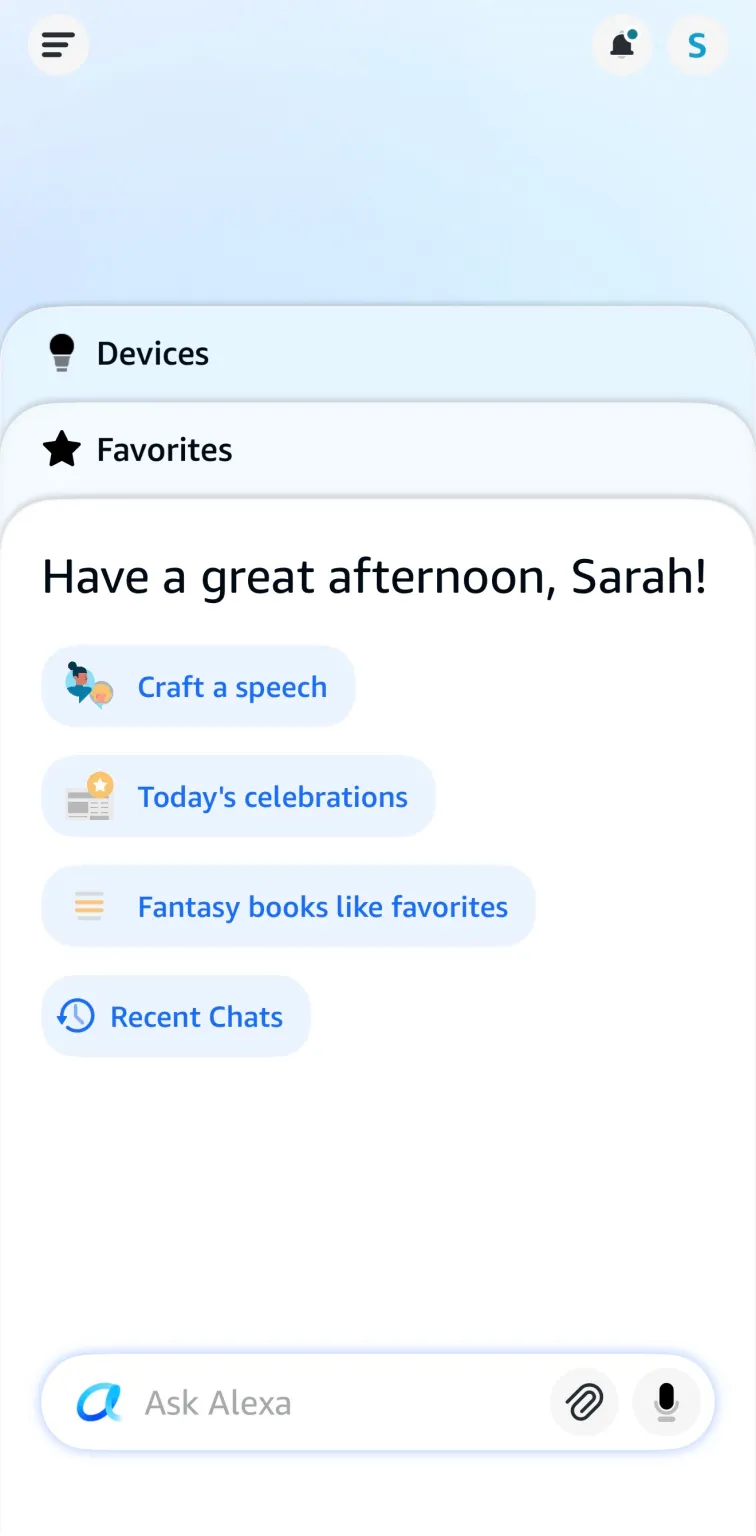
In sync with the web page, Amazon has also made a major revision of the Alexa mobile application, highlighting the product positioning of "intelligent agent" (agent-forward). The revised application homepage adopts a conversational interface similar to that of mainstream AI chatbots, placing chat interaction in the most prominent position, while traditional device control, skills and settings and other functions have been reduced to a secondary level. Amazon hopes to use this to allow users to view Alexa as an AI agent that can continue conversations and proactively help with tasks, rather than just an executor of voice commands.
On Alexa.com, users can use Alexa+ to explore complex topics, generate content, arrange schedules and other general AI tasks, but Amazon hopes to use "family scenes" to highlight differentiation. In addition to continuing to control smart home devices, Alexa+ will be more involved in household affairs management, such as updating family calendars and to-do items, making restaurant reservations, adding desired groceries to Amazon Fresh or Whole Foods shopping carts, searching for recipes and saving them to a personal recipe library, and even providing personalized movie recommendations for family movie night. Amazon has recently continued to expand the third-party services it connects with Alexa+, adding new partners such as Angi, Expedia, Square and Yelp, and adding previously supported applications such as Fodor’s, OpenTable, Suno, Ticketmaster, Thumbtack and Uber to serve as a “master scheduler” in more life scenarios.
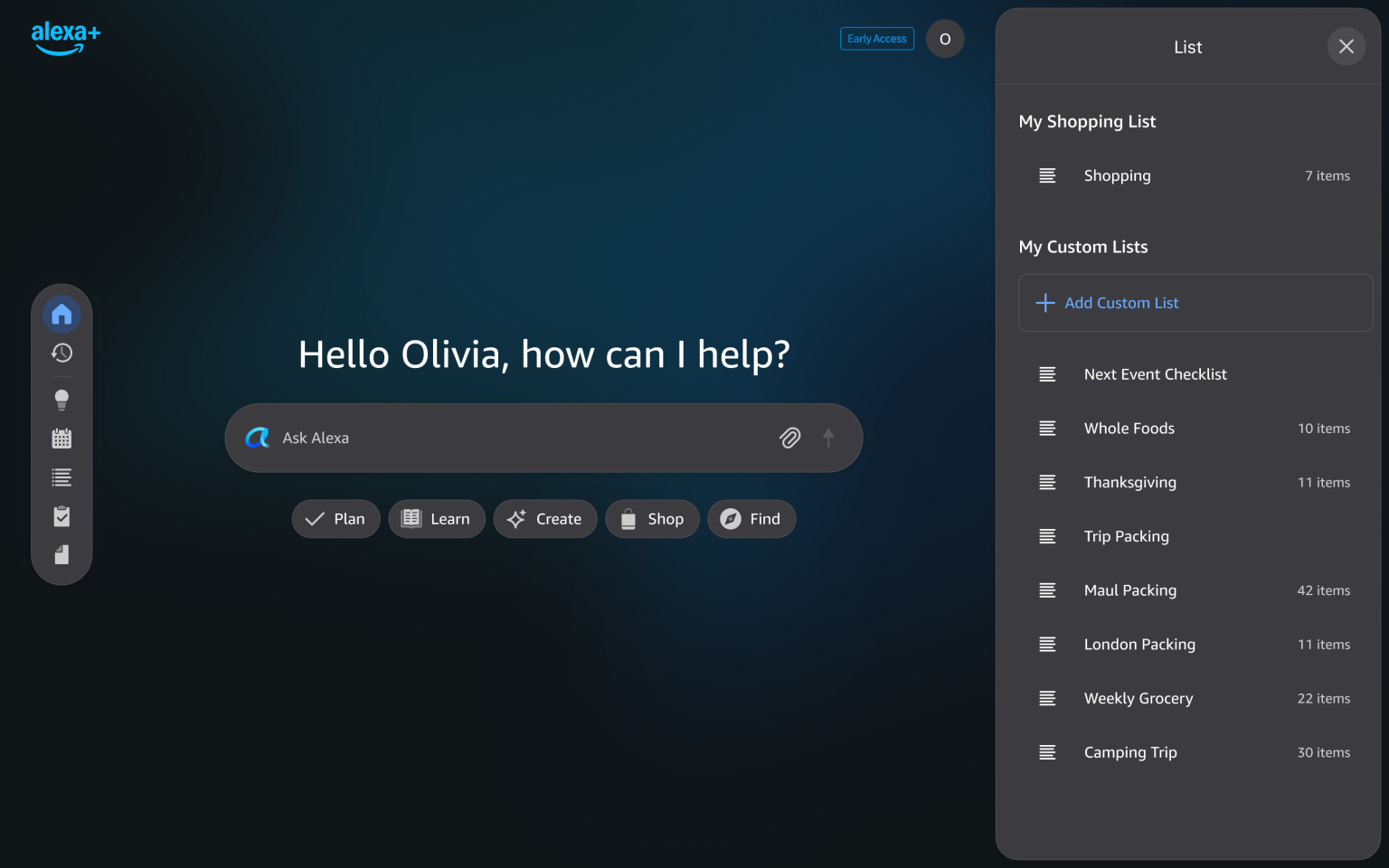
The new version of Alexa.com also adds a side navigation bar to the interface design to facilitate users to quickly access frequently used functions. Users can return to previous tasks with one click here, such as adjusting the thermostat, checking schedules, browsing shopping lists, etc., thereby improving continuity and efficiency in multi-tasking scenarios. Amazon is also trying to build Alexa+ into a family information center, hoping that users will be willing to authorize it to access personal documents, emails and calendars, so that AI can centrally manage all aspects of family life - from children's vacation schedules and soccer training times to medical appointment records, to the dates of pet vaccinations and the time of the neighbor's barbecue party.
In terms of productivity and personal data, Amazon faces obvious shortcomings: unlike Google, which has its own office suite and massive user data, Amazon lacks a native entrance like Gmail or Google Calendar. To this end, Alexa+ currently relies more on "forward" and "upload" tools, with users actively importing files and information into Alexa+ for organization and memory. Such capabilities will also be extended to the Alexa.com web page. Information uploaded by users can not only be managed on web pages and applications, but can also be synchronized to Echo Show and other screen devices for centralized display and control.
Amazon believes that if it can get the positioning of "home data management" right, Alexa+ is expected to form a unique selling point. Daniel Rausch, head of Amazon’s Alexa and Echo, revealed in an interview that currently “76% of Alexa+ usage scenarios are beyond the capabilities of other AIs.” He believes this illustrates the value of Alexa+ from two levels. On the one hand, users have handed over some highly personalized tasks that are deeply bound to the home environment to Alexa+, such as taking photos of family recipes and giving them to Alexa to save, and then asking Alexa for steps while operating in the kitchen, and even asking Alexa to give alternatives based on the ingredients available at home, until the entire cooking process is actually completed.
Rausch also pointed out that about 24% of the uses are "general tasks" that overlap with other AI, which in turn also shows that some users are migrating their needs that were originally scattered on other AI tools to Alexa+ for centralized processing. Amazon revealed that Alexa.com is currently only open to Alexa+ early experience program users, and users need to log in with their own Amazon account to access. Since the official release of Alexa+ in early 2025, Amazon has been expanding the scope of early experience in a "gradual ramp-up" approach.
Rausch said that at this stage, more than 10 million consumers have obtained access to Alexa+, and the frequency of their interactions with Alexa+ is two to three times that of the original Alexa. In terms of specific behaviors, these users shop through Alexa+ three times more than before, and use recipe-related functions five times more frequently. Heavy smart home users control their homes through Alexa+ 50% more frequently than the original Alexa. These data are regarded by Amazon as an early signal that Alexa+ has "run through" in terms of stickiness and scene depth.
However, on social media and online forums, there are also many complaints about Alexa+ from the outside world. The problems mainly focus on "rollover" cases such as deviation in answers and errors in task execution. In this regard, Rausch believes that there is an amplification effect of online public opinion, emphasizing that from the data point of view, the proportion of users who choose to quit after trying Alexa+ is still at a low single-digit level, "almost can be regarded as close to zero." He also said that 97% of Alexa devices currently support upgrades to Alexa+, and all the capabilities of the original Alexa era, including tens of thousands of third-party services and hardware integrations, have been fully inherited into the Alexa+ experience.
With the launch of Alexa.com and the revision of its mobile application, Amazon is trying to give this voice assistant, which has been around for many years, a new AI identity, shifting from a "smart speaker software that can understand commands" to a universal AI agent around home scenes. In the context of Google, OpenAI and other competitors pushing AI assistants to all platforms, Amazon is betting on the differentiated direction of "home" and "life operation center", hoping to redefine Alexa's role in users' daily lives through the three-end integration of devices, services and web applications.