Game retailer GameStop started 2026 with more store closures than anyone expected. On Thursday, it was estimated that about 295 stores were either closed or in the process of closing; a day later, that number jumped to nearly 400 and counting - with employees expecting more closures by the end of January.
A Blogspot website that compiles store closing information through employee revelations and GameStop's official store locator said that 390 stores have been confirmed to be closed, and at least 10 are still being confirmed. This number is consistent with GameStop's publicly disclosed plans. In a U.S. Securities and Exchange Commission (SEC) filing in December 2025, GameStop management noted that 590 stores had been closed in 2024 alone.
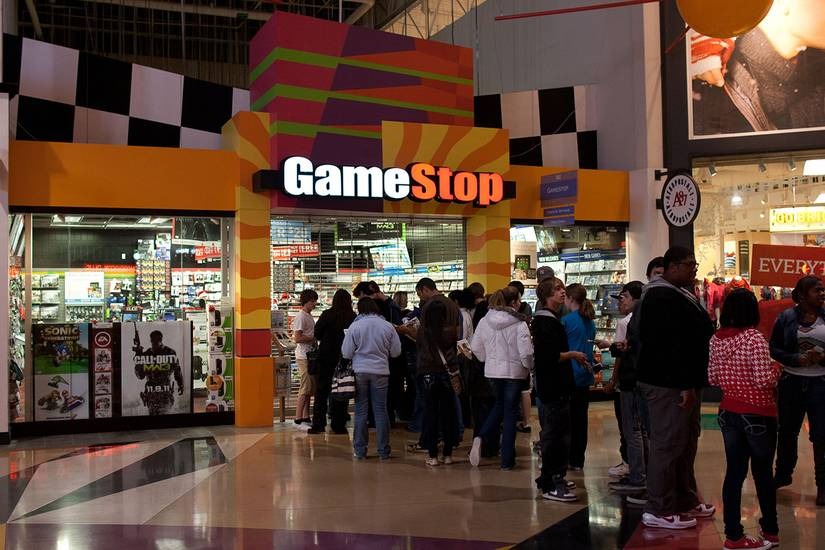
"We anticipate a significant number of additional store closures in fiscal 2025," the filing read. GameStop did not immediately respond to a request for comment, but it is worth noting that its fiscal 2025 will technically end on January 31, 2026. Although the company did not disclose specific numbers in the SEC filing, the wording suggests that the number of stores GameStop plans to close this time may be similar to the aforementioned 590 stores. The GameStop online community is also full of unemployment anxiety and dissatisfaction shared by employees, which confirms the universality of the current store closure problem.
The same document also details GameStop's plan to gradually reduce its business in international markets, including Austria, Ireland, Switzerland, Germany, Italy, Canada and France. However, all reported store closures this year have occurred in the United States. The document acknowledges that this strategy may lead to lower sales in the short term, but is expected to have a positive impact in the long term.
GameStop has been adjusting its retail strategy over the past few years. At first, the company abandoned old games and focused on new games. Recently, it has taken advantage of the resurgence of the retro game craze to develop its second-hand game business. Many GameStop stores are filled with products that appeal to a broad geek base, such as toys and collectibles. The geek has also repeatedly emphasized to retailers that it hopes to become a card trading center through various operations - such as purchasing a rare Pokémon card from a customer for $30,000 in December.
GameStop has also partnered with the Professional Sports Authority (PSA) to provide card grading services to customers (the grading results will affect the card value). In 2025, the company launched the "Power Packs" plan to create a digital card trading platform that allows customers to purchase or store rated cards online. In 2022, GameStop tried to launch the ill-fated NFT trading platform; recently, the company has increased its investment in social media, focused on hot topic events, and cooperated with well-known Internet celebrities such as Casey Neistat and Mega64. At the same time, despite ups and downs in performance, GameStop's stock price has been boosted from time to time by "meme investors" - these investors are bent on pushing up the company's valuation, regardless of actual operating conditions.
Arguably, these adjustments, combined with continued investment in the cryptocurrency Bitcoin, have allowed GameStop to become profitable in 2025, despite continued declines in its stock price. However, another SEC filing from early 2025 showed that GameStop had 2,325 stores in the United States at that time. This means that if 590 stores are closed in 2025 and hundreds more are closed in early 2026, the number of offline stores of this game retailer may be reduced by 20% to 30%. Such a large-scale shrinkage will certainly help reduce costs, but it also casts a shadow on its future as a "game hub". Although the company does not seem to be giving up on the gaming business in the short term, it has clearly pinned most of its hopes on pan-category businesses such as cards with a higher return on investment.
On January 6, a GameStop social media account quoted an old post from 2009 about the game's midnight launch event, writing: "The world you grew up in no longer exists."
Regardless, GameStop's pursuit of profitability could result in thousands of job losses. Meanwhile, CEO Ryan Cohen has received performance-based stock options worth $35 billion, conditional on continued explosive growth.
“People in high positions who have never actually done a retail job see employees as just numbers on a spreadsheet,” a self-described former GameStop employee wrote in a post discussing Ryan Cohen’s pay structure.