In a nearly weightless microgravity environment, viruses that specifically infect bacteria can still "fight" normally. However, the battle between viruses and bacteria in space shows a completely different evolutionary trajectory from that on Earth. A new experiment conducted on the International Space Station shows that bacteriophages infecting E. coli can still successfully complete the infection process in an orbital environment, but the interaction between the virus and the host has changed significantly, which provides important clues for future improvements in viral therapies on Earth. The relevant research was led by Phil Huss' team at the University of Wisconsin-Madison and was published in the open access journal PLOS Biology on January 13.
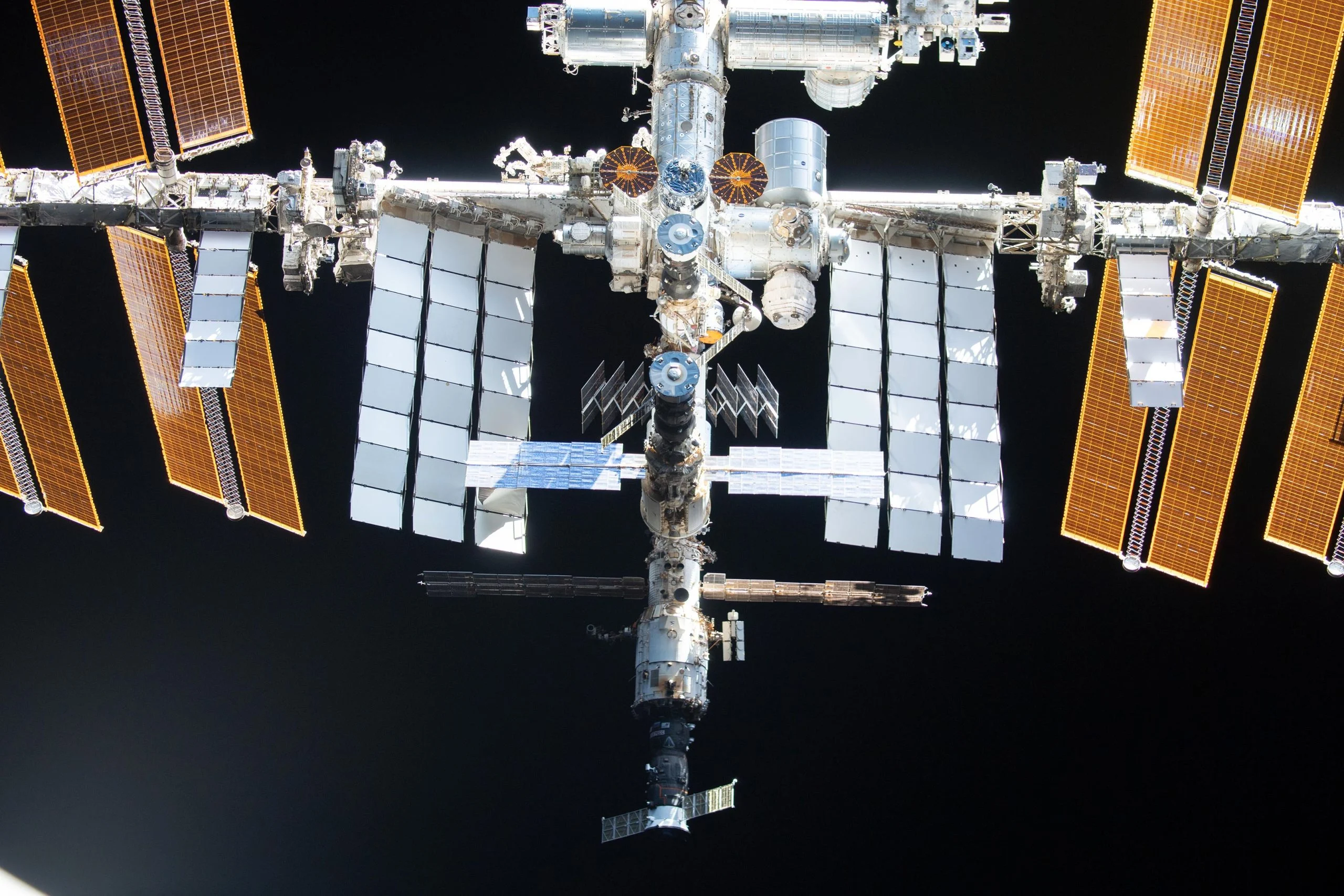
In microbial ecosystems, the relationship between phages and bacteria is often viewed as an ongoing "evolutionary arms race": bacteria continue to evolve defense mechanisms, while phages continue to evolve countermeasures. This game has been widely studied in the earth's normal gravity environment, but microgravity not only changes the physiological behavior of the bacteria themselves, but also affects the frequency of physical contact between the virus and the host cell, which may completely rewrite the rhythm and path of the infection process. At present, humans still know very little about this "virus-bacteria relationship" played out in space, so the research team designed controlled experiments to find out how microgravity reshapes this microscopic ecology.
The researchers chose the classic E. coli phage T7 and left a group of infected E. coli to be cultured on the ground, while the other group was sent to the International Space Station to grow simultaneously under near-weightlessness conditions. Experimental results show that in the space station environment, T7 phage can still infect E. coli, but the infection initiation process is significantly slower. Subsequent gene sequencing analysis showed that the mutation patterns of viruses and bacteria from space samples were clearly different from those of the ground control group, showing their own unique evolutionary paths.
Specifically, T7 phage in the orbital environment has accumulated a number of specific genetic changes. These changes are believed to help it more efficiently recognize and attach to receptors on the bacterial surface, thereby improving infection efficiency. At the same time, a series of mutations have also occurred in E. coli in a microgravity environment. These changes may enhance its ability to resist phage attack and improve its survival adaptability in near-weightlessness conditions. This shows that in the extreme environment of space, both viruses and bacteria accelerate their adaptive evolution along trajectories different from those on Earth.
To further analyze the molecular basis of these changes, the research team used "deep mutational scanning" technology to conduct a systematic analysis of the receptor-binding protein of T7 phage. This key protein directly determines whether the phage can recognize and invade host bacterial cells. Small changes in its amino acid sequence may significantly affect the infection spectrum and infection efficiency. The results of deep mutation scanning revealed a series of differential mutations in this protein between space station samples and ground samples, and these "space-related mutations" were subsequently confirmed in experiments on Earth to change the ability of phages to attack different bacterial strains.
Follow-up functional experiments carried out on the ground showed that T7 phages carrying these mutations formed in the space environment showed stronger killing effects on certain E. coli strains that cause urinary tract infections in humans. These target strains were originally naturally resistant to ordinary T7 phage, but became more vulnerable to the "space evolved" phage. This discovery suggests that special evolutionary changes induced by the space environment may open up new application directions for phage therapy, especially in dealing with difficult-to-treat drug-resistant pathogens.
The study pointed out that conducting phage-related experiments on the International Space Station not only has direct significance for future long-term manned spaceflight and space station health management, but also provides a new idea and tool library for anti-infection treatment on the ground. Compared with traditional evolutionary experiments conducted in Earth laboratories, the microgravity environment in space can force viruses and bacteria to systematically embark on a different adaptation path, thus exposing biological mechanisms and targets that are difficult to observe under conventional conditions. The authors concluded in the paper that space fundamentally changes the interaction between phages and bacteria: the infection process is slowed, and the evolutionary trajectories of both parties are completely different from those on Earth.
By dissecting these space-driven adaptations, the researchers not only gained new insights into the coevolution of viruses and bacteria but also engineered phage candidates with "significantly greater activity" against drug-resistant pathogens on Earth. This achievement demonstrates the potential of using space as a "natural evolutionary laboratory" and also indicates that in the future, space experiments can be combined with ground engineering technology to accelerate the development of a new generation of precise and efficient phage treatments to deal with the increasingly severe threat of drug-resistant bacteria around the world.
Compiled from /ScitechDaily