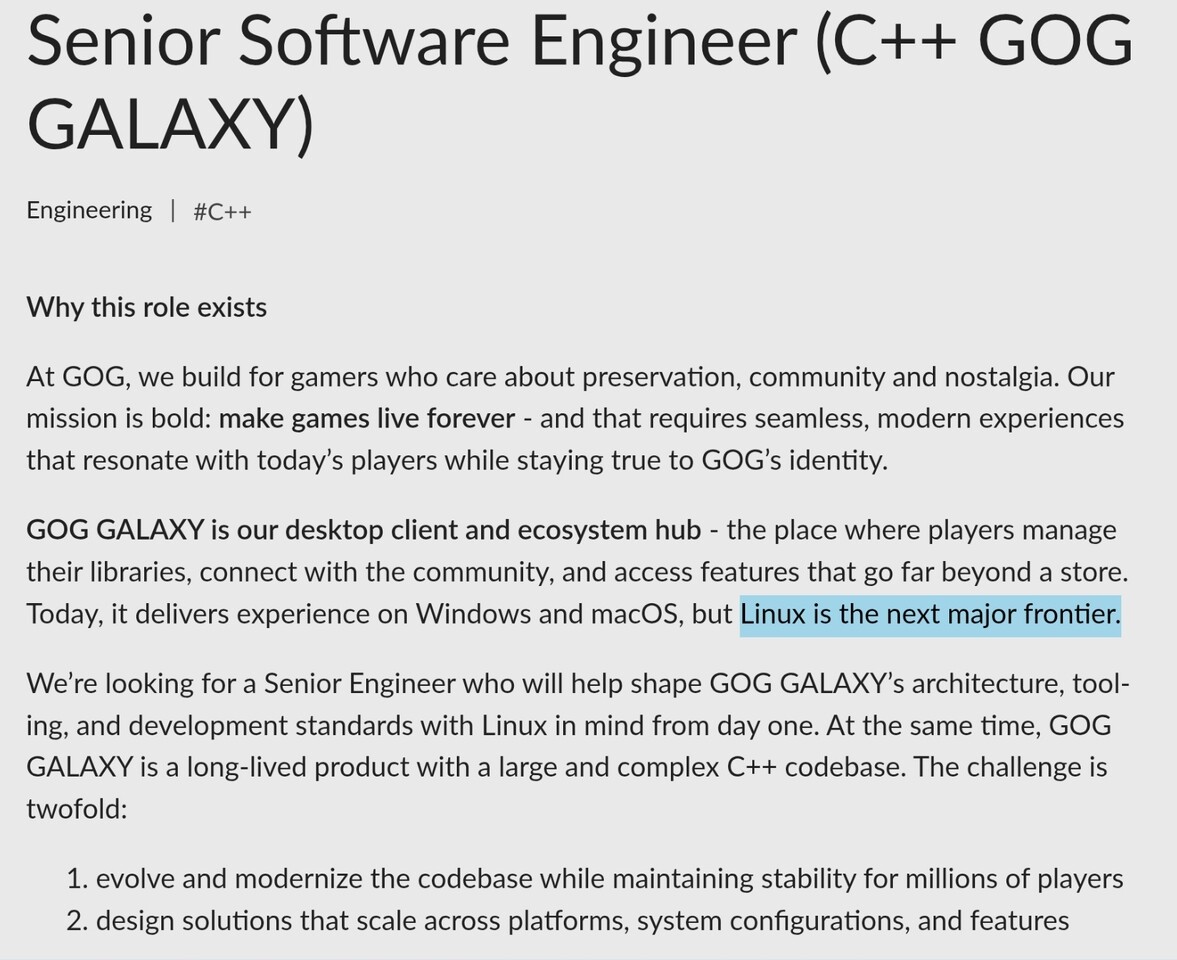
After being recently reacquired by its co-founders and reaffirming its commitment to the retro gaming community, well-known digital gaming platform GOG appears to be preparing to take a more strategic step. According to a recruitment notice for senior C++ software engineers released by GOG,The company is planning to develop official first-party Linux support for its client GOG Galaxy, a move that marks an important shift for GOG in expanding its multi-platform ecosystem.
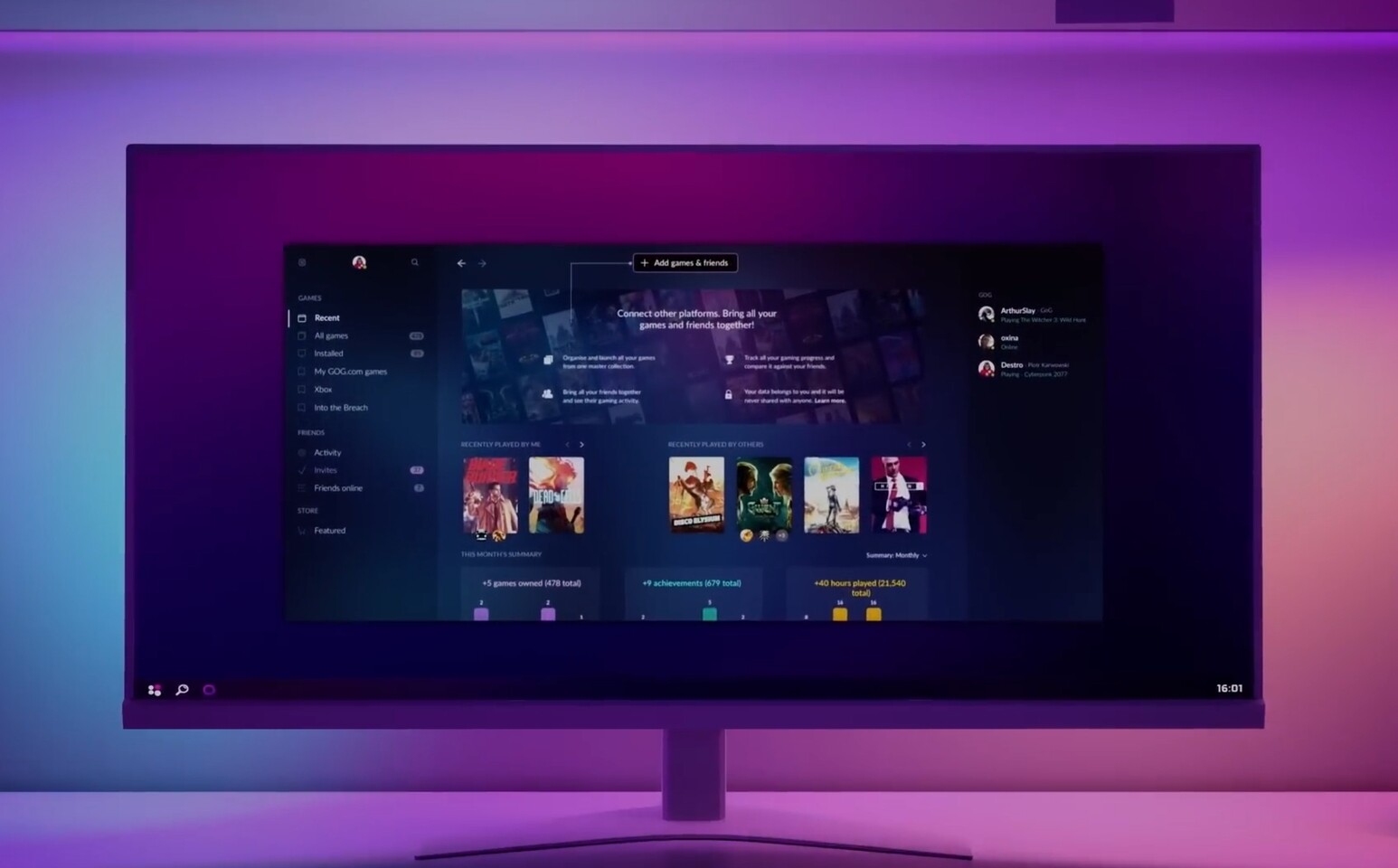
The recruitment information clearly states that this position will focus on Linux development from the beginning, and will be responsible for shaping the underlying architecture, tool chain and development standards of the Linux version of GOG Galaxy. GOG emphasized in its description that the new project will prioritize the long-term development of the platform and plans to support a variety of hardware configurations, aiming to provide users with a native experience equivalent to the Windows version while giving full play to the open advantages of the Linux system.
Currently, if Linux players want to experience games on the GOG platform, they usually can only directly download offline installation files, or rely on third-party open source launchers such as Heroic Games Launcher. Although Heroic has won widespread praise for its ability to integrate cross-platform libraries such as Epic Games, Xbox and Steam, it is still difficult to completely replace official applications in some core functions. For example, some users reported that Heroic’s cloud archive synchronization function has been in the testing stage for a long time and lacks GOG’s native screen overlay (OSD) support. GOG's official client launch this time is expected to focus on solving pain points such as cloud archive stability and cross-platform library management, bringing a more seamless gaming experience to Linux users.
The news sparked an enthusiastic response from the player community. Although some experienced users say that Heroic can meet most needs, most players welcome the official entry, believing that it can bring long-term maintenance guarantees, and look forward to the official client's deep integration of the Proton compatibility layer and more complete offline installation package management functions.
It is worth noting that this action by GOG is not an isolated incident, but a microcosm of the recent large-scale tilt of the gaming industry towards the Linux ecosystem. Just earlier this month, Nexus Mods also confirmed that its Vortex module manager will receive Linux support in 2026; at the same time, industry data shows that nearly 90% of Windows games can currently run in the Linux environment, and Valve is also continuing to promote the optimization of Steam Machine related hardware (such as open source HDMI 2.1 support). As the Linux gaming environment becomes increasingly mature, GOG's official participation will undoubtedly further promote the platform to become a strong competitor in the mainstream gaming market.