On February 4, Xunlei posted a short video of nearly 6 minutes on its own video account. On the occasion of Xunlei's 23rd birthday, several users were invited to tell their own "Xunlei stories" in front of the camera. In the blink of an eye, Xunlei is already 23 years old this year, and many of the software that debuted together have long since disappeared. I am a classical internet user. In 2026, Xunlei still has a place in my computer. It is like a somewhat stubborn but reliable old buddy who has been by my side for many years. So, here is the article below.
Author | Chen Xuning
Editor | Huang Yuntao
A "ding" in the middle of the night
Wang Mingyuan still remembers that "ding".
In the winter of 2003, in the undergraduate dormitory of the Beijing Broadcasting Institute at No. 1 Dingfuzhuang East Street, Chaoyang District, Beijing, the fan of a Compaq desktop computer was whirring, the 15-inch monitor was glowing, and a software with a blue interface was running on the screen - this was an early version of Thunder that Zou Shenglong and Cheng Hao had just released a few months ago.
In an era without cloud services and online playback, the Internet could not be used instantly. The movies you want to watch, the software you want to install, and the music you want to listen to must be completely moved to your local hard drive first.
At that time, the way Chinese netizens understood the Internet was not “what am I watching?” but “Have I downloaded this thing?” A set of tools, habits and order formed around downloading constituted the earliest daily form of China’s Internet.
At that time, downloading was a manual job. "Slow download speed" is the second biggest dissatisfaction among ordinary Internet users, second only to "high Internet access costs".
Xunlei accurately hits this pain point.
The 700MB "The Matrix" used to take 15 hours to download. Wang Mingyuan started Thunder, and the progress bar suddenly started to jump: 54KB/s, 87KB/s, 131KB/s...
"That was the beginning of Chinese netizens voting with their feet." Wang Mingyuan is now a project manager at a large technology company. "P2SP technology let us know for the first time that other people's hard drives can become my accelerator."
That year, the number of broadband users in China had just exceeded 10 million. Most households were still dialing up for Internet access, and broadband had not yet become widely popularized. At that time, the download world belonged to FlashGet and Internet Ants. They were like hard-working porters, carrying data from the server line by line.
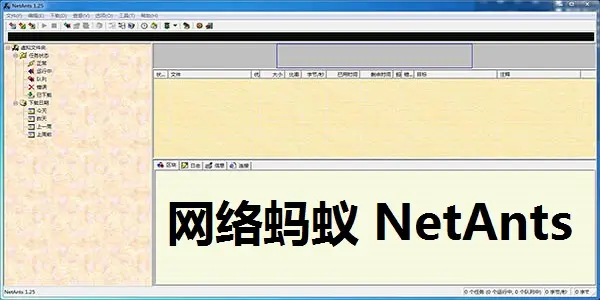
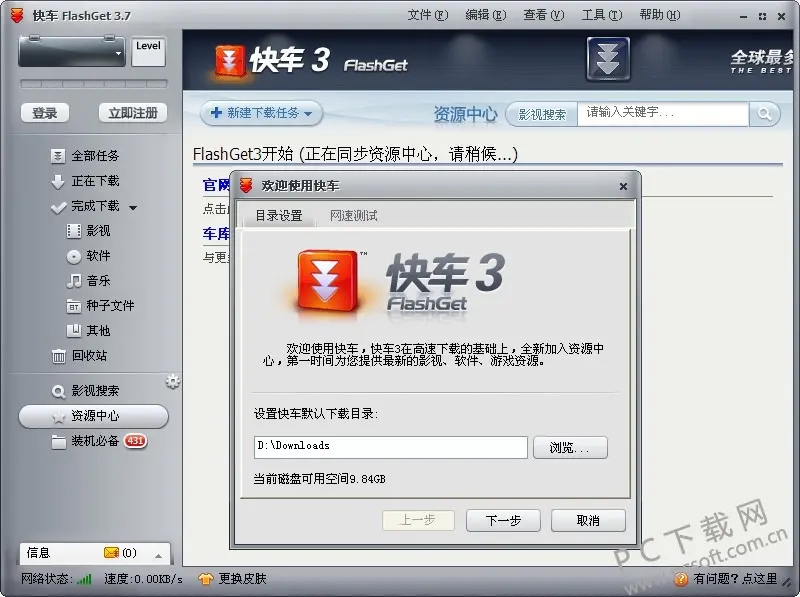

In the days of dial-up Internet access, downloading meant unplugging the phone cord and not being able to turn off the computer all night long. A 700MB movie file often takes an entire night to process. The most frustrating thing is not the slowness, but the failure - disconnection, crash, blue screen, all of which will cause the progress bar to clear instantly.
Later, Thunder appeared.
It is not the first download tool in China, but it is the first product to systematically solve "slowness" and "unstability". Multi-threading, P2P, resource aggregation, these technical terms were written repeatedly later, but for users at the time, the changes were extremely intuitive: the progress bar began to move forward steadily.
Xunlei uses P2SP technology (Peer-to-Server + Peer, server + point-to-point hybrid technology), which uses both the server and point-to-point node acceleration. It will return the address of the user who has successfully downloaded the file on the server. In other words, even if the file has been deleted on the server, it is possible to download it back with Xunlei. This is something that other tools cannot temporarily achieve.
In this way, Xunlei connects all computers on the Internet that have the target file to form a temporary network. Your download speed no longer depends on the server, but on how many like-minded netizens are sharing.
The technology community initially criticized Xunlei. A technology review’s question is quite representative: “Is this a technological innovation or a bandwidth black hole?”
But the average user makes the choice with the mouse. By 2006, the number of Xunlei users exceeded 100 million, making it the download software with the largest user base.
In those years, Xunlei, together with QQ and Baofengyingyin, became the standard configuration of new computers. After installing the system but not installing Thunder, it is often considered that "the computer is not ready yet".
resource war
On the eve of the 2008 Beijing Olympics, the broadband of a community in Shijiazhuang was upgraded to 8M. Li Tao, a 29-year-old small businessman, made a "major" decision: spending 4,500 yuan to buy a desktop computer with a hard drive capacity of 160GB, specifically for downloading TV series.
"At that time, Xunlei's resource search was simply a treasure." Li Tao recalled, ""Prison Break", "Lost", and the high-definition version of "Bright Sword", you can search for whatever you want to watch."
That was the golden age of Thunder. Around 2005-2007, with the rapid expansion of broadband users, download tools changed from auxiliary software for technology geeks to infrastructure on ordinary home computers. Xunlei has become the content highway of China’s Internet.
What surges along this "highway" is the collective desire of China's first generation of digital residents. A large amount of online entertainment demand has not yet been fulfilled by genuine platforms, and film, television and music content flows between users at high frequency through P2P networks. According to reports from some institutions at the time, most of the resources transmitted by Chinese netizens through P2P technology were film, television and music content.
It was also during those years that watching American TV series became the collective experience of a generation. "Prison Break", "Lost" and "Heroes", an episode of more than 300 megabytes, with the signature of the subtitle group, were downloaded to each hard drive through Thunder.
Many people used Xunlei for the first time, not at home, but in front of rows of Internet cafe computers with the same configuration: Windows XP desktop, unified download tool, and D drive full of folders. This is a common memory of that era.
Internet cafes became an important scene for Internet downloading in China when broadband was not yet widely available.
From an industry perspective, this is a window period. Regulation has not yet been fully formed, business models are still being explored, and technical capabilities develop ahead of rules. The download tool entered its peak period at this stage: it did not produce content, but it became the largest content circulation entrance and one of the most scale-effective infrastructures on the Chinese Internet.
Xunlei, eDonkey, BT, and magnet links form a highly spontaneous distribution network. Copyright exists in a legal sense, but it does not bind everyday use. As long as someone is sharing it, you can get it.
Commercialization attempts followed.
Around 2009, Xunlei began to launch value-added services with membership as the core, including high-speed channels and offline downloads. Users can first submit the download task to Xunlei's server or node network, and then transmit it back to the local at a higher speed after the resources are aggregated.
This model essentially reorganizes personal bandwidth and time, and also brings a relatively stable source of paid income to Xunlei.
From a technical perspective, this is not a simple "acceleration button." Some technical research points out that similar models rely on node deployment, caching strategies and popular resource scheduling. Under certain conditions, they can indeed significantly improve users' actual download efficiency, especially in high-concurrency and popular content scenarios.
Competition also became fierce at this time.
Tencent launched QQ Tornado in 2008 and quickly gained market share by attracting traffic from the QQ client; Internet Express continued to maintain, update and try to transform after the acquisition; VeryCD's eDonkey Resource Station relied on its unique community culture and resource links to have many active users among specific user groups.
By around 2010, the friction surrounding download tools began to become apparent, and a war without gunpowder quietly broke out. Some users have discovered that when using one downloading software, the speed of another downloading software becomes extremely slow. On technical forums, terms such as "protocol blocking" and "connection limit" began to circulate.
But few realize that the real crisis comes from another dimension.
4G 'kills' downloads?
Around the same time, another content logic began to take shape.
Zhang Xin’s downloading habits changed in 2014. This student from a northern university of finance and economics found that watching dramas on iQiyi no longer requires waiting for buffering. "You can just pull up the progress bar and watch it directly."
At the end of 2013, China issued 4G licenses. By mid-2015, the number of 4G users exceeded 250 million.
Video websites are on the rise across the board, copyright awareness is rapidly strengthening, and membership systems are gradually becoming mainstream. For most ordinary users, downloading is no longer a necessity, but a backup plan. It retreated from the main stage to the side, and changed from "must go down first" to "if it can't be done, then go down." Users no longer need to actually own the files, just an account that is always available.
With the popularity of mobile networks and genuine video services, the frequency of use and user scale of traditional downloading tools have declined significantly.
It was also at this stage that many download tools that once had a large user base gradually disappeared from view.
Tornado Download, Internet Express, BitComet, and eDonkey—they were once resident programs in Internet café computers, but they all quietly disappeared amid the wave of scene migration and platformization. Not because of technical failure, but because the free-download Internet format they rely on is retreating as a whole.
The bigger impact comes from policy. The nationwide "Clean Net 2014" special campaign and the "Sword Net 2014" copyright protection action promoted by the National Copyright Administration and other departments have caused widespread ineffectiveness of links to pirated resources, and subtitle group forums have been closed one after another.
The barbaric era of "you can find resources just by entering the film title" has come to an end.
Although the industry is still conducting various explorations and attempts on shared computing, computing power and networks, it is an indisputable fact that for ordinary users, the mainstream usage scenarios of traditional download tools have significantly reduced.
From 2010 to 2020, with the rise of mobile video and streaming media, the proportion of user downloads decreased, while streaming media data consumption increased significantly.
At the same time, downloads have retreated to a lower level: no longer existing as an explicit tool, but becoming an invisible layer of capabilities embedded in operating systems, enterprise services, and network architectures.
In the face of industry changes, Xunlei has also embarked on business exploration and transformation, determined to break away from the limitations of a single download tool.
Starting in 2015, Xunlei launched Xingyu CDN and other related services through its subsidiary Netcenter Technology to provide cloud computing capabilities for enterprises, taking a key step in transforming into a cloud computing service provider with distributed technology as its core.

This series of transformation actions also received a positive response from the capital market, and the stock price once rose to US$27 per share.
At the same time, Xunlei has also extended its business to a wider range of C-side streaming media and related scenarios:
The cloud disk, player, browser, game accelerator and other product matrix cover cloud storage, audio and video playback, web browsing, game entertainment and other fields. The number of members has exceeded 7 million, and it still maintains considerable service value in the individual user market.
Although the way of obtaining digital content has been revolutionized, with online playback and caching replacing file paths, and the cloud replacing hard drives, the reason why content is available with one click and can be used at any time is not that people no longer need to "download", but that the act of "downloading" itself has been redefined by technology:
It becomes more invisible, smarter, and more integrated into cloud-integrated services. Xunlei's transformation process from tools to services, and from terminals to cloud is also the most direct response to this change.
Afterimages and Retro
Interestingly, in recent years, there has been a "retro return" in the individual consumer market. On Xiaohongshu and Bilibili, "local storage" and "digital hamster syndrome" once became hot topics, and some people described it as "digital hoarding syndrome."
When Netflix removed American TV series and Amazon remotely deleted e-books, people rethought the value of downloads.
In the early days of the Internet in China, downloading meant waiting; in the era of streaming media, it was once regarded as redundant; but as the boundaries between platforms and cloud services gradually tightened, people began to re-understand the meaning of "putting files on their own hard drives": cloud services will be closed, streaming media will be removed, and only the content downloaded to the local hard drive truly belongs to them.
During the National Day holiday in 2025, Wang Mingyuan went back to his hometown to help his parents sort out the belongings in the old house, and found an 80 GB Maxtor hard drive from 2005. After connecting the adapter, neatly lying inside were the ten seasons of "Friends", the first season of "Prison Break" and the 2004 collection of "Kangxi Is Coming".
Each folder is a microcosm of the desires of an era. Those downloads that require staying up late to wait, those anxious searches for seeds in forums, and those avoidance of restarts due to the resume function, constitute the initial collective memory of the Chinese Internet.
From "download first and then talk" to "watch as you go", to today there are still people who insist on keeping the content in their own hands. What downloading actually carries is the different understandings of "ownership" among Chinese netizens.
Late at night, Wang Mingyuan would occasionally open Thunder and download some large files. The blue progress bar is still extending to the right, 99.8%...99.9%...100%.
bite......
When the completion prompt sounded, he seemed to have returned to that winter night in 2003, the age when he believed that "the download is complete, and the world is at hand."