At the beginning of 2026, China's automobile exports will maintain rapid growth. On February 11, data released by the China Association of Automobile Manufacturers showed that vehicle exports in January were 681,000 units, a year-on-year increase of 44.9%. Among them, 589,000 passenger vehicles were exported in January, a year-on-year increase of 48.9%; 93,000 commercial vehicles were exported in January, a year-on-year increase of 23.6%.
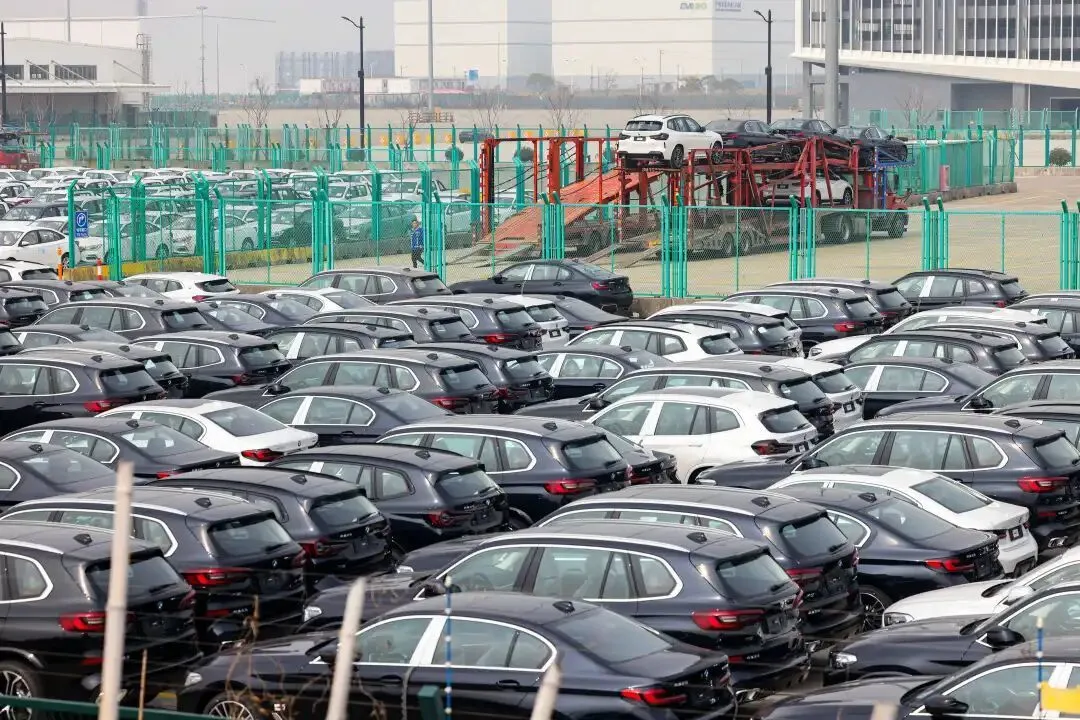
The export of new energy vehicles contributes significantly. Data show that in January, my country exported 302,000 new energy vehicles, a year-on-year increase of 302,000 units; among them, new energy passenger vehicles were exported to 295,000 units, accounting for more than 50% of the overall passenger vehicle exports for the first time, a year-on-year increase of 1.1 times; new energy commercial vehicle exports were 6,000 units, a year-on-year decrease of 1.4%.
In the past, among China's passenger car exports, although new energy vehicles have grown rapidly in recent years, fuel vehicles still accounted for the majority. In January this year, this situation ushered in a historic change, which is a reflection of the continued improvement in the competitiveness and recognition of China's new energy vehicles in overseas markets.
From the perspective of new energy vehicle export structure, pure electric vehicles were exported in January to 202,000 units, a year-on-year increase of 200%; plug-in hybrid vehicles were exported to 99,000 units, a year-on-year increase of 97.3%.
In recent years, the export of plug-in hybrid vehicles has grown rapidly. According to a report from the China Passenger Car Association, China's export performance of new energy vehicles in 2025 was better than expected. The main reason is that plug-in hybrids and hybrids have replaced pure electric vehicles as new growth points for export growth. In particular, the export performance of plug-in hybrid pickup trucks has been strong and has become a highlight of the export of new energy vehicles for commercial vehicles. China's new energy vehicle exports to markets in the Middle East and developed countries have shown high-quality development, mainly exporting to Western European and Asian markets.
China's plug-in hybrid vehicles are rapidly seizing the market due to their technological leadership and cost advantages. It is worth noting that China’s electric vehicle exports to Europe were once in a downturn due to the EU’s imposition of additional tariffs. However, in the context of the European Union wielding tariffs on Chinese pure electric vehicles, Chinese plug-in hybrid models are still subject to a 10% basic tariff in Europe, and this policy difference has also become a "breakthrough" for Chinese car companies in the European market. A report from the China Passenger Car Association Branch shows that with potential external trade policy interference, China's automobile exports performed sluggishly from February to April 2025, resumed growth from May to November, and were unusually strong in December. Due to the fragmented market, China's automobile export growth rate is less affected by the external environment and has continued to rise since August 2025.
From the perspective of my country's complete vehicle export companies, among the top ten companies in January's complete vehicle export sales, nine companies achieved positive growth in exports, and only Changan Automobile's exports declined. Among them, Chery exported 119,000 vehicles in January, ranking first, followed by BYD (100,000 vehicles), SAIC (97,000 vehicles), Geely (77,000 vehicles) and Tesla (51,000 vehicles). These five car companies all exported more than 50,000 vehicles. The top ten car companies by export volume also include Changan (44,000 vehicles), Great Wall (40,000 vehicles), Dongfeng (29,000 vehicles), BAIC (26,000 vehicles) and Sinotruk (18,000 vehicles).
Over the past many years, China's automobile exports have hovered around 1 million units per year. Until 2021, China's automobile export volume will begin to grow explosively. In 2025, China's automobile exports were 8.32 million units, a year-on-year increase of 30%, continuing the growth trend.
On the one hand, as Chinese car companies continue to increase their investment in channel construction and branding in the overseas passenger car market, Chinese car companies are steadily expanding their overseas market share. On the other hand, China's automobile industry chain is highly resilient, and the country encourages export trade. As the efficiency and intelligence of the domestic industrial chain improve, Chinese passenger car products have become more cost-effective and competitive in overseas markets.
According to a report from the China Passenger Car Association, China's automobile exports performed relatively strongly in other Asian regions such as Central and South America, Southeast Asia, and South Asia in the early stage. Now they are gradually shifting to a relatively strong performance in Central and South America and Europe. Especially in the recent past, the Middle East, Central and South America, etc. have performed relatively strongly. As long as the international market environment is stable in the future, there will still be huge room for the development of China's automobile exports.