According to people familiar with the matter, Musk's SpaceX and its wholly-owned subsidiary xAI are participating in a confidential new Pentagon competition aimed at developing voice-controlled autonomous drone swarm technology. Musk announced in early February that the two companies would merge to enter the new frontier of research and development of artificial intelligence (AI)-enabled weapons, marking a new turn for Musk that may cause controversy.
Although SpaceX is already a mature defense contractor and Musk is passionate about advancing AI, he has previously been one of those who opposed the creation of "new killing tools."
Musk’s company was among only a handful of companies selected to compete in the $100 million challenge, which was launched in January, said people familiar with the matter who asked not to be identified because they were discussing sensitive topics.
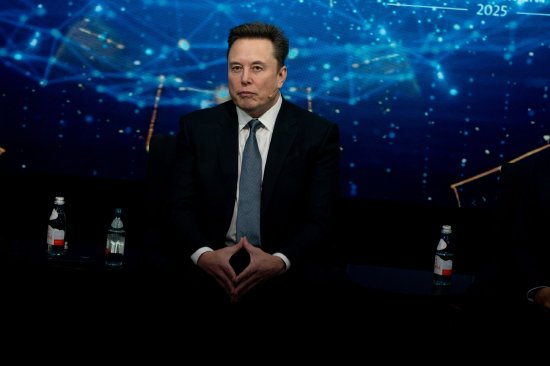
The six-month competition aims to develop advanced swarm technology capable of converting voice commands into digital commands and driving multiple drones.
Although it is now possible to fly multiple drones at the same time, developing software that can command a swarm of multi-rotor drones at sea and in the air - and be able to autonomously track targets - is still a challenge. People familiar with the matter said the competition will be advanced in phases based on the results and interests of participants.
The Pentagon competition was launched jointly by the Defense Innovation Unit (DIU) and the Defense Autonomous Warfare Group (DAWG), which are dedicated to bringing in Silicon Valley startups. DAWG is a new agency under the second Trump administration and is affiliated with the U.S. Special Operations Command. DAWG is a continuation of the Biden-era Replicator program to a certain extent, which plans to produce thousands of expendable autonomous drones.
The project will be carried out in five phases, starting with software development and gradually transitioning to field testing. A defense official indicated in a January competition announcement that the drones would be used for offensive purposes, saying human-machine interaction "will directly impact the lethality and effectiveness of these systems."
security clearance
xAI's website shows that the company has recently begun a hiring spree, with the goal of recruiting engineers from Washington or the West Coast with valid U.S. security clearances at the "secret" or "top secret" level to work with federal contractors. xAI said in a job announcement that it is looking for software engineers with experience working with "government agencies, Department of Defense or federal contractors on AI, software or data projects," adding that the hiring process will be completed within a week.
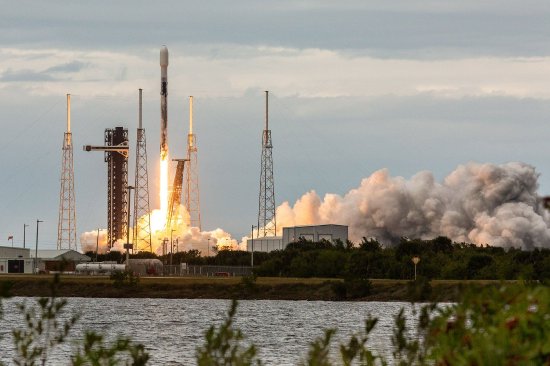
On December 9, a SpaceX Falcon 9 rocket was launched from the Cape Canaveral Space Force Station in Florida carrying a classified payload of the U.S. National Reconnaissance Office.
Musk has previously advocated for a ban on the development of offensive autonomous weapons, which are capable of selecting and attacking targets on their own, beyond substantial human control.
In 2015, Musk signed an open letter sponsored by researchers in the fields of AI and robotics warning of the dangers posed by autonomous weapons.
When Musk merged the two companies SpaceX and xAI, he did not talk about using AI to provide software that supports new weapon technologies. But this new Pentagon mission, involving xAI and SpaceX engineers and managers, is pushing in that direction.

The Pentagon in Arlington, Virginia
While the Pentagon is eager to accelerate the application of AI and autonomous technologies, the prospect of integrating chatbots and voice-to-text commands into weapons platforms has even some defense officials uneasy, according to multiple people familiar with the matter. They say it's crucial to limit the use of generative AI to translation and not allow it to control drone behavior.
Several expressed concerns about the risks if generative AI is used to translate speech into operational decisions without a human in the loop.
At the same time, some employees at major labs have left their jobs amid questions about a host of other ethical issues in the AI industry, and leading generative AI companies are scrambling to generate revenue to support continued research and development.