The Middle East is not just about oil and gunpowder.
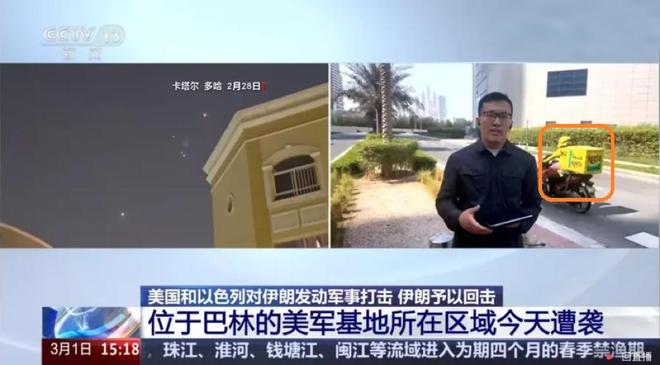
Is this someone from Meituan? That’s right, this is the delivery boy from Keeta, Meituan’s delivery platform in the Middle East. Keeta's takeaway boy appeared on CCTV footage, not by chance, but by necessity. Nowadays in Dubai, the "golden glitter" delivery boy is a sight.
Text | Chinese Business Tao Lue Deng Xinghua
【01 Golden Shine in the Middle East】
In response to the recent situation, Keeta previously said: "When necessary, services will be temporarily restricted or stopped in specific areas to ensure community safety. We will respond quickly according to the situation." But so far, as everyone joked, they are still:
"You beat yours, I'll give mine as a gift."
Busier than ever.
Meituan has not been in the Middle East for a long time, but its market share has been soaring.
In May 2023, Meituan launched the international takeaway brand Keeta for the first time in Hong Kong, China.
In September 2024, Keeta was launched in Saudi Arabia and officially landed in the capital Riyadh a month later.
Saudi Arabia already had a mature food delivery market at that time: giants such as Talabat and Deliveroo accounted for 70% of the market share, and the local platform Hunger Station had been rooted for 10 years, but Keeta quickly opened up the situation.
Its trump card includes the subsidy blitz that Chinese platforms have mastered, such as “50% off on the first order” and “permanently free shipping.” Relying on this user incentive and the super efficiency achieved in China, Keeta quickly established a foothold in cities such as Riyadh and Jeddah, and the number of users and order volume grew rapidly.
By January 2025, the number of downloads of Keeta APP has reached the top of the Saudi App Store, with a market share of over 10%, ranking among the top three. Its services cover more than 20 cities in Saudi Arabia, making it one of the most popular local food delivery platforms.
Since then, Keeta has continued to expand its territory throughout the Middle East and called out new goals,Covering six Gulf countries within three years——Saudi Arabia, United Arab Emirates, Qatar, Kuwait, Oman, Bahrain.
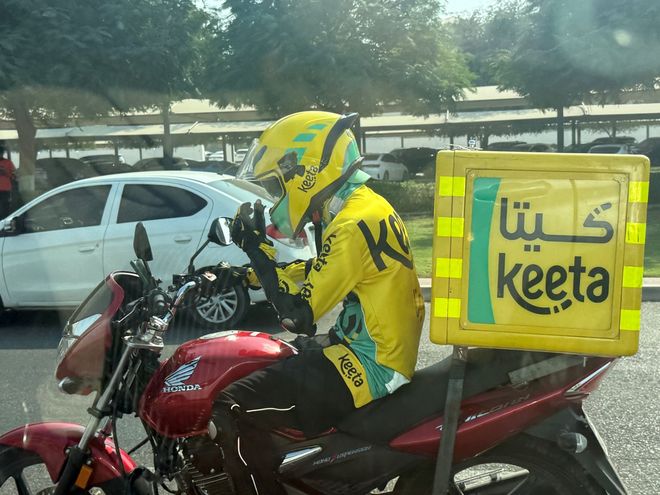
▲Keeta riders on the streets of Dubai, source: Daily Economic News
In August 2025, Keeta will be officially launched in Qatar;
In September 2025, Keeta officially entered Kuwait and the United Arab Emirates;
In early January this year, Keeta officially opened its doors in the Bahrain market...
In these new markets, Keeta has also launched attractive user subsidies such as "no commission in the early stage" merchant policy and "buy one, get one free".With ultimate efficiency and quality, we quickly break through the competition and become the first choice of consumers.
On the evening of November 28, 2025, Meituan CEO Wang Xing revealed at the third quarter earnings call that Keeta's Hong Kong business had achieved profitability in October 2025, and other regions are still developing rapidly, and the Middle East is one of its "other" focuses.
Meituan is not the only well-known Chinese company that has invested heavily in the Middle East. Cross-border e-commerce companies such as SHEIN and AliExpress have also arrived early.
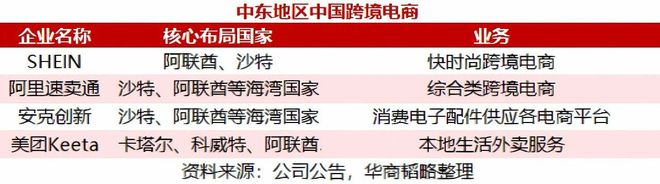
There are also new energy vehicles. Both "Diwang" and "Ningwang" have taken root for many years and are growing rapidly.
For example, BYD, its new energy vehicles have been fully rolled out in the Middle East and are growing at an extremely fast rate. This time, BYD protected car owners near the missile blast point and became a global hot search, which has also built a reputation for quality.
In addition to selling cars, BYD has also launched the world's largest grid-side energy storage project of 12.5GWh in Saudi Arabia, which is an important support for the local energy transformation.
CATL’s “NING Service” is the first experience center in the Middle East and the largest new energy aftermarket service center in the Middle East. In January last year, CATL also became the preferred battery energy storage system supplier in the RTC (Rround the Clock) project in the United Arab Emirates.
ZTE has also been deeply involved in the construction of digital infrastructure in the Middle East for many years. In December 2025, it also announced that it had obtained a major contract from a Middle Eastern telecom operator, with an order amount of more than 3 billion US dollars. It was the largest overseas 5G order for a Chinese communications company last year.
The field of engineering and infrastructure is the absolute territory of Chinese enterprises. The NEOM New City landmark, a favorite of the Saudi Crown Prince, was contracted for construction by China State Construction Engineering Corporation, and the exterior photovoltaic power station was awarded to Sungrow and Huawei Digital Energy. The core supplier of most large-scale photovoltaic projects in the Gulf region is LONGi Green Energy.
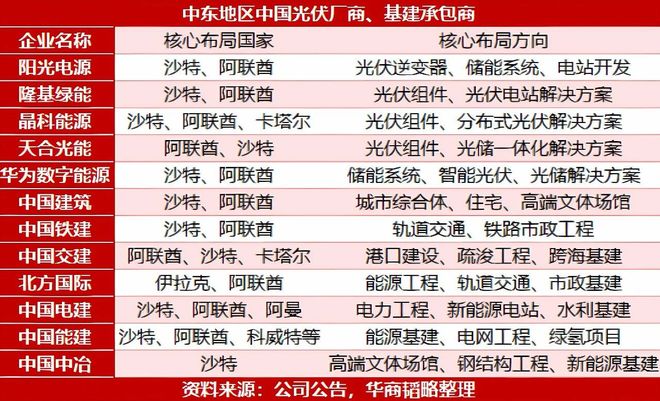
Oil fields, oil and gas, and refining projects constructed by Three Barrel Oil and China Petroleum Engineering Corporation are also located throughout the Middle East. In addition to large and well-known enterprises, the wealth stories of Chinese entrepreneurs in the Middle East are becoming more and more colorful.
【02 Chinese businessmen enter the Middle East】
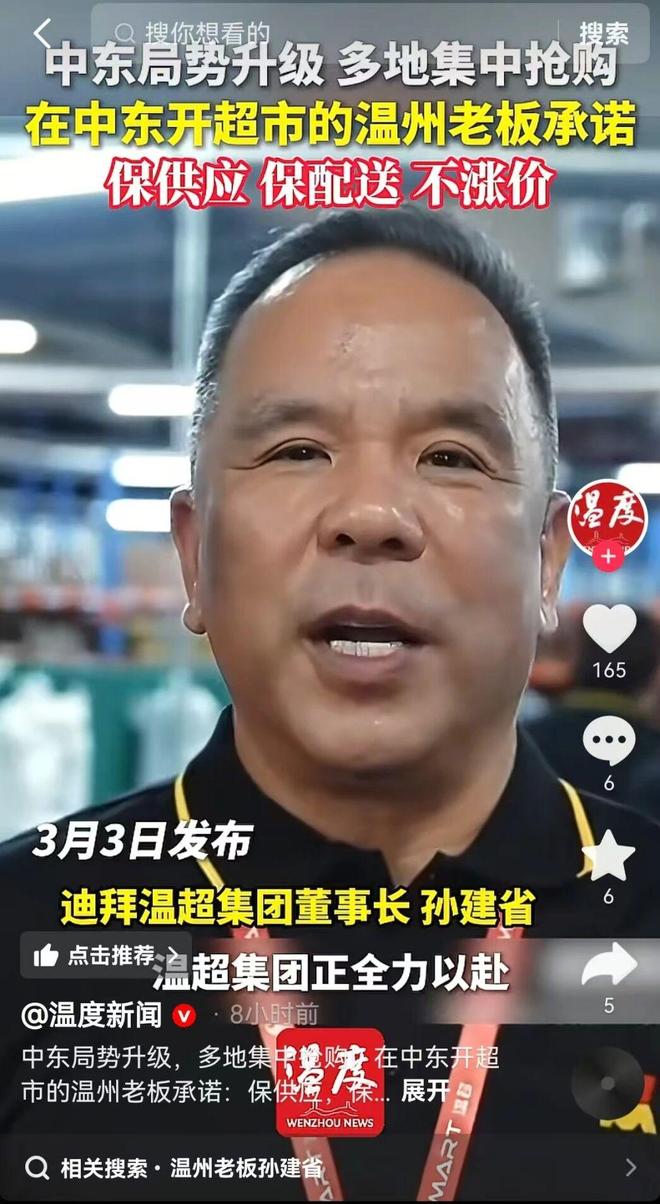
In the past two days, many short video platforms have shown signs of sold-out Middle Eastern supermarkets:
"Wenchao market".
This is a supermarket that specializes in fresh food and food, combining online and offline services. Its founder, Sun Jiansheng, is really from Wenzhou, Zhejiang.
Sun Jiansheng went to Dubai to start a business in 2006. In 2010, he opened the first Wenchao International City store.
“When I first came to Dubai, there were already many Chinese businessmen here.Everyone was complaining that there was nothing to eat and food was very expensive, so I opened a small store in Deira Trade City to provide fresh, affordable food and daily necessities to the Chinese in Afghanistan.. "
Not long after it opened, Sun Jiansheng discovered a problem: Chinese people love to eat green leafy vegetables, but they were simply not available locally.
After some thought, he decided to turn a problem into an opportunity: grow vegetables locally.
After that, Sun Jiansheng purchased a 70-acre piece of sandy land 35 kilometers away from Dubai International City in the direction of Oman. He began measuring the dimensions, building a house, erecting a greenhouse, and digging pipes. He traveled back and forth between the supermarket, the farm, and his home every day.
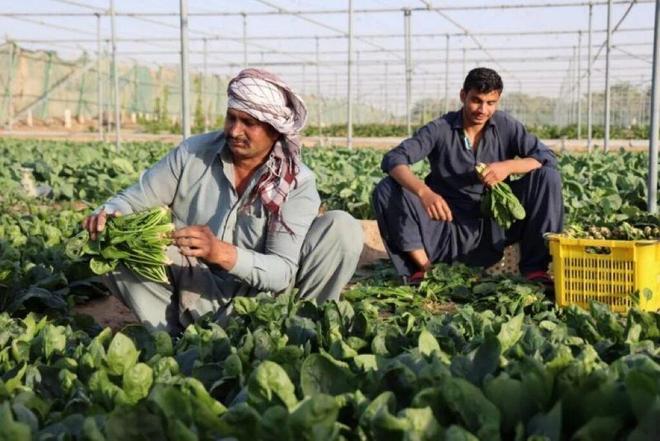
▲Picking spinach at Wenchao Group’s farm. Source: People's Daily Online
In 2011, the first phase of the green farm with an investment of 14 million yuan was completed. In 2014, the second phase of the farm covering an area of about 60 acres was also started.
Today, the farm covers an area of about 80,000 square meters and grows more than 30 varieties of vegetables, mainly green leafy vegetables. The output can reach 10,000 kilograms per day.
With the supply from the farm, Sun Jiansheng opened more and more chain stores.
Now, Wenchao has become a full supply chain group with online distribution + offline stores + warehousing and logistics, especially in Dubai and Abu Dhabi, with annual revenue exceeding 2 billion yuan.
Wenchao has a wide range of varieties, and the price is not too expensive. For example, Shanghai green vegetables only sell for about 3.25 dirhams (about 6.5 yuan) per kilogram. They are obviously grown in the desert, and the price is not much higher than what they actually buy in Shanghai. Other green vegetables are also sold at low prices.
As soon as the situation in the Middle East became tense this time, Wenchao Group immediately issued an emergency supply guarantee announcement, saying that it had activated the emergency supply guarantee mechanism as soon as possible, and coordinated multiple warehouses to increase the replenishment of rice, flour, oil, drinking water, fresh food and other livelihood commodities:
"Guarantee supply, ensure distribution, and do not increase prices."
In addition to supermarkets, offline commodity malls and wholesale markets in the Middle East are also crowded with Chinese businessmen.
In the 1990s, Chinese state-owned enterprises and early Chinese businessmen entered Dubai. The Chinese community quickly established a huge commodity market that looked like a dragon. The goods in it all came from China. It was called the "Dragon City". There were more than 4,000 shops in it, of which more than 700 were shops owned by Zhejiang merchants.
In the early years, Dragon City encountered a sharp increase in rents. Zhejiang businessmen united and obtained a promise of "no rent increase for three years" through communication with local investors. Later, these Zhejiang businessmen were received by the Sheikh of Dubai.
Among them, one of the more famous Wenzhou businessmen is Chen Zhiyuan. He sold his house in his hometown and set up a street stall in Dubai more than 20 years ago to start a business. Step by step, he opened four major markets: "China Commodity City, China Light Industry City, Zhiyuan Shoe City, and China Hardware and Auto Parts City", with a yearly turnover of US$1 billion.
In recent years,The express delivery industry in the Middle East has also been restructured by a Chinese entrepreneur.
Her name is Huang Zhen. She graduated from the University of Electronic Science and Technology of China in Chengdu, Sichuan. In 2008, she joined Huawei as an overseas account manager and was then dispatched to Africa. In 2014, Huang Zhen was transferred to Dubai. The following year, Alibaba established a joint venture in Dubai and invited Huang Zhen to be the CTO (chief technology officer), responsible for the implementation of Alibaba cloud computing technology in the Middle East, so Huang Zhen joined Alibaba.
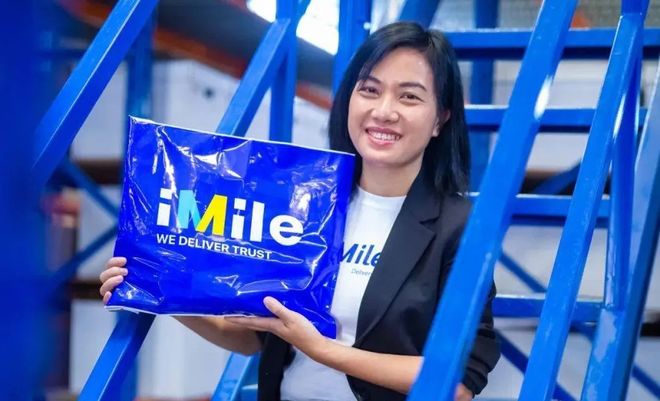
After working at Alibaba for two years, Huang Zhen came up with the idea of starting a business:“When I was living in the Middle East, I often encountered problems with lost packages and unclear addresses when shopping online. At that time, I thought, why can’t local logistics services be better?”
In April 2017, Huang Zhen resigned from Alibaba. Two months later, she established iMile Express in Dubai. Starting from the "last mile" delivery, she quickly established cooperation with the four overseas e-commerce dragons:
After receiving orders from Middle Eastern customers on these e-commerce platforms, Chinese sellers will first send the goods to iMile's warehouse in China. After receiving the goods, iMile's warehouse will then express them to Saudi Arabia, the United Arab Emirates and other places. After customs clearance, they will enter its self-built warehouse in the Middle East and then be sorted and delivered to customers by its express delivery team.
In less than 5 years, Huang Zhen has captured more than 40% of e-commerce users in more than 10 countries in the Middle East. Its cooperative customers include Amazon, Carrefour, AliExpress, SHEIN, and Noon, the largest e-commerce company in the Middle East, etc. The network fully covers wealthy countries such as the United Arab Emirates, Saudi Arabia, Qatar, Kuwait, and Jordan.
【03 From trade to investment】
Since the 1990s, the Middle East has begun to make friends with China.
Such as Saudi Arabia.
In 1990, China and Saudi Arabia formally established diplomatic relations, opening a new chapter in modern economic and trade cooperation between the two countries.
In 1999, the two countries announced the establishment of a "strategic petroleum partnership."
In 2006, Saudi King Abdullah visited China for the first time after he ascended the throne.
In 2016, China and Saudi Arabia announced the upgrade to a "comprehensive strategic partnership" and initiated the planning and construction of a number of important infrastructure projects, including ports, roads, railways and industrial parks.
In addition to Saudi Arabia, China’s cooperation with other Middle Eastern countries has also been deepening. According to statistics,By 2024, the bilateral trade volume between China and the Middle East will reach US$487.2 billion. China mainly exports electromechanical, textile and clothing, new energy vehicles, petroleum equipment and other products to the Middle East, while importing oil, gas and mineral products from the Middle East.
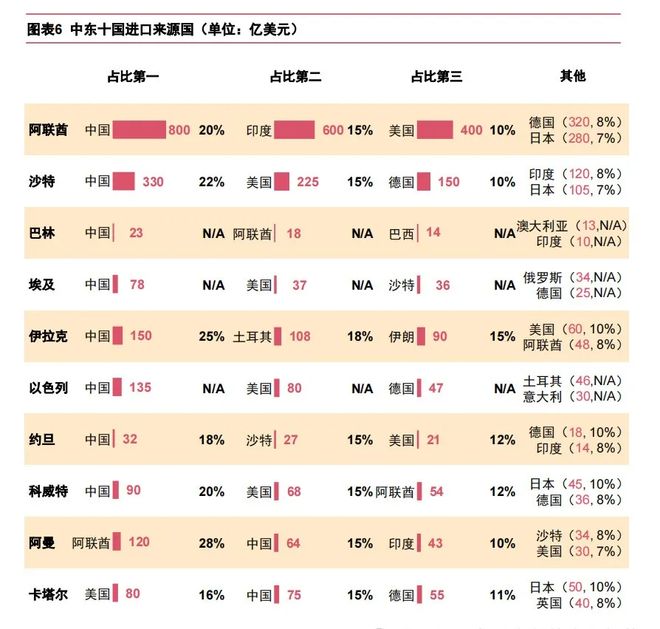
In recent years,China often ranks first among the 10 countries in the Middle East as a source of imports.
Moreover, partners in the Middle East not only buy goods themselves, but also do transit.
The UAE is China's largest trading partner in the Arab region. About 60% of Chinese goods are transshipped through UAE ports to more than 400 cities in the Middle East and North Africa.
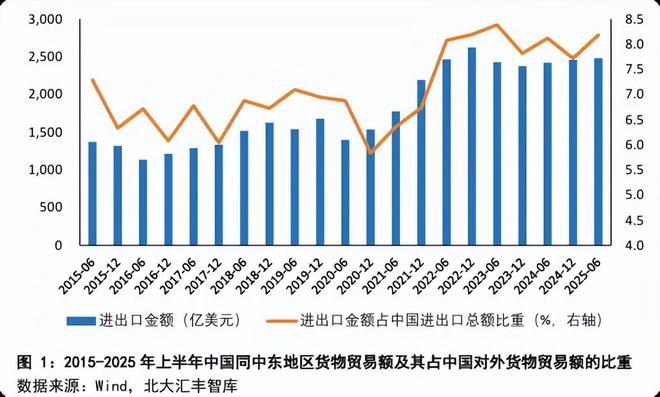
In recent years, both sides have increased mutual investment in addition to trade.
In 2024, Saudi Arabia will receive a total of US$19 billion in investment and construction contracts from China, and China's investment and construction in the entire Middle East will also reach US$39 billion. Countries including Iraq and the United Arab Emirates have received investment in infrastructure including power plants, subways, highways, and buildings.
Capital in the Middle East favors investments in Chinese companies, ranging from petroleum and petrochemicals, new energy vehicles, auto parts, medical equipment, airports, traditional Chinese medicine, and even military electronics.
Saudi Arabia, in particular, likes oil refineries. For example, Saudi Aramco not only jointly opened a Jubail refining and chemical company with Zhejiang Rongsheng Petrochemical, with half of the equity owned by both parties, but also invested in the equity of Zhejiang Hengli Petrochemical, Rongsheng Petrochemical, Dongfang Shenghong and Shandong Yulong Petrochemical, holding 10% of the shares in all four companies.
This 10% stake has at least two functions. One is to lock in China's large market and major customers, so that everyone can buy oil from Saudi Aramco. The other is to get a share of the downstream oil industry chain.
In addition to petroleum and petrochemical related industries,What Middle Eastern funds are most interested in may be new energy vehicles. Investment targets include Geely, Gaohe, NIO, Xpeng, BAIC New Energy, Pony.ai, etc., successively acquired more than a dozen new energy vehicle brands, with a total investment of more than 100 billion yuan.
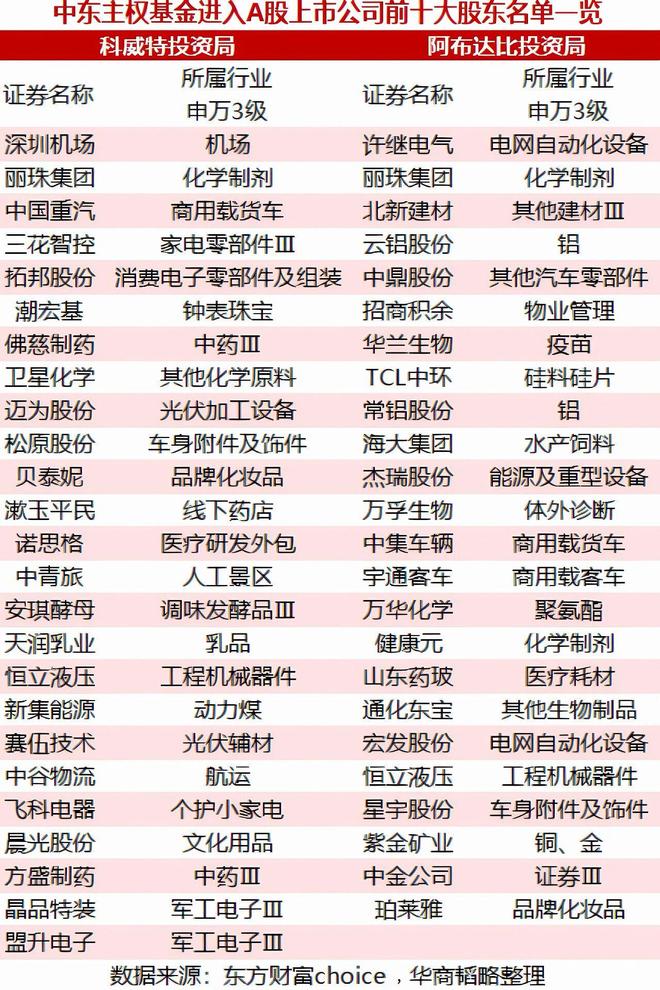
Of course, compared to finding a company to sign a contract to subscribe for shares, the easier investment method is to buy directly in the secondary market. at present,Among A-share listed companies, 49 have Kuwait Investment Authority or Abu Dhabi Investment Authority among their top ten shareholders., including 25 companies from the Kuwait Investment Authority and 24 companies from the Abu Dhabi Investment Authority.
Nowadays, with the transformation and upgrading of China's economy to new productive forces and the development of the Middle East itself, more business opportunities between China and the Middle East are also presented to each other.
In short, the Middle East is not just about oil and gunpowder, extreme wealth and extreme poverty. The Middle East has always been a land of wealth and treasures, and has always had unlimited business opportunities beyond most people's imagination.
【Reference】
[1] "Research on Meituan Keeta's Surprise Attack on Middle Eastern Reporter in Dubai" Daily Economic News
[2] "I open a supermarket in the "One Belt and One Road": growing green leafy vegetables in the Dubai desert" Qianjiang Evening News·Chao News
[3] "Post-80s Female Boss Delivers Express Delivery Globally: "Capillaries" from the Middle East to 30 Countries" 21st Century Business Herald
[4] "Over 100 listed companies deploy in the Middle East, latest response" 21st Century Business Herald