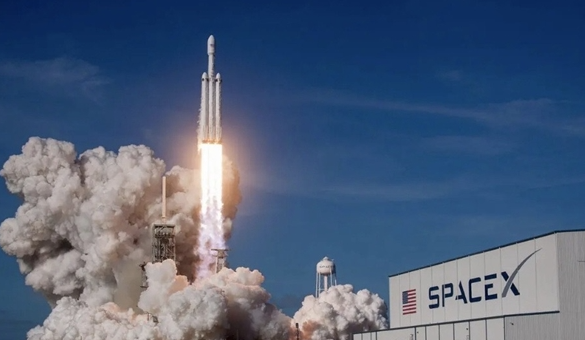
According to media reports,The first flight of SpaceX's Starship V3 version has been delayed. At the same time, NASA is constantly urging to speed up the development of the lunar lander.This dual pressure makes Musk face the dual test of technology and time. SpaceX founder and CEO Elon Musk said on social media on March 7,The first flight of the Starship V3 version is expected to take place "in about four weeks." If we count from March 7, this means that the launch window may fall around April 4.
And on January 26th,Musk once confidently stated that "the Starship will be launched in 6 weeks." According to this calculation, it was originally scheduled to be around March 9. Neither SpaceX nor Musk gave a specific explanation for the approximately four-week delay.
However, from outside observers, this delay is not surprising. In the past period of time, the test rhythm of the Starship base in Texas has shown no signs of imminent launch. There has been neither relevant maritime navigation warnings nor airspace restriction announcements, which are usually important signals before rocket launches.
The change in the progress of the starship happened to occur against the background of NASA's constant urging. Currently, the manned lunar lander for the U.S. Artemis lunar landing program is mainly developed by SpaceX and Blue Origin.
SpaceX executives revealed in November last year thatStarship V3 will become a "production rocket." Its goal has never been to "launch once" but to "fly as often as an airplane."This means that every test, every delay, and every failure is actually accumulating experience for the future high transmission frequency system.
For NASA, the key to the lunar landing mission is not a single success, but whether the starship can achieve stable, high-frequency, and reusable flight capabilities.