A research team at Nanyang Technological University in Singapore is transforming "cybercockroaches" originally used for disaster relief into special tools for monitoring infrastructure safety. They can drill into narrow spaces that are difficult for conventional robots to reach and inspect aging pipelines and underground facilities. These "bionic cockroaches" are composed of living cockroaches and electronic backpacks that can be remotely controlled. Researchers use electrical signals to accurately guide their movement trajectories, providing a new inspection method for urban underground networks.
The project is led by Professor Hirotaka Sato of Nanyang Technological University's School of Mechanical and Aerospace Engineering, who is one of the pioneers in the field of cyberinsect research. In his early years, he transformed beetles and realized the world's first "cyber beetle" that could remotely control flight. This achievement was later included in the Guinness Book of World Records. Today, he and his team are pushing related technologies from disaster response scenarios to more routine infrastructure operation and maintenance uses.
“We are now testing some daily use cases, such as inspecting old pipelines,” Sato said in an interview with the Financial Times. The body structure of cockroaches has developed the ability to squeeze into gaps over a long process of evolution, and this is an advantage that many wheeled, tracked and even snake-like robots cannot completely match. Therefore, combining the natural mobility of cockroaches with the control module developed by Nanyang Polytechnic, a new inspection tool suitable for traveling through narrow spaces is formed. It is especially suitable for underground pipe corridors such as power, communications, water supply and drainage, and sewage pipelines, which are difficult for humans and traditional robots to easily enter.
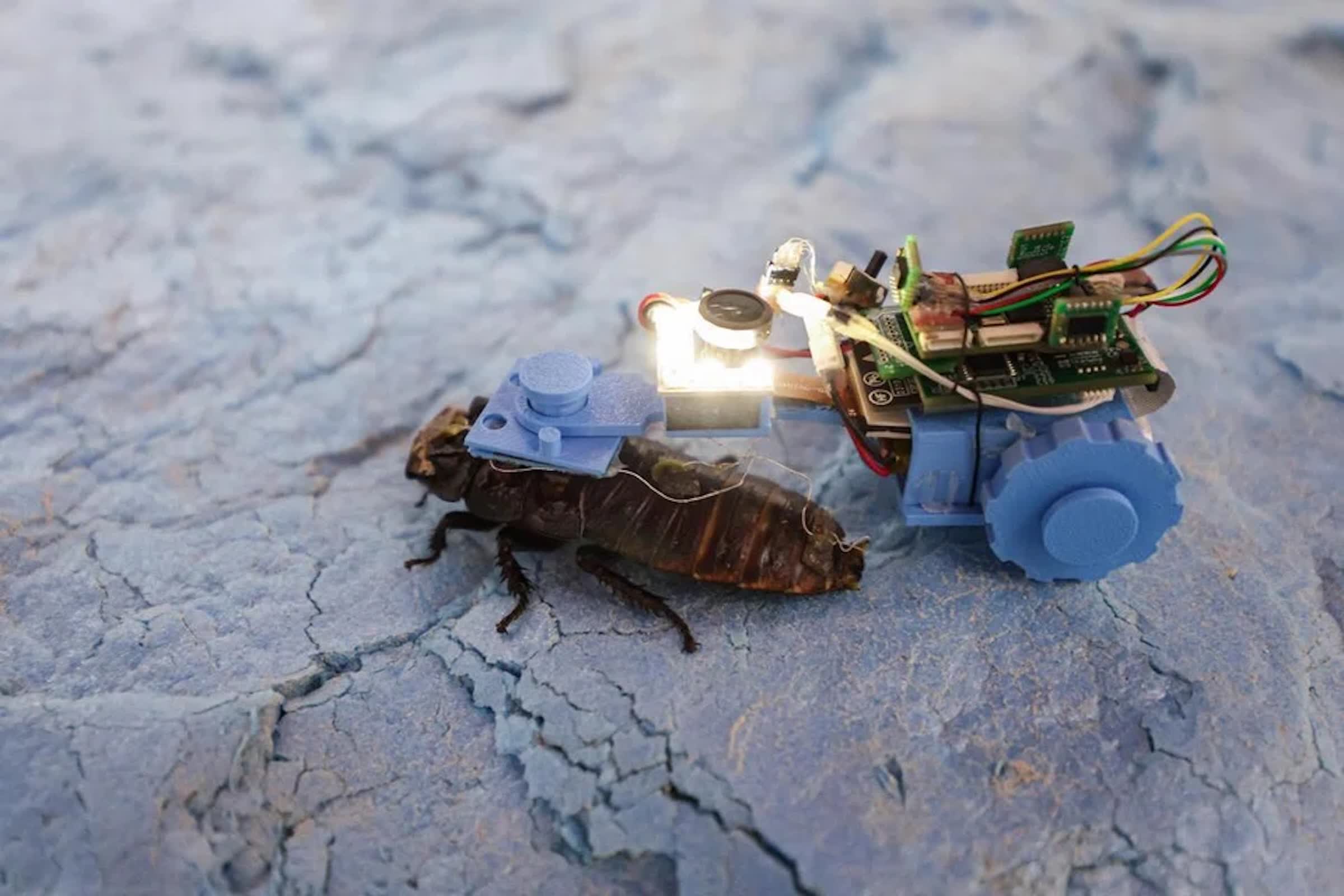
Each cybercockroach carries a lightweight electronic module on its back, which uses weak electrical signal stimulation to guide the insect's movement direction. The operator can send signals to the module through the control terminal to achieve remote steering and travel control of the cockroach. The latest version of the control system reduces voltage requirements by about 25% compared to the previous version, thereby extending the overall battery life. Project team members stress that these electrical pulses do not cause pain to the cockroaches.
As early as a year ago, the team had applied this system to extreme disaster scenes. At that time, 10 cybercockroaches carrying infrared cameras were deployed to an earthquake-stricken area in Myanmar with a magnitude of 7.7, trying to search for survivors in the ruins. Although no signs of life were found in this operation, it proved the feasibility and tolerance of the cyber cockroach in a real disaster environment, laying the foundation for subsequent expansion of application scenarios.
After completing the disaster scenario verification, the team began to focus on improving the system's large-scale deployment capabilities. By introducing an automated assembly process, researchers can now attach a control module to a cockroach in just over a minute, whereas previously the same operation often took about an hour. The substantial improvement in assembly efficiency makes it a realistic option to deploy a large number of cyber cockroaches at one time in large-scale inspection missions in the future.
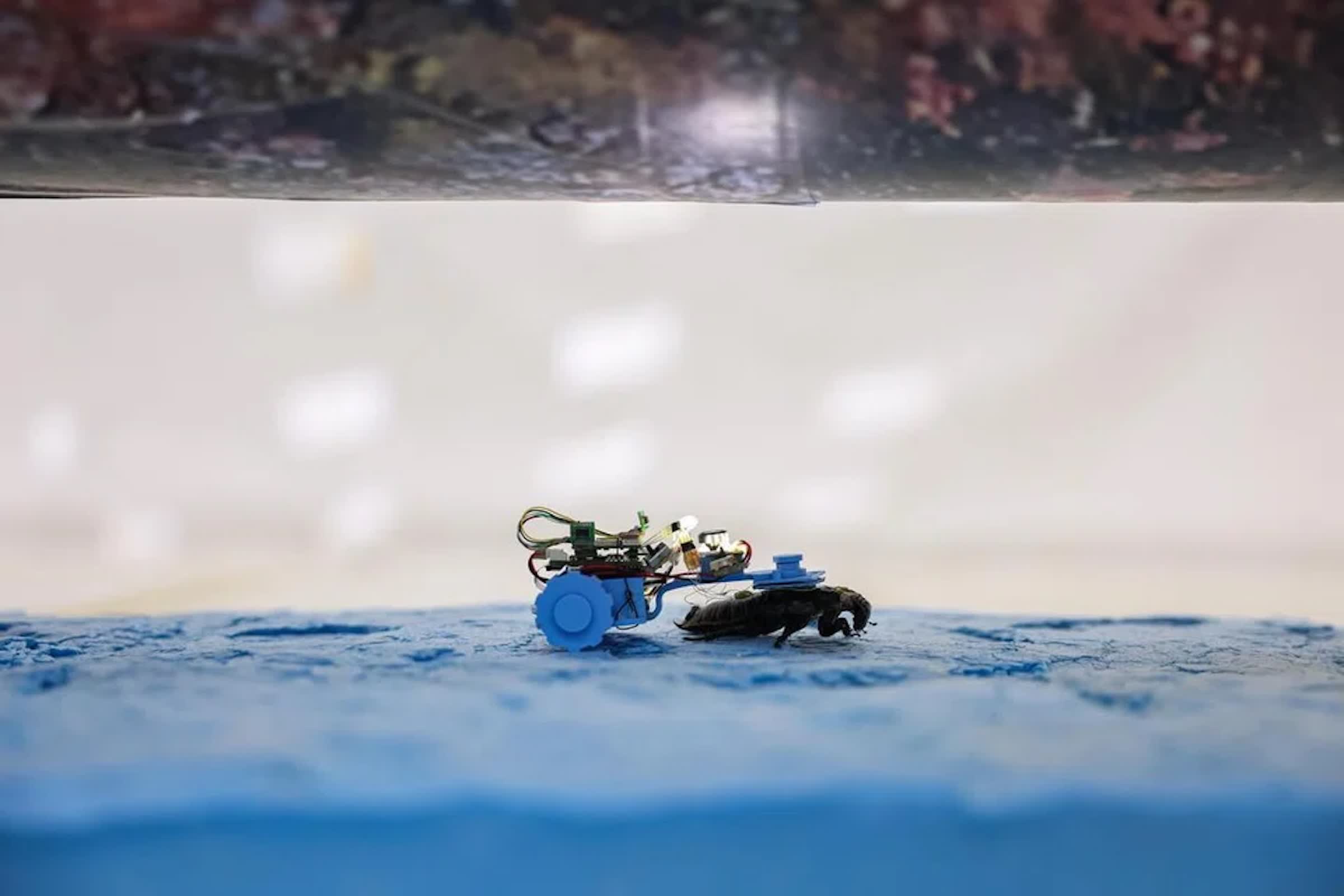
As the application scenario shifts from collapsed buildings to urban pipe networks, the "equipment form" of cyber cockroaches has also undergone significant changes. Previous versions used for rescue mostly used compact backpack designs, but the latest prototype allows cockroaches to tow a set of miniature "chariots" - this small vehicle is equipped with lights, cameras and larger-capacity batteries, and is equipped with small wheels to make the overall load move more smoothly within the pipeline. During the inspection mission, the cockroach pulls the device forward in the pipeline, collecting images and data of pipe wall damage, leakage, etc. in real time. The team plans to conduct local trials in some transportation and municipal facilities in Singapore in the near future.
Although cybercockroaches still have broad potential beyond infrastructure maintenance, Sato clearly emphasized that relevant research at Nanyang Technological University is strictly targeted at the civilian field. This statement is not redundant, because in other agencies, similar "insect-electronics" hybrid integration projects are gradually moving towards military and intelligence directions. For example, German startup Swarm Biotactics has unveiled a prototype "cockroach surveillance platform" for reconnaissance purposes, viewing cyber insects as potential covert intelligence-gathering tools.
In contrast, the Cyber Cockroach project on the Nanyang Polytechnic campus has always focused on civilian and public services. After completing their assigned tasks, the cockroaches are "retired" and placed in containers with fresh lettuce to spend the rest of their lives. For the research team, this arrangement that takes into account engineering benefits and animal welfare is also one of the bottom lines they hope to adhere to when exploring cutting-edge bionic technology.