"Someone has fallen into the water!" is one of the most frightening shouts on a ship, and it often ends in tragedy. Now, the ZOE "man overboard" (MOB) machine vision inspection system launched by maritime technology company Zelim has officially passed the certification of authoritative organizations and is expected to significantly reduce the mortality rate of such accidents.
In service on a variety of ships from small yachts to giant roll-off container ships, the most terrifying alarm after "fire" and "serious tailshaft packing failure" is "man overboard". In most real-life scenarios, once someone falls over the guardrail and falls into the sea, unless it is a calm day and someone happens to see or hear the sound of falling into the water, the chance of survival is extremely low. Even if someone witnesses it in time, this is only the starting point of the emergency response - what was originally a complete person suddenly turns into a looming "head" among the waves, while the ship continues to move forward and quickly moves away.
According to the traditional process, when a "man overboard" alarm is issued on the ship, at least one crew member will be designated to keep an eye on the person who fell into the water throughout the entire process, constantly pointing to his location to ensure that visual tracking is not interrupted; at the same time, the captain and other crew members race against time to turn the ship around and return to carry out rescue operations. On a small boat with slow speed and flexible steering, this set of actions is still feasible, but in practice, the speed at which heads disappear in the surge is often unexpected. On behemoths such as large passenger ships or cargo ships in the North Sea, even just stopping the ship may take several nautical miles, let alone turning around and returning to the point of falling into the water. Therefore, many "man overboard" incidents eventually evolve into aimless searches for remains, and sometimes it is difficult to even find the remains.
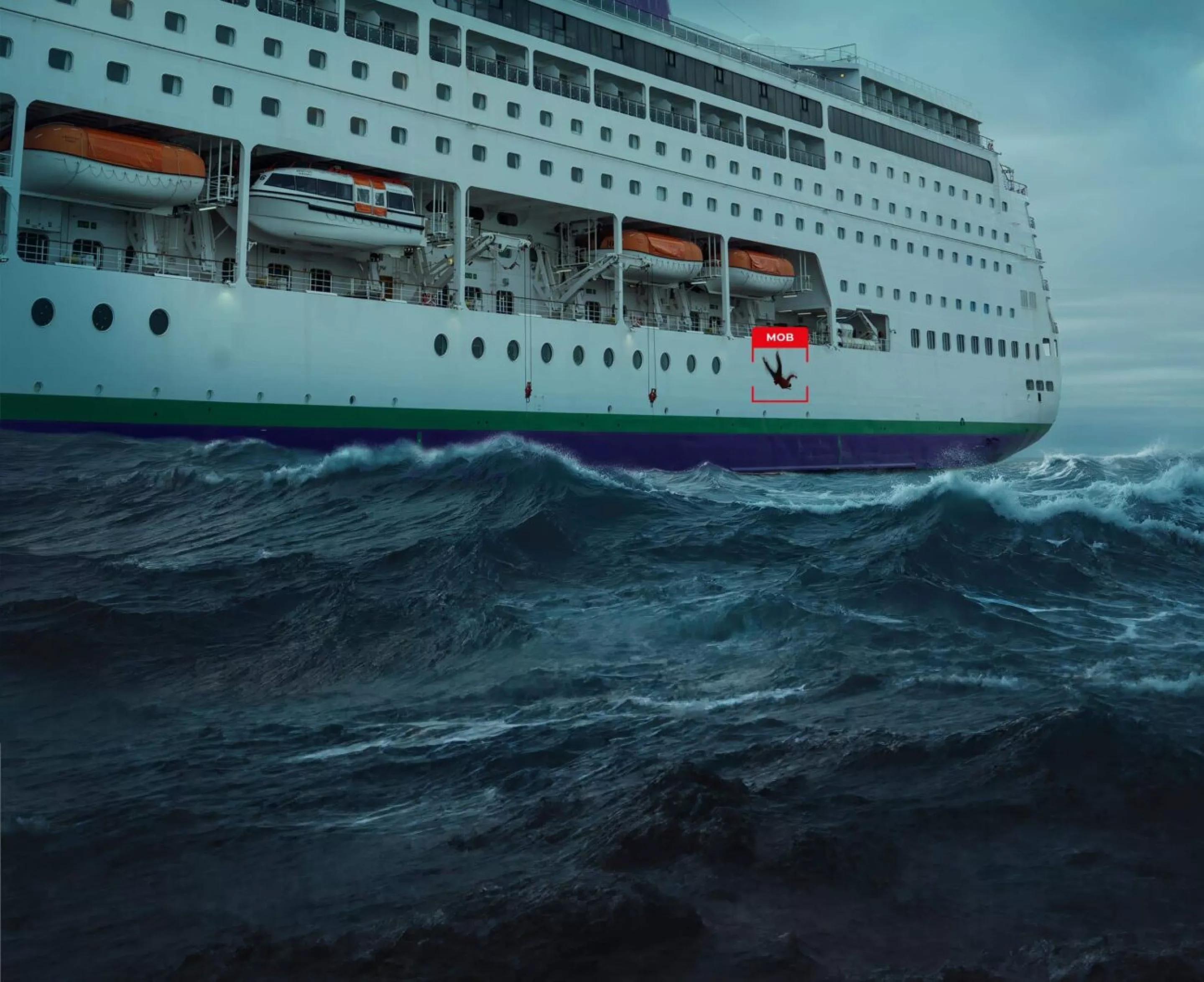
The ZOE system attempts to "grab time" in this critical link. It achieves all-weather, all-round 360-degree monitoring by deploying multiple sets of multi-spectral sensing cameras around the ship. These sensors are a combination of thermal imaging and high-definition visible light cameras, all connected to a recognition system based on computer vision and machine learning. For this purpose, Zelim built a proprietary data set containing more than 9.5 million annotated maritime targets to train algorithms to identify various maritime targets, especially people who have fallen into the sea. With the cooperation of multi-source sensing and algorithms, ZOE can complete detection at the moment when a person crosses the side and falls into the sea, and achieves continuous automatic tracking, regardless of day or night, regardless of weather conditions.
For "man-overboard" rescue, "instantaneous discovery" is almost the dividing line between life and death. The article pointed out that once the initial discovery is missed, the probability of successfully locating a person who fell into the water will plummet to about 20%. This is also the psychological reason why many crew members are unwilling to work alone in dangerous areas such as the bow deck: as long as there is a miss, it may be "completely goodbye."
According to reports, on April 14, 2026, the ZOE system passed the formal certification of Lloyd’s Register (Lloyd’s Register) and complies with the ISO 21195:2020 standard. During the 90-day certification test, the actual detection rate of the system reached 97%, which is higher than the minimum standard required by the relevant certification. Equally critical is that it only triggers an average of one false alarm per day during daily operations, which helps improve safety without unduly disturbing the crew and navigation operations. Although this is not a mandatory requirement for the certification scope, Zelim also conducted additional tests on ZOE to verify that it can not only identify adults, but also detect children and even infants falling into the sea, further expanding the applicability of the system in passenger and cruise scenarios.
At a time when "man overboard" is still one of the deadliest emergencies at sea, ZOE provides ships with a new "automatic watch" tool by combining multi-spectral sensing, machine vision and large-scale maritime data training, which is expected to win back the chances of survival that are easily lost in the most critical seconds.