Google recently launched a new AI speaking practice function for its translation service to help users correct pronunciation and improve their oral expression skills when learning foreign languages. This tool called "pronunciation practice" analyzes the user's voice and gives real-time improvement suggestions, allowing learners to complete targeted exercises within the app before opening their mouths for real conversations.
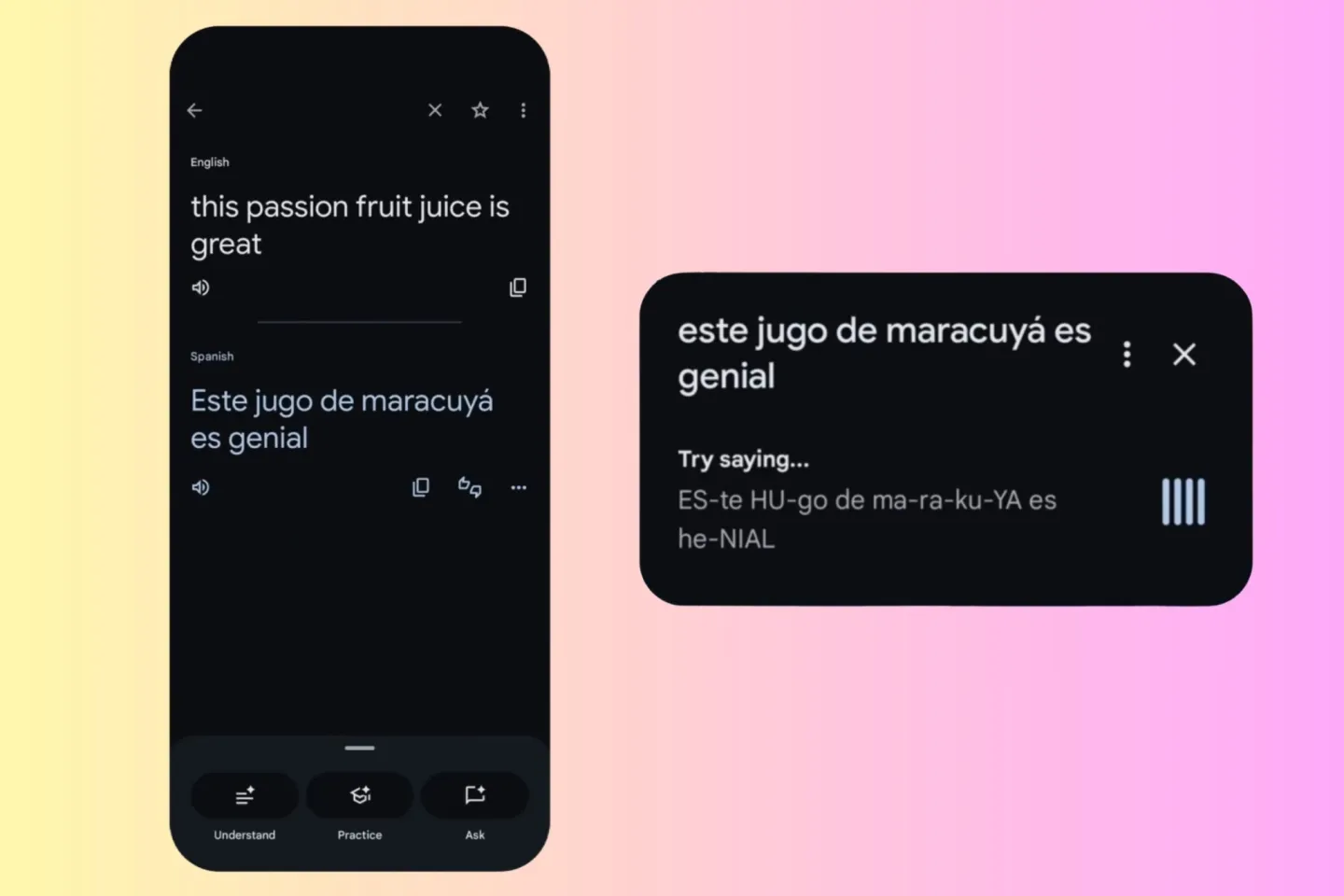
This function will carefully break down the user's pronunciation and present it in the form of phonetic symbol prompts close to Pinyin style, helping learners understand the correct pronunciation more intuitively, thereby "giving you a chance to truly practice correctly." This design is considered to have certain similarities in experience with the pronunciation practice module in the language learning application Duolingo, both of which emphasize strengthening oral training through instant feedback.
At present, the pronunciation practice function of Google Translate has been launched on Android clients in the United States and India, supporting English, Spanish and Hindi. Google has not yet announced when the feature will be expanded to more regions, nor whether and when it will land on the iOS platform.
This update is also part of a series of activities commemorating the 20th anniversary of the launch of Google Translate. Google said that "pronunciation practice" is one of the most requested features by users. The company hopes to use the new generation of AI technology to enable translation tools to not only "understand text" but also truly help users "speak more authentically." Officially disclosed data shows that more than 1 billion users currently use Google translation services every month, and through products such as Translate, Search, Lens and Circle to Search, Google processes approximately 1 trillion words of translation each month.
With the continued development of generative AI and speech recognition technology, more and more language learning and translation applications are beginning to incorporate "pronunciation correction" and "speaking practice" into their core functions. Analysts believe that Google's addition of pronunciation exercises to its translation products will not only help further consolidate its dominance in the field of multi-language tools, but also indicate that the traditional "word-reading" translation experience is accelerating its evolution towards a colloquial language closer to real communication scenarios.