The Fedora project has now officially released Fedora Linux 44, which was launched on time as previously announced, including Fedora Linux 44 Workstation equipped with the Gnome desktop environment, and Fedora KDE Plasma Desktop 44 using the KDE Plasma desktop. Both have brought significant updates in user-visible functions and underlying technology.
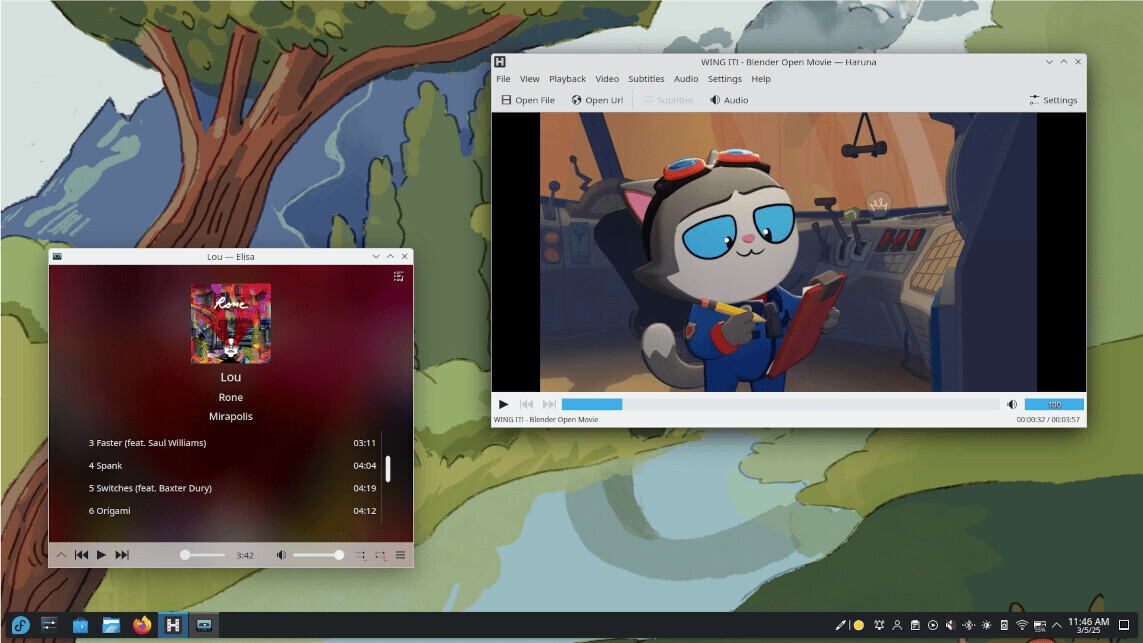
According to the previous update delay arrangement, Fedora 44 "debuted" as scheduled, and released stable versions for users of the two major desktop environments, Gnome and KDE. Fedora Linux 44 Workstation ships with the new Gnome 50 by default, while Fedora KDE Plasma Desktop 44 integrates KDE Plasma 6.6, bringing a series of improvements to desktop interface details, usability, performance and accessibility. Users can now download the new version of the image through the Fedora official website. Existing users can also perform in-place upgrades by referring to the official upgrade guide. The complete release notes of Fedora 44 have been synchronized on the documentation site.
In addition to the desktop environment upgrade, Fedora Linux 44 itself has also completed a number of important adjustments, one of which is enabling the NTSync driver by default. This new component, combined with the latest versions of Proton and Wine, can bring significant performance and stability improvements in some game scenarios. The relevant test results have been disclosed in the community before. This change is expected to be a big selling point for users who want a Linux+Proton gaming experience on Fedora.
In terms of KDE, all Fedora KDE versions will have a unified default "out-of-box experience" in the future, with a consistent design from installation boot to initial configuration process. This will help hardware manufacturers pre-install Fedora KDE, provide end users with a more coherent welcome interface and setup wizard, and also help reduce the learning cost for new users when they first get started. At the same time, the Fedora Atomic Desktops array has officially removed support for the FUSE2 library. This change may have a practical impact on users who rely on AppImage format applications. Relevant users need to pay attention to compatibility issues before upgrading.
In terms of graphics stack, both Fedora Workstation and Fedora KDE Plasma Desktop continue to use Wayland as the default session. It is worth noting that Gnome 50 has completely removed X11 compatibility code in Fedora Workstation; although users can still install X11 components separately, it is no longer officially supported and may cause functionality or stability issues. For users who still rely on X11 for legacy workflows, this means carefully evaluating upgrade steps or looking for alternatives.
Fedora KDE Plasma Desktop 44 also switches the default login component to KDE Plasma Login Manager. For users who have been using the old version of the login manager for a long time, the new interface may be a little unfamiliar in interaction, and the current version has a relatively small number of features, but the official obviously hopes to further unify and nativeize the KDE experience through this adjustment. Overall, while introducing Gnome 50 and KDE Plasma 6.6, Fedora Linux 44 continues to move in the direction of optimizing modern desktop and gaming experiences through measures such as NTSync, Wayland default policy adjustments, and component stack streamlining.
learn more:
https://fedoramagazine.org/announcing-fedora-linux-44/