Dell and Lenovo recently officially joined the Linux Vendor Firmware Service (LVFS) sponsorship ranks and became senior sponsors of the project, with annual donations exceeding US$100,000 to ensure long-term sustainable operation of the project and support subsequent feature development. L
VFS has gradually become popular in the Linux ecosystem in recent years. With the expansion of applications of distributions such as Bazzite and SteamOS in the field of simplified device operating systems such as game consoles, and the launch of "Linux-first" complete machine products by manufacturers such as Framework and System76, the importance of providing users with unified and convenient firmware update capabilities through LVFS has become increasingly prominent.
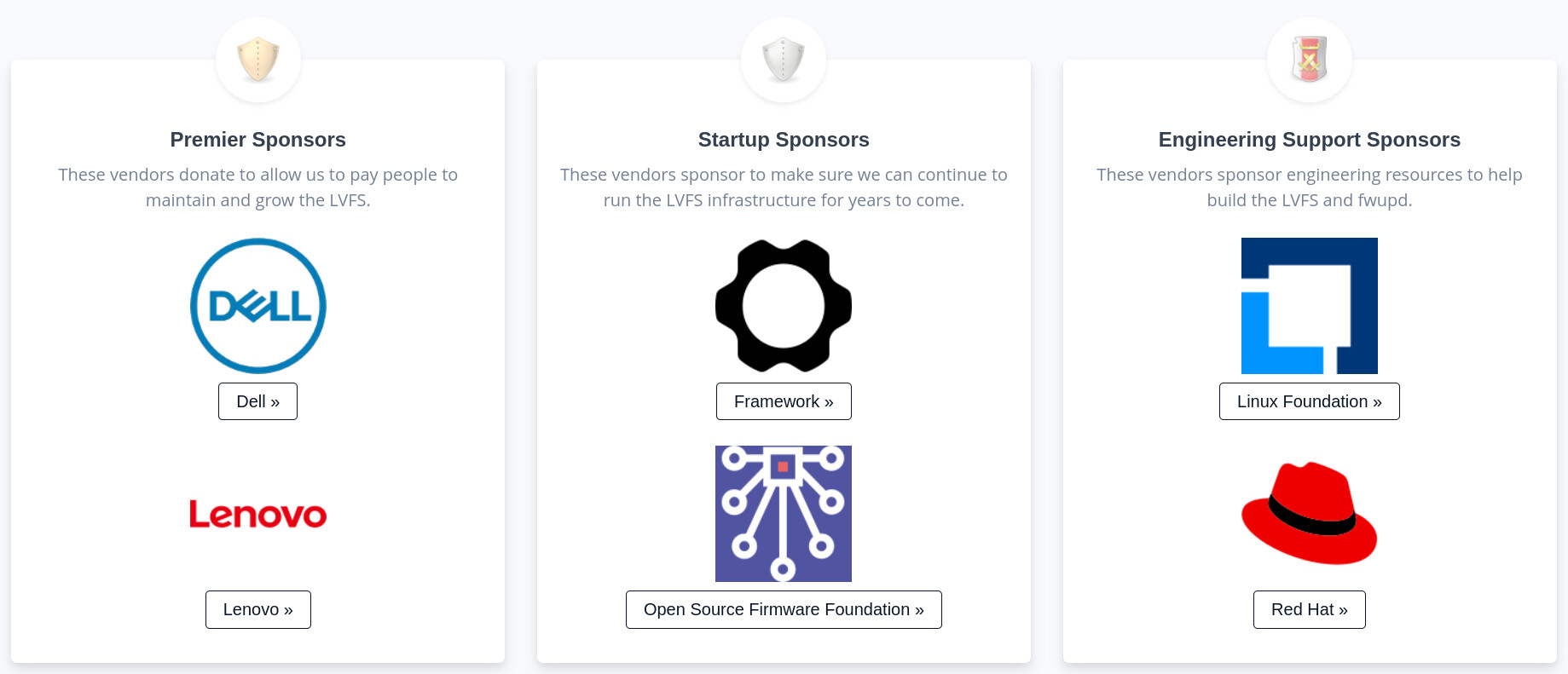
The report pointed out that before becoming senior sponsors, Dell and Lenovo had already opened LVFS-based firmware update support on some devices. Now with deeper financial and technical investment, the two companies will collaborate more closely with the LVFS development team. According to Gnome developer and maintainer Richard Hughes, premium sponsorship status not only means a stable source of funding, but also allows manufacturers to obtain a series of additional permissions, including implementing customized functions for their own products, providing up to 1,500 firmware uploads and 10 million firmware download quotas per month, etc., thereby efficiently distributing firmware updates to Linux users around the world.
LVFS has previously announced a detailed sustainable development plan, hoping to increase the total annual donation by an additional US$400,000 on the existing basis by attracting more donors, provide a stable budget for development investment, and reserve an annual operating cost of US$30,000 for hosting services. The addition of Dell and Lenovo means that LVFS is one step closer to this funding goal, and also sends a positive signal that large PC manufacturers are willing to invest in the Linux firmware ecosystem for the long term.
At the practical application level, the combination of LVFS and components such as fwupd allows Linux distributions to uniformly manage firmware updates for multiple types of hardware such as BIOS, motherboards, docking stations, and monitors in a graphical interface or command line, preventing users from relying on the independent update tools of each manufacturer. For game consoles pre-installed with Bazzite, SteamOS and other systems, as well as branded devices such as Framework and System76 with Linux pre-installed at the factory, a stable, unified and verifiable firmware update channel not only helps improve security and reliability, but also provides infrastructure for subsequent functional improvements and compatibility optimization.
As more and more OEM manufacturers embrace the Linux market, the role of LVFS has gradually shifted from a community project to an indispensable basic service platform in the entire PC industry chain. The entry of Dell and Lenovo as senior sponsors is not only a recognition of LVFS's past technical achievements and influence, but also seen as another step for the two major brands in the layout of enterprise-level and personal-level Linux devices. In the future, it is not ruled out that more hardware manufacturers will follow up and join this firmware update platform ecosystem.