Instagram today launched a new feature called Instants, as well as a standalone app of the same name, which focuses on "sharing the moment with more spontaneous, less over-retouched photos." Officials position it as an instant sharing method for friends: the photo is temporarily visible to the recipient, but will be retained in the user's personal archive for up to one year, and can be shared again in the limited-time dynamic feed as a retrospective content in the future.
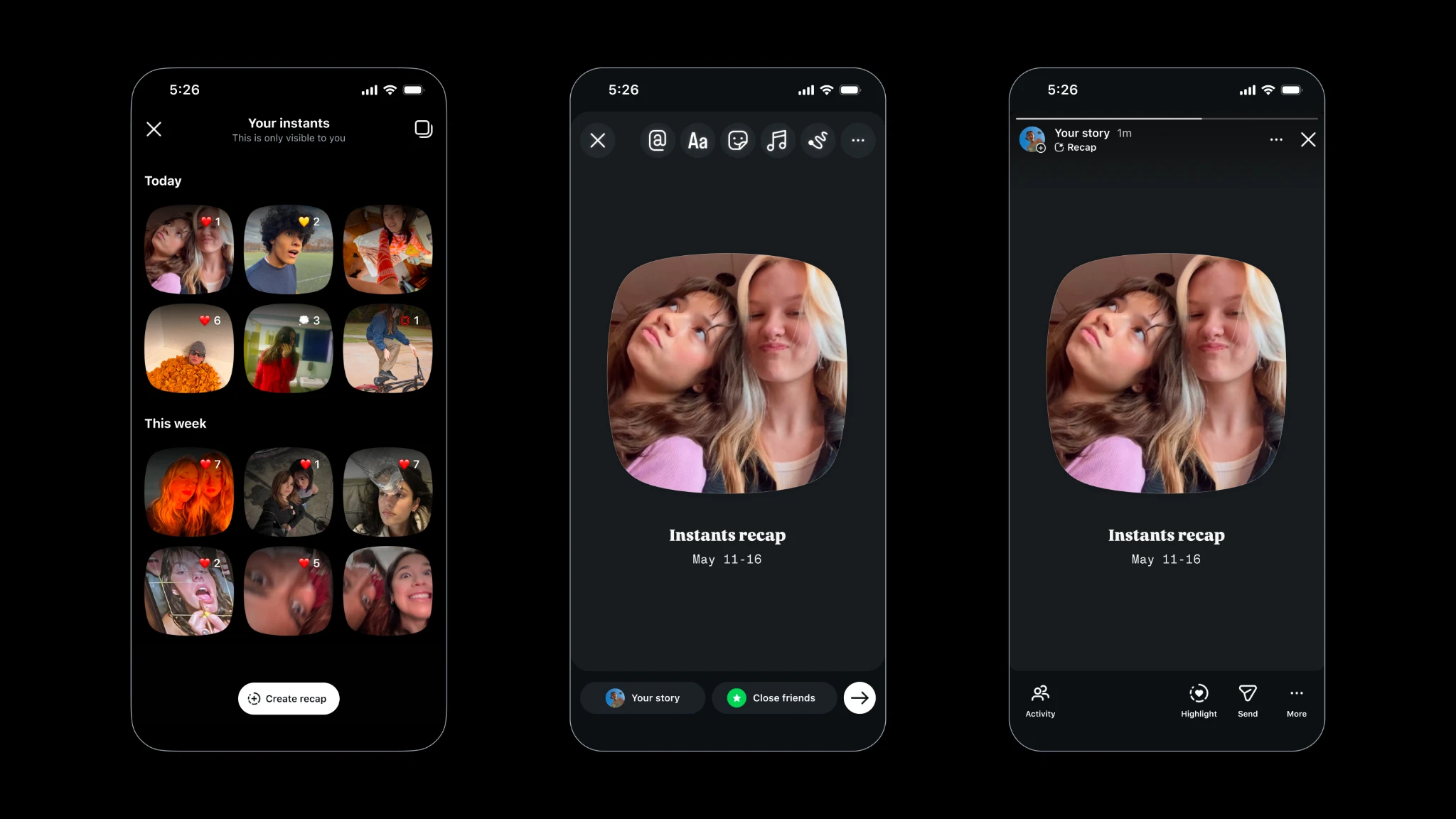
Instants allows friends to react and reply to content, and all replies will go directly to the Instagram direct message inbox. In order to facilitate shooting and sending, Meta has also released the Instants "companion application", which provides a faster camera access. It is currently being pushed to some countries and regions on iOS and Android platforms.
From a morphological point of view, Instants is actually a "burn after reading" photo sharing tool for specific groups of people. It supports sending to close friends or fans who follow each other. Once the other party has finished viewing, the photo will disappear from their view. In the Instagram private message interface, Instants are fixed in the lower right corner in the form of a stack of thumbnails, making it easy for users to view and use them at any time.
Users can add text descriptions when sharing Instants, and the text will be displayed first, which is different from the presentation logic of limited-time dynamic updates. Unlike Stories, Instants does not support further editing and beautification, emphasizing the immediacy and original state of the content. Users can flexibly choose who to share with before sending, and if they regret it, they can quickly withdraw the content they just sent through the "Withdraw" button.
In the upper right corner of the Instants interface, users can enter their personal Instants archive, which is only visible to them and is used to centrally manage the moment photos shared in the past period. Officials stated that this move aims to balance the need for “short-term visible” social experiences with the need for long-term preservation of personal digital memories.