British scholars recently discovered a previously unnoticed parchment fragment in medieval documents at the British Library, providing a rare first-hand record of the true plight of the few survivors of the Black Death epidemic in the 14th century. The fragment, inserted into the account books of Ramsay Abbey's Manor of Worboys, Huntingdonshire, details the length of time several peasants were unable to serve on the estate due to the plague, listing the names of survivors and the approximate length of time their employer determined they would need to recover.
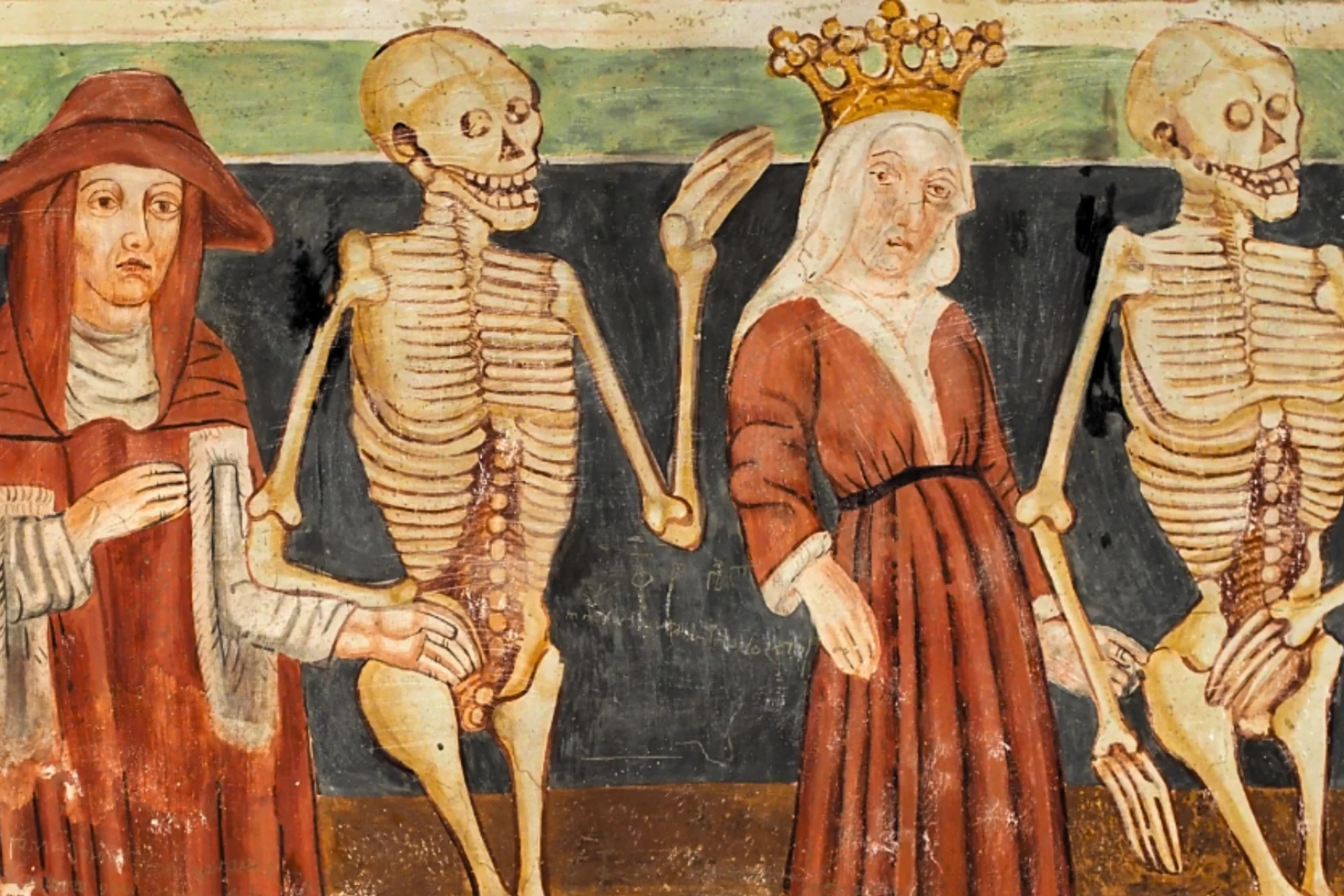
According to an analysis by researchers in their latest paper, the list involves 22 tenants who were most likely infected with the Black Death and who eventually recovered and returned to work after suffering on their beds for weeks. The Black Death was one of the deadliest epidemics in human history. It is generally estimated that about one-third to two-thirds of the European population died during the pandemic from 1346 to 1353. Therefore, historical research has long focused on death and population decline, while leaving almost no mention of "people who contracted the disease but survived." This newly unearthed list of survivors fills a critical gap in this period of history, providing a concrete look at how medieval societies dealt with chronic illness and recovery.
Medieval records had long acknowledged the low but real possibility of survival from the plague, and some chroniclers even attempted to distinguish the odds of life and death corresponding to different symptoms. Geoffrey Le Baker, a clerk at Swinbrooke in Oxfordshire, wrote shortly after the Black Death that some patients suddenly developed hard, dry boils that produced little fluid when cut open. A considerable number of these people could survive by draining pus or suffering from long-term illness; while another group of patients had tiny black pustules all over their bodies, and "almost no one" among them recovered. However, documents such as those at Warboys Manor that accurately record survivors by name and duration of absence are extremely rare in existing historical sources.
From the end of April to the beginning of August 1349, the monks of Ramsey Abbey listed a group of manor farmers who were too ill to perform their labor obligations, and counted the number of weeks they were absent from work one by one. Records show that the same plague affected different individuals significantly differently: Henry Brown, who recovered the fastest, returned to the fields after missing only a week, while John Delworth and Agnes Mold were absent for a full nine weeks due to illness before returning to work. Statistics show that the average length of illness for the 22 people was between three and four weeks, and about three-quarters of them returned to work in less than a month, which was far shorter than the maximum sick leave limit of one year and one day that they could have enjoyed under the system.
This list of survivors also reveals the subtle role of social class in the epidemic. Most of the tenants on the list control a larger share of land and are considered to be a group with relatively good living conditions and economic status in the manor. The researchers note that this bias may mean that people with higher living standards have an advantage in fending off secondary infections or complications and thus recover more easily from the Black Death, while poor farmers and marginalized groups are more likely to slump and "disappear" from the record. Of the 22 people on the list, 19 were men, but scholars believe this was more a reflection of gender bias in medieval manorial land holdings and not enough to indicate that the plague was gender-selective.
From the perspective of estate administration, this document also shows the huge impact of the epidemic on the labor force. Researchers compared the account books of the same manor from the 1340s and found that in the summer of a "normal year", only two or three cases of absence due to illness were usually recorded, but in 1349, 22 working peasants took sick leave during the 13 weeks, which is equivalent to ten times the usual number. To put it more intuitively, this group of patients took up a total of 91 "labor weeks", and all of this occurred in just one quarter. This meant that the total number of dead, dying, and chronically ill in the fields, on the estates, and in the villages was likely to far exceed the few who were still healthy enough to work.
There are many direct descriptions of the "labor vacuum" in medieval documents. Some chroniclers, looking back on the Black Death, wrote that "there was such a shortage of servants and labor that almost no one knew what to do." Combined with high mortality, unprecedented large-scale disease, and bad weather, the harvests of 1349 and 1350 were later described as "the worst harvests in England since the Middle Ages" and were even considered worse than the harvests that caused the Great Famine from 1315 to 1317. The newly discovered Worboys List complements this macro narrative from a micro level, allowing people to see how specific villages lost a large number of laborers in a short period of time, but were still forced to maintain basic production order.
The research team believes that the value of this fragment lies in rewriting "illness and recovery" into the history of the Black Death. In the past, when people talked about the Black Death, they often only saw cemeteries, mass graves and plummeting population curves. However, this list reminds us that beyond the shadow of death, there are also a large number of people with long-term high fever, swollen lymph nodes, and vomiting blood but finally struggling to survive. Documents document that typical symptoms of these farmers included painful swollen lymph nodes in the groin and neck (so-called "lymphadenomas"), recurring fevers, and profuse vomiting of blood, but they gradually regained their strength within a few weeks and returned to their fields and estates to continue working. According to researchers, this resilience to resume production and maintain the operation of village communities during an "apocalyptic epidemic" is a key clue to understanding how medieval society survived the Black Death.
The author of the article, a scholar of medieval history at Durham University, pointed out that this archival discovery shows that the Black Death is not a single "death story", but a multi-layered social experience including death, disease, recovery and adaptation. Through these names and week numbers preserved in just a few lines of parchment, modern people can see the daily reality of ordinary farmers struggling to travel between their sick beds and the land during the great plague nearly seven hundred years ago.