A new study uses protein evidence preserved in ancient tooth enamel to show that genetic exchanges between early human species were far more frequent than previously thought. Homo erectus, who lived in East Asia, may have indirectly passed some genetic material to today's Southeast Asian and Oceanian populations by interbreeding with Denisovans.
For much of the 20th century, human origins were often compared to a neatly branched "evolutionary tree": each of our closest relatives was an independent branch, and eventually only Homo sapiens, who appeared in Africa, became the "backbone" that continues to this day, replacing all older human types after leaving Africa. In the past, ancient humans such as Neanderthals and Homo erectus were often regarded as "evolutionary dead ends" and were considered to have left no descendants among modern humans. However, in the thirty years since the author left the university, this "neat replacement theory" has been completely overturned in the face of new evidence from molecular biology and paleogenetics.
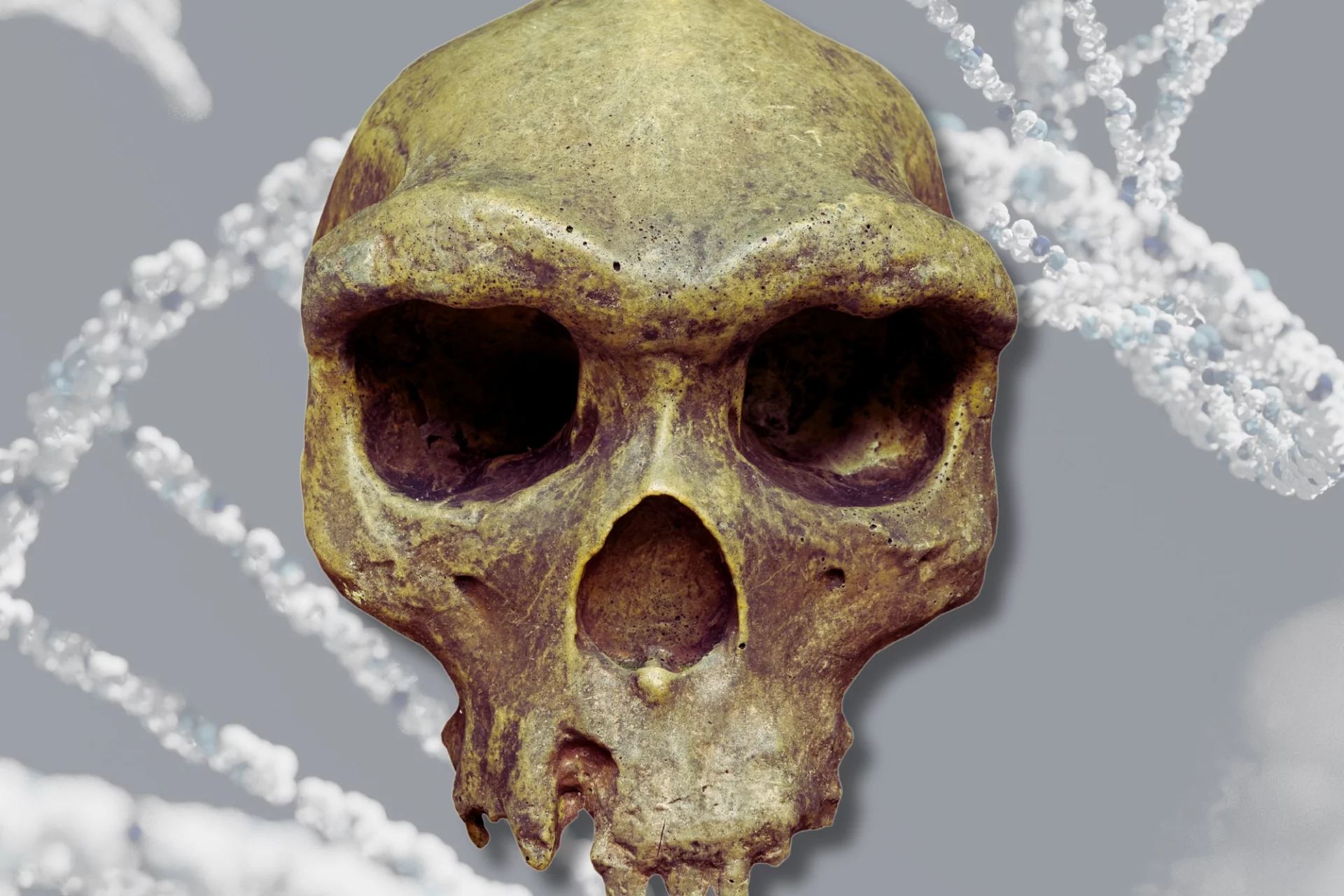
A paper published in Nature this week by the team of paleogeneticist Fu Qiaomei of the Chinese Academy of Sciences once again challenges this linear evolution narrative. The research team extracted ancient proteins from the fossil teeth of Homo erectus about 400,000 years ago, and obtained effective biological information that can still be used when the DNA has been completely degraded, which was almost unimaginable a decade ago. These dental specimens come from three locations in China - Zhoukoudian (the famous early "Peking Man" site), Hexian and Sunjiadong, and are all believed to belong to Homo erectus individuals.
Homo erectus is widely regarded as the first member of the hominid family to leave Africa. Evidence shows that this species migrated into Eurasia nearly two million years ago, making it one of the most geographically distributed human ancestors to date. New research uses protein "fingerprints" to suggest that genetic exchange occurred between Homo erectus and Denisovans in East Asia about 400,000 years ago, most likely through hybridization. Further analysis showed that some traces of this genetic contribution can still be detected today in the genomes of populations in the Philippines, Papua New Guinea, and more broadly across Southeast Asia.
The key material on which the research is based is enamel protein. Tooth enamel is the hardest tissue in the human body, and the proteins in it can still be partially preserved over a very long time scale, even if the DNA has long been degraded to the point that it cannot be extracted. The team found the same previously unknown amino acid variant in six tooth samples - a very small but stable molecular marker that changes just one "letter" in the protein sequence and has never appeared in any other known ancient humans or living groups. This unique variant aggregates these Homo erectus individuals in East Asia into a clear independent group, and also provides strong molecular evidence for the long-standing debate about whether Homo erectus is Homo erectus in Hexian.
In addition to this "unique signature," a second amino acid variant appears in the enamel protein that is not unique to Homo erectus. The study found that the same variant also exists in Denisovan material from the Denisovan Cave in Siberia. This ancient group is regarded as a "mysterious branch of ancient humans" that is different from Homo sapiens. The distribution of the corresponding genetic variants in modern populations now shows obvious regional differences: the detection frequency in the Philippine population is about 21%, while in the Indian population it is about 1%, which is highly consistent with the researchers' expectations based on the distribution of Denisovan genetic components.
Based on these data, the research team believes that the most reasonable explanation is that the Homo erectus group in East Asia passed this variant to the Denisovans through interbreeding; then, the Denisovans carrying the variant had genetic exchanges with the ancestors of modern humans in a later period, and "introduced" it into the gene pool of related populations in Southeast Asia and Oceania. This cross-species transmission of genetic material is called "introgression" in evolutionary biology, reflecting that the boundaries between species are not absolutely closed during the long process of evolution. Once considered a "dead end", the Homo erectus lineage now appears to have left a small but reliably identifiable molecular "clue" in the modern human genome, linking a "Peking Man" tooth to Asian populations hundreds of thousands of years later.
The significance of this research goes far beyond confirming the origin of a specific variant or identifying genetic fragments in certain populations. Its more important revelation is that interbreeding among ancient humans is not a rare exception but the norm. Genomic studies in recent years have shown evidence of admixture in nearly every major ancient human lineage for which we have genomic data. Modern humans outside Africa generally carry about 2% Neanderthal DNA, while Papuans and Aboriginal Australians have an additional 2% to 5% Denisovan genetic content.
In the genomes of West African populations, scientists have also discovered some ancient genetic signals that cannot be classified, which are believed to come from "unknown ancient populations" that have not been clearly matched by fossils. The latest protein research further strengthens another inference: Denisovans themselves also received gene flow from older and more "deviated" lineages than themselves, most likely from Homo erectus or closely related groups. A review published in the "American Journal of Physical Anthropology" in 2019 found that at least three different "Denisovan-like" genetic introgression events occurred in the ancestors of Southeast Asian and Oceanian populations, some of which occurred even close to 20,000 years ago, and the time span is far longer than previously thought.
This accumulated evidence paints a very different picture from a "neatly branching" evolutionary tree, and more like a genetic network that has been continuously intertwined over time. Our genome today is not a "pure lineage" that extends in one direction from Africa and has never been interrupted, but a mosaic "spliced" by multiple ancient human groups. Each group formed unique adaptations in their respective regional environments, and then "contributed" some advantageous variants to later generations during the hybridization process. For example, some Denisovan-derived variants in the Papuan genome are associated with the regulation of immune function and are thought to be potentially involved in shaping how they respond to specific pathogens.
As for the Homo erectus-derived variant identified this time, its specific functional significance is currently unclear, and this question still needs to be answered by subsequent research. However, judging from the multiple variants spread through genetic introgression in the past, they are often related to adaptation to new environments, such as high altitude tolerance, immune defense, and even skin and metabolic characteristics. Therefore, the scientific community speculates that the reason why this Homo erectus variant was preserved in later generations is probably not without a biological "role", but in some way involved in the process of human adaptation to the local environment.
Even more fascinating is that this work provides new clues and tools for those "ghost people" that we have not yet been able to directly study. Fossil evidence shows that Homo erectus may have survived in Indonesia until about 100,000 years ago; the "hobbits" on Flores, Homo floresiensis, still existed when modern humans arrived; and Homo Luzon on Luzon Island is another independent human lineage. So far, none of these groups has left any DNA available for analysis, and even before this study, no molecular-level information about them was available.
Were these island populations also to some extent "absorbed" into the modern human populations that arrived later, becoming extremely faint or even unresolved components of today's genomes? In the past, scientists had difficulty identifying these tiny signals in complex genetic backgrounds due to relatively crude analytical tools. Now, the "proteomics" method of extracting ancient proteins from tooth enamel and conducting high-precision comparisons shows that if reliable information can be successfully obtained from Homo erectus specimens 400,000 years ago, then applying the same technology to the dental materials of Homo Flores or Homo Luzon may in the future reveal whether they have left even a tiny genetic "echo" for modern humans.
In the scientific literature, human evolution has long ceased to be simply likened to “a tree.” A more appropriate metaphor may be a "woven river": many tributaries sometimes run in parallel, sometimes separate, constantly dividing and converging with each other over a long geological time, exchanging "water flows" with each other. The latest study on the enamel protein of Homo erectus once again proves that even if some ancient human populations suddenly "disappear" in the fossil record, they are not completely extinct in a biological sense, but continue to exist in the genes of today's humans in the form of fragmented genetic memories.