Apple has recently announced a new round of accessibility feature updates in advance as usual to "warm up" the upcoming iOS 27, iPadOS 27 and macOS 27. These features are released every year around Global Accessibility Awareness Day. They are not only targeted at users of major devices such as iPhone, iPad, and Mac, but are also regarded as forward-looking signals for the core features of Apple's next-generation system.
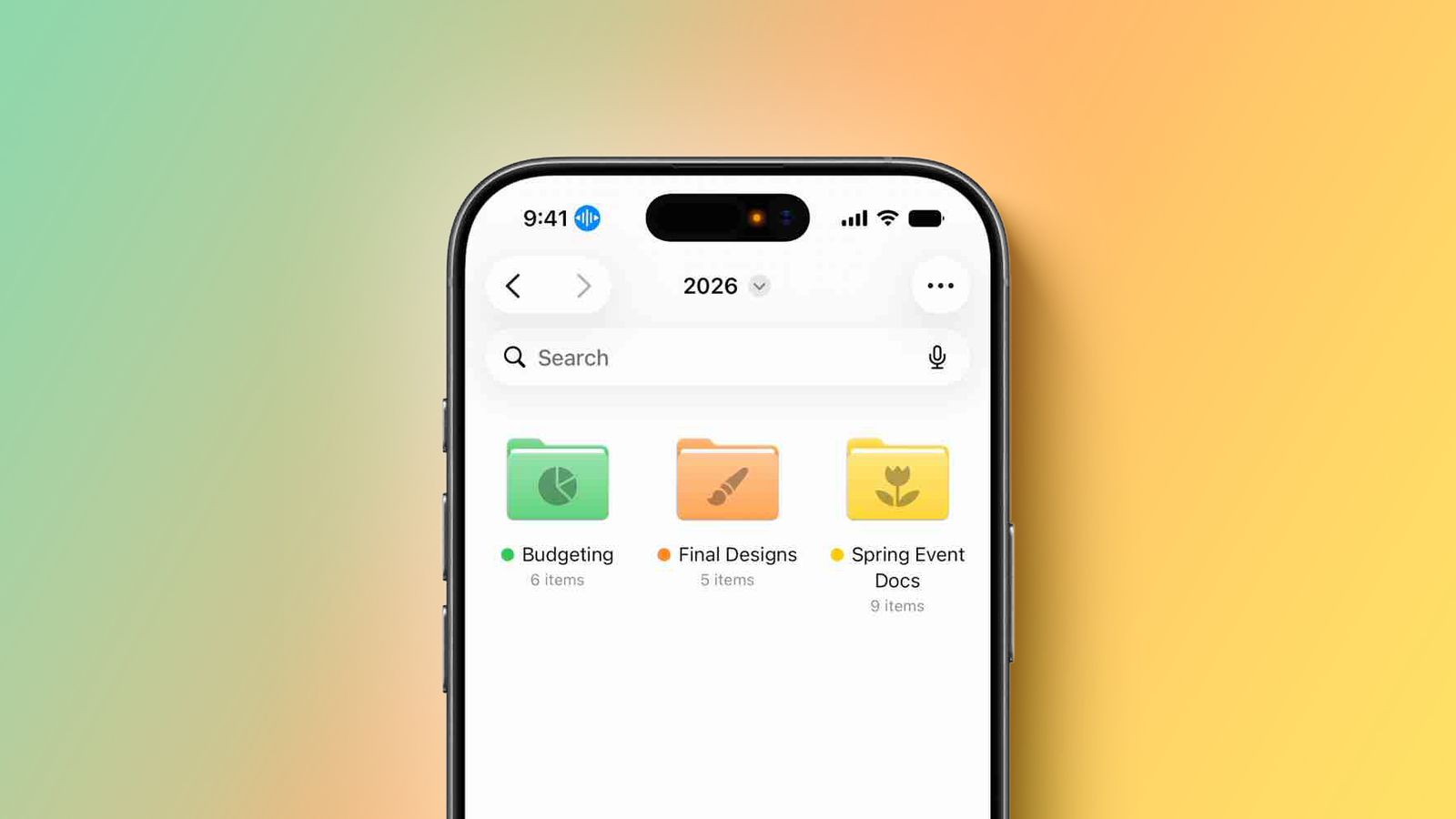
Among the many updates announced this year, the most watched one is that the “Voice Control” function on iPhone and iPad has been blessed by Apple Intelligence, officially introducing natural language support. Apple says this upgrade will make voice control "more intuitive than ever". Users no longer need to memorize the precise labels, numbers or descriptions of buttons on the interface, but can directly refer to on-screen items using natural language. For example, a user can say to the device, "Click that best restaurant guide" to navigate Apple Maps, or "Click the purple folder" to navigate the interface in the Files app.
It is generally believed that this AI-driven voice control is actually paving the way for a new generation of Siri with more "agent" capabilities. As early as WWDC in 2024, Apple had previewed a more personalized version of Siri, emphasizing that it would have "screen awareness capabilities" and be able to understand the user's natural language and perform operations directly on the current interface, which is equivalent to introducing an AI assistant agent at the system level.
Relevant demonstrations have also sparked discussions on social platforms. Some developers pointed out that if ordinary users can control the entire iPhone through natural language, then the same mechanism can also be called by the AI agent to achieve higher-level automated operations on the device. This method of combining natural language understanding, interface element recognition and system-wide control is regarded as a key step for Apple to promote generative and agent-based AI on the terminal side.
Apple has previously demonstrated usage scenarios for the new generation of Siri, including allowing users to directly ask "Mom's flight and lunch reservation arrangements", and the system will automatically extract relevant content from applications such as "Mail" and "Messages" and provide integrated responses. Later reports pointed out that this version of Siri could even complete more complex cross-application operations in the future, such as commenting on Instagram, scrolling through shopping apps, and helping users add items to their shopping carts.
Overall, the new Siri is expected to evolve significantly in the following aspects: first, it has a stronger understanding of personal context and can better correlate the user's schedule, communication records and preference information; second, it has true screen awareness and can understand the content and controls being displayed on the current interface; third, it provides deeper single-application control capabilities to achieve fine-grained operation execution. However, Apple announced in March 2025 that these capabilities, which were originally planned to come online earlier, were postponed until later this year.
According to current news, the new version of Siri will become one of the “main features” of iOS 27, iPadOS 27 and macOS 27. Apple is expected to officially announce it at WWDC 2026 on June 8 and launch the official version to the public in September. This means that the natural language upgrade of voice control is only part of the entire Siri solution, and more in-depth capabilities are expected to be unveiled at the developer conference.
In terms of hardware support, the new Siri, which is more personalized and has stronger AI capabilities, is likely to require a newer device platform. The report pointed out that some features are expected to only support iPhone 15 Pro and newer models, Macs equipped with M1 chips and newer chips, and iPads equipped with A17 Pro or M1 and higher chips. This also continues Apple’s strategy of binding high-end AI capabilities with the latest hardware computing power in recent years.
Overall, the Apple Intelligence upgrade introduced for voice control in iOS 27 not only improves the accessibility experience, but is also regarded as a key signal before the new generation of Siri is completely revamped. As WWDC 2026 approaches, the outside world is increasingly waiting to see how this "reinvented voice assistant" will implement stronger AI agent capabilities on the device side.