Just after the first five months of 2026, the number of layoffs in the global technology industry has exceeded the 100,000 mark, and judging from the trends in the past month, this trend shows no signs of abating. Based on multiple public information and third-party statistics, artificial intelligence is not the only reason, but it is becoming one of the leading factors behind this round of layoffs. Meta, which announced its high-profile "transformation into an AI-first company," became a typical case that suffered the most serious damage to the technology job market in May.
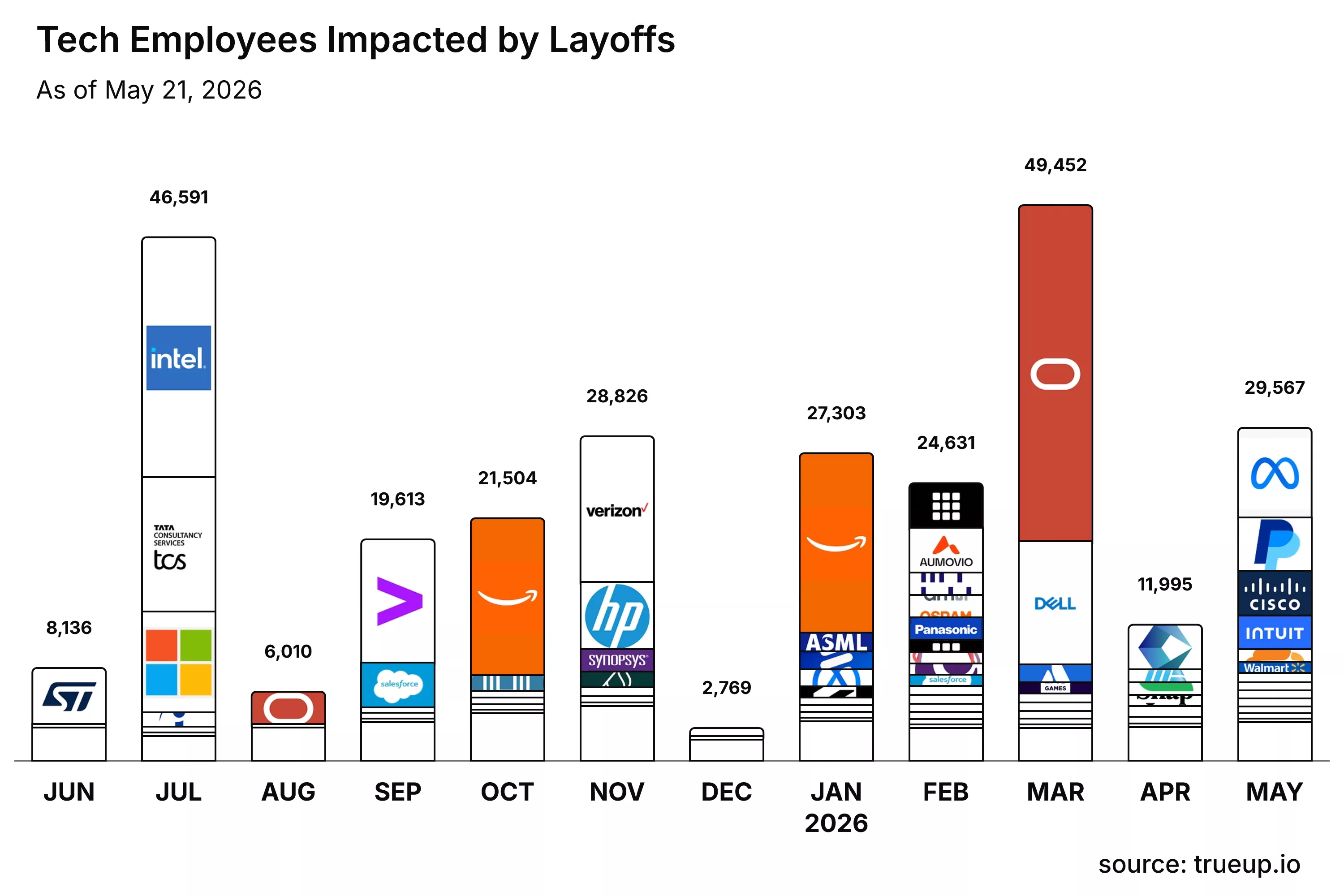
According to the summary of the human resources data platform TrueUp, except for April, the number of layoffs in the technology industry will exceed 20,000 every month in 2026, and May is expected to become one of the most serious months of layoffs in the past year. In this wave of concentrated adjustments, Meta announced that it would lay off about 8,000 employees to partially offset its huge investment in artificial intelligence data centers and related hardware. It also planned to transfer about 7,000 employees to AI-related positions. This round of actions is seen as the epitome of the current technology industry's "mobilizing manpower to make way for AI".
Meta is significantly reducing labor costs to make room for more than $100 billion in AI infrastructure and data center spending in 2026. At the same time, it was also revealed that the company trained its own AI system by monitoring employee workstation usage, a practice that some internal employees described as "extremely demoralizing." From the outside, Meta is not only using layoffs to directly cut costs, but also using more sophisticated monitoring data to strengthen its AI product and service layout.
TrueUp's chart also shows that payment company PayPal also accounts for a large proportion of the overall layoffs, but its specific timing is still unclear. Sources told the Wall Street Journal that PayPal plans to lay off about 20% of its employees in the next two to three years, and the total number of employees may be close to 4,760. Its logic is similar to Meta, which is also to make way for technology upgrades and efficiency optimization by streamlining the team.
Network equipment giant Cisco announced about 4,000 layoffs in its latest adjustment. CEO Chuck Robbins tried to downplay the negative significance of this number in his external position, emphasizing that the company is increasing investment in AI infrastructure to avoid falling behind in the new round of "AI competition." In his view, compared with passively waiting and watching, making adjustments to the human resource structure now is a "necessary price" for future competitiveness.
Finance and taxation software company Intuit also recently announced that it would lay off approximately 3,000 employees, accounting for 17% of its global workforce. The official explanation was "to optimize the organization in line with the company's transformation in the direction of AI." Interestingly, the company deliberately emphasized that the layoffs were "not because of AI," but the information it disclosed to the outside world continued to highlight its goal of reshaping its product and service lines through artificial intelligence. It is reported that the affected employees will receive approximately 16 weeks of severance compensation and other corresponding benefits.
Although AI has a high presence in this round of layoffs, industry insiders point out that the "overheated" employment structure after the large-scale recruitment expansion of technology companies in the past few years is also one of the important incentives for the current layoffs. Some analysts believe that overly optimistic business expectations coupled with changes in the macro environment have forced many companies to "downsize" to restore financial health and operational efficiency. In addition, in subdivisions such as game development, project failures and income pressure are also being transformed into new layoff pressures.
In the game industry, French studio Quantic Dream recently announced that it will lay off about 95 employees due to the failure of the multiplayer online battle game "Spellcaster Chronicles" project, and the game server is expected to be shut down on June 19. On the other hand, Bungie, which once created the "Destiny" series, was revealed to be preparing to launch a new round of large-scale layoffs after ending the development of "Destiny 2". Its June 9th update will be the last major content update for the game. Currently, "Destiny 3" has not yet been approved.
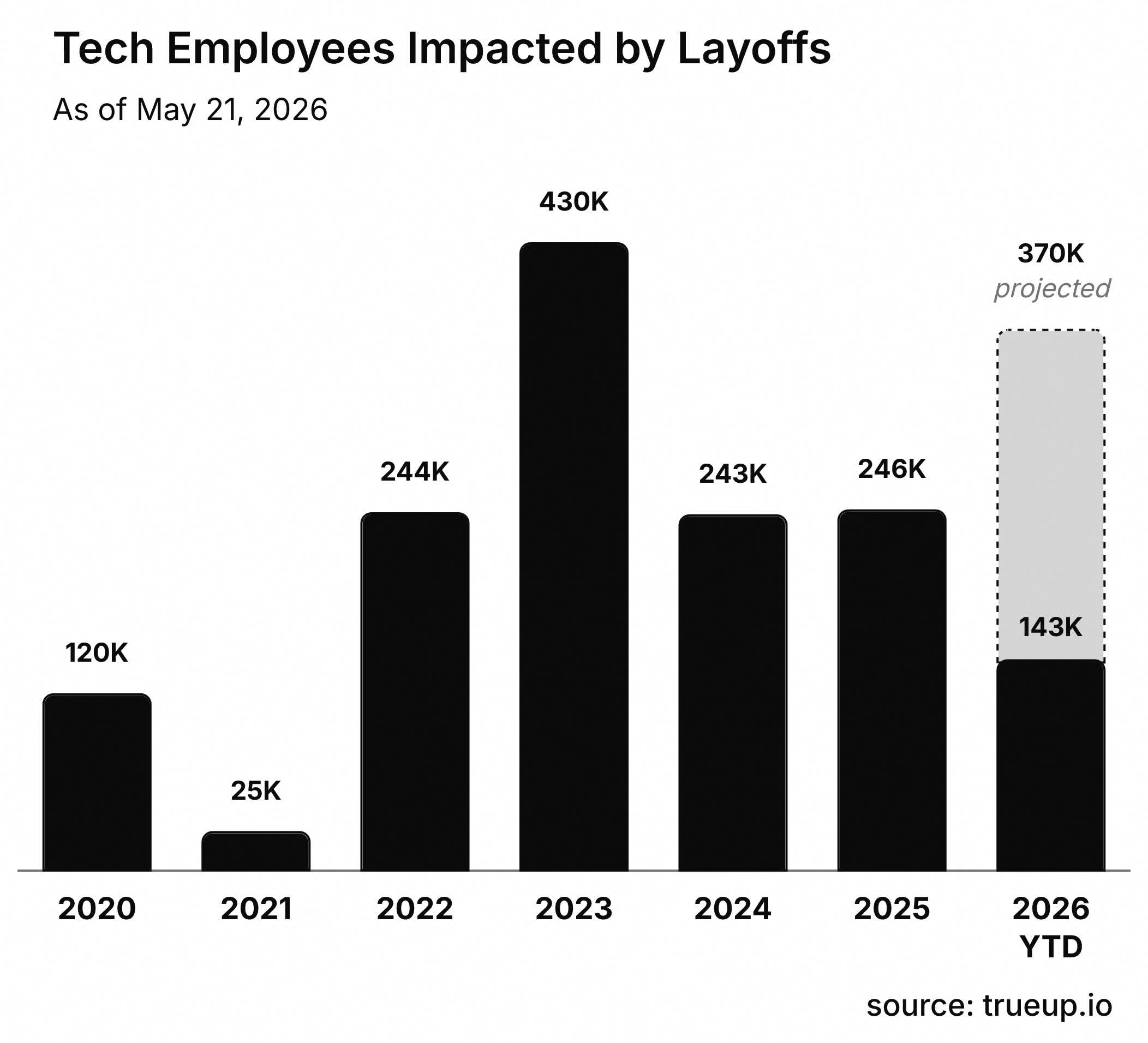
Overall, TrueUp predicts that the total number of layoffs in the technology industry may hit the level of 370,000 people in 2026, significantly higher than the previous two years. As a reference, the total number of layoffs in the technology industry in 2023 will be approximately 430,000, which means that if the current trend continues, 2026 may become one of the most volatile years in the technology labor market in recent years. Industry observers warn that as more and more companies tilt their budgets towards AI, the compression of traditional positions, the reorganization of job structures and even the reshaping of career paths may become a new normal that technology practitioners will have to face in the next few years.