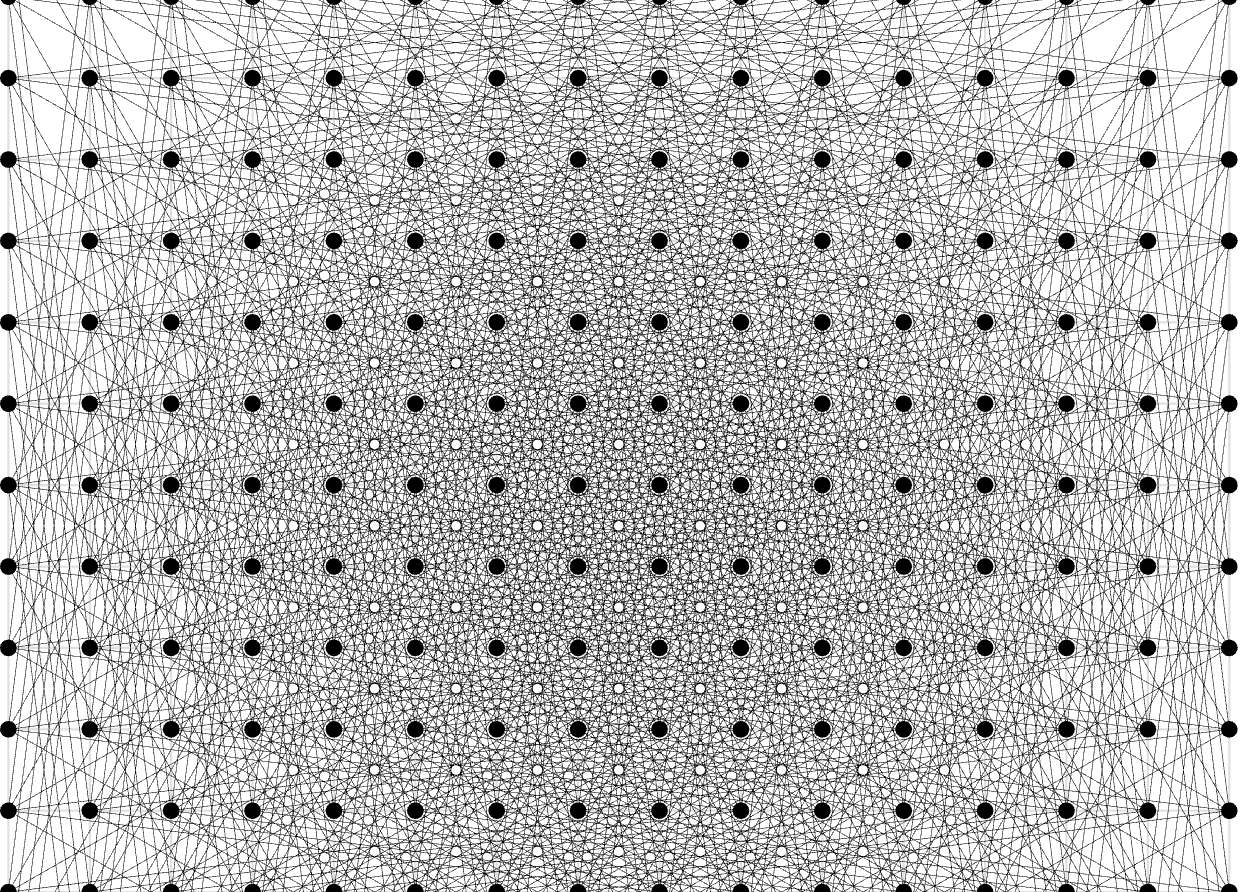
OpenAI recently stated that its latest general-purpose reasoning model independently provided an original mathematical proof, overturning an unresolved geometric conjecture proposed by the famous mathematician Paul Erdős in 1946. OpenAI said that this is the first time that artificial intelligence has independently solved a well-known public problem that is at the core of a certain field of mathematics, and many mathematicians involved in the endorsement also believe that this time is not a false alarm.
It is worth noting that this is not the first time OpenAI has made a high-profile statement on "AI overcoming the Erdos problem." About seven months ago, Kevin Weil, the company’s then vice president, posted on the social platform But someone soon pointed out that the so-called "solution" of the model actually already existed in the mathematical literature, and GPT‑5 only "looked up" from existing results rather than actually discovering a new solution. Amid ridicule from rivals including Google DeepMind CEO Demis Hassabis and Yann LeCun, Weir eventually deleted the post, which was criticized as "exaggerated."
Perhaps because of this experience, OpenAI is obviously more cautious in this release. While announcing the results, the company released a "Supplementary Commentary" document written by a number of mathematicians to demonstrate the rigor of overturning this geometric conjecture. These joint mathematicians include Noga Alon, Melanie Wood, and Thomas Bloom. Bloom maintains the "Erdos Problems" website, and criticized Weir's remarks in the previous round of controversy as "a very dramatic misleading." This time he sided with OpenAI and endorsed the new proof.
OpenAI published an article on According to OpenAI, this result comes from a general reasoning model, not a mathematical system specifically designed to solve the problem, nor is it an algorithm "custom-trained" for this geometric problem.
OpenAI believes that the significance of this result goes beyond the single proposition itself, and also reflects the improvement of the current AI system's capabilities in "long chain reasoning" and "cross-domain concept connection". By exploring structural patterns in complex spaces that human researchers have not yet attempted or systematically explored, such models are expected to lead to new discoveries in fields as diverse as biology, physics, engineering, and medicine. In other words, AI no longer just verifies existing proofs or searches existing literature, but begins to play a more active role in "proposing new structures and ideas."
Bloom said in a statement that artificial intelligence is helping humans "more fully explore the mathematical cathedral we have built together over hundreds of years." He asked: "How many unseen miracles are still waiting to be unveiled?" At a time when the discussion of "whether AI can truly make original scientific discoveries" has not yet subsided, this counterexample of geometric conjecture that has been approved after review by the mathematical community may become an important reference point for subsequent debates.