On Tuesday local time, the National Aeronautics and Space Administration (NASA) released an update on the lunar base construction route, and also awarded orders to a number of commercial aerospace companies based on the latest roadmap.
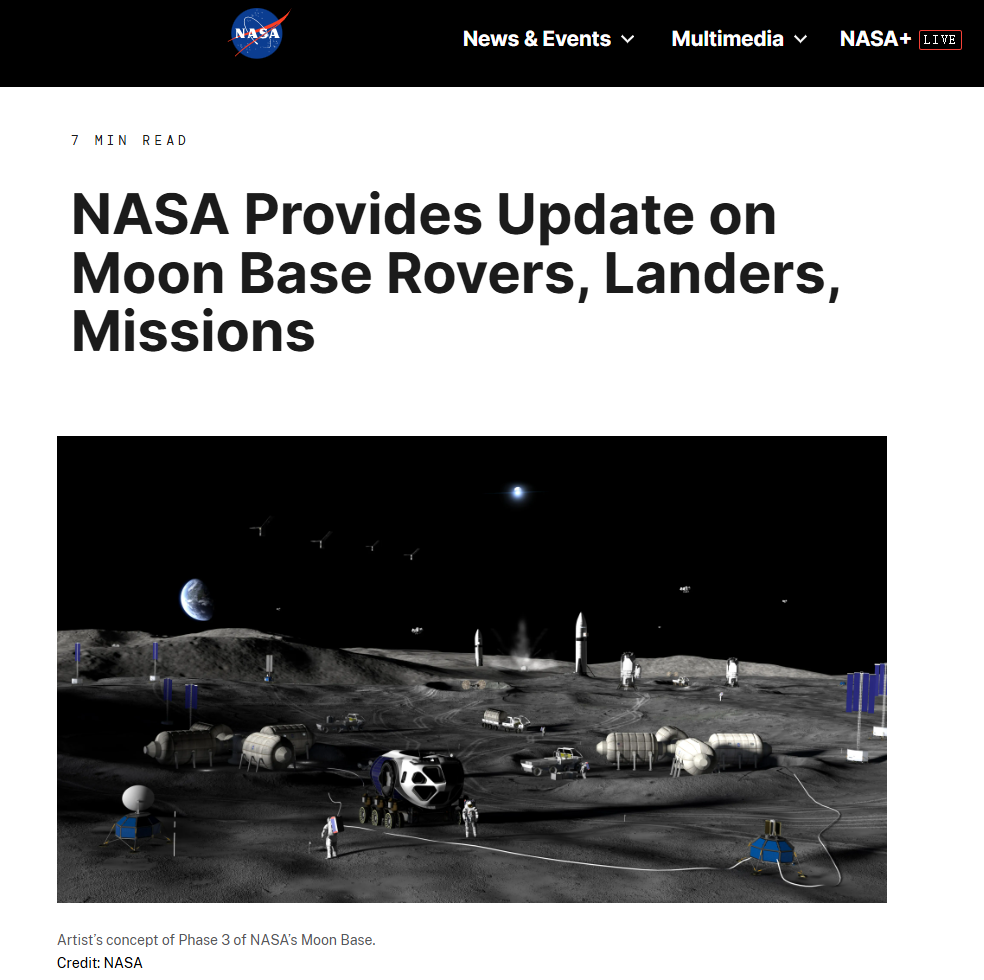
(Source: NASA)
During Tuesday’s event,NASA reveals three lunar base missions planned for this year, these tasks all belong to the first phase of NASA’s lunar base construction plan,This phase will last until 2029. Then in a second phase from 2029 to 2032, NASA will assemble semi-permanent facilities with the ultimate goal ofAchieve "continuous existence of human beings on the moon" in 2032.
Specifically, NASA’s work arrangements this year focus on two issues:How to send the payload from the earth to the moon, and how to transport it on the moon after sending it up.
in,Blue Origin will launch a lander "no earlier than the fall of 2026" to transport NASA payloads to verify the technical capabilities related to spacecraft landing.
Astrobotic's Griffin lander will then deliver more than 1,100 pounds of cargo to the moon, including Astrolab's FLIP lunar rover, which willTest the lunar surface mobility and provide reference for the operation of future Lunar Terrain Vehicle (LTV).
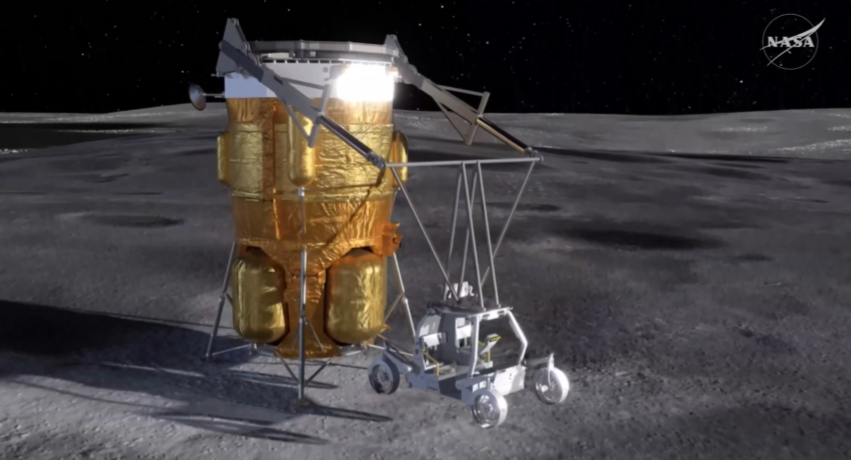
By the way, NASA announced on Tuesday a $219 million award to Astrolab to build and deliver the first Lunar Terrain Vehicle (LTV), with the ultimate goal ofDeploy manned and unmanned mobile systems to the lunar surface by 2028. Another lunar rover developer, Lunar Outpost, also received a US$220 million contract.
NASA said that deploying multiple lunar terrain vehicles in the early stages of lunar base development will help accelerate technology verification, optimize base site planning, and reduce operational risks before the implementation of the manned "Artemis" mission. This move will also help NASA assess terrain risks, transport supplies, deploy resources in advance, and improve key systems needed for long-term lunar exploration.
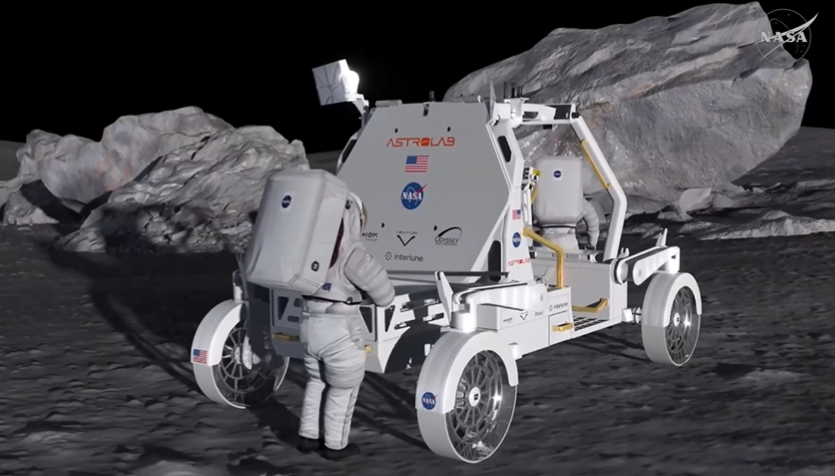
In the next 18 months, the selected manufacturers will finalize the lunar rover design, conduct manned evaluation tests, and complete airworthiness certification of flight-grade equipment to ensure actual operational capabilities. The final delivered lunar terrain vehicle will be used for tasks such as autonomous driving, terrain sorting, scientific research, technology verification, and astronaut transportation.
In order to transport these lunar rovers to the lunar south pole region, NASA also awarded Blue Origin a contract worth $188 million, with an optional execution phase worth $280.4 million, corresponding to two task orders. Whether this optional phase is started or not will depend on how well the initial phase performs.
The third task is relatively focused on scientific research.Intuitive Machine's lunar lander will carry scientific research payloads to the moon to study the "lunar vortex" on the lunar surface(lunar swirls) - brightly colored areas on the lunar surface to help scientists further understand the evolution of the lunar surface and the behavior of materials in extreme environments. The mission will also carry scientific research payloads from the European Space Agency and the Korean Academy of Aerospace and Space Sciences.
NASA also disclosed the latest progress of the "Moon Landing" mission on Tuesday.
The mission plans to deliver four drones to the lunar surface and conduct short-distance jump flights to survey landing sites that may be used by Artemis astronauts in the future.
NASA's Jet Propulsion Laboratory in Southern California is currently responsible for the design, development and prototype hardware testing of the mission. Meanwhile, NASA has selected Firefly Aerospace to build the spacecraft that will transport these drones from Earth orbit to the moon.. The mission target launch time is 2028.
These drones will land independently on the lunar surface and conduct high-resolution imaging surveys of hard-to-reach terrain over a full lunar-diurnal cycle.
Finally, NASA stated that it will announce "more robotic lunar missions" and related orders in the next few months, focusing on "lunar base" payload transportation and technology verification.
As of the close, Intuitive Machinery, which failed to win the lunar terrain vehicle project, plummeted from a price of more than 18% during the session, and finally closed down 8.89%; Firefly Aerospace closed steadily up 18.81%.