A new study puts forward a bold idea: Impact ejections from the Earth may continuously fly to the high-altitude clouds of Venus for billions of years and remain viable for a short period of time, thus providing a potential source of life in the clouds of Venus.
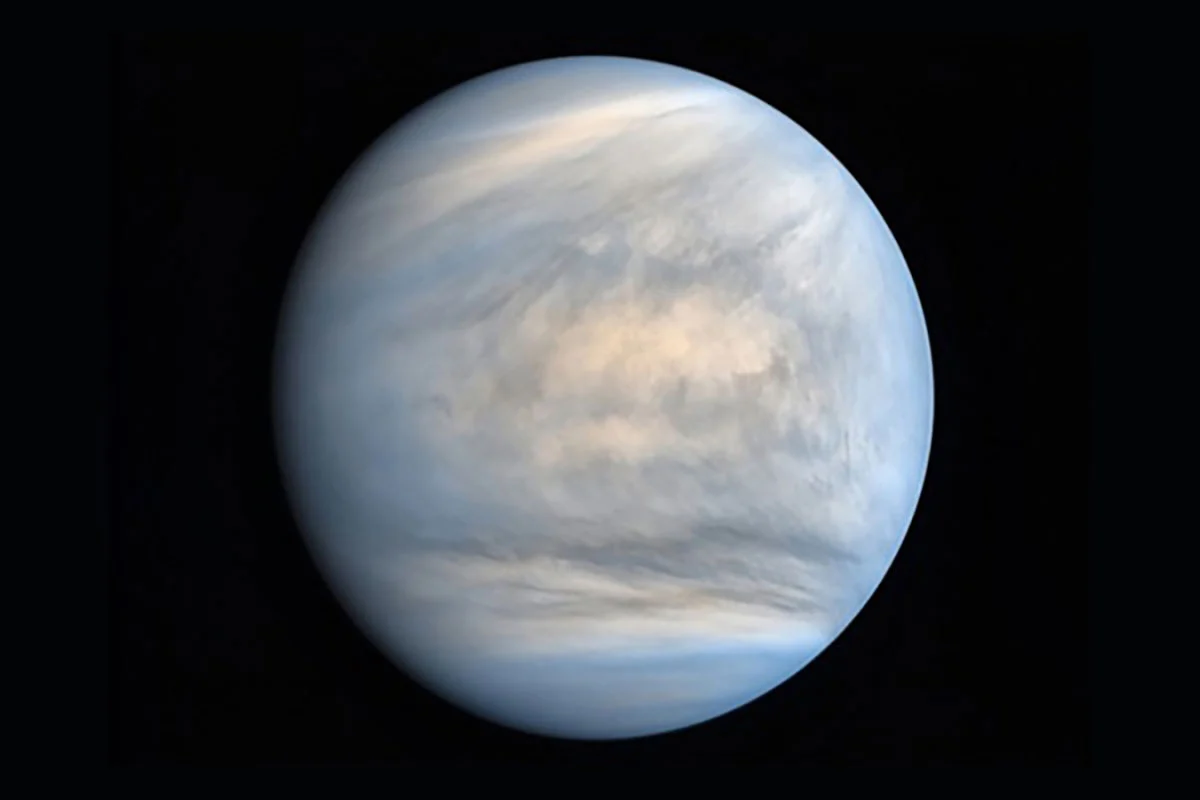
This idea is based on "panspermia" - the idea that life or its components can travel between planets on asteroids, comets and other celestial bodies. If life or organic matter has appeared on a planet, a strong enough impact can throw rocks containing organic matter into space, and some fragments can then fall to other planets. The scientific community has long been discussing whether there is a similar exchange of materials and life between Earth and Mars. In recent years, the debate about the possible existence of microorganisms in the clouds of Venus has made the material exchange between "Earth-Venus-Mars" a new focus.
At the 2026 Lunar and Planetary Science Conference held this year, research teams from the Johns Hopkins University Applied Physics Laboratory and Sandia National Laboratory conducted detailed modeling studies on this. They used the "Venus Life Equation" (VLE) framework proposed by Noam Itzenberg and others in 2021 to evaluate whether the material ejected from the Earth could allow life to "survive" in the clouds of Venus to at least a few days per century.
The idea of the "Venus Life Equation" is similar to the famous "Drake Equation", which estimates the possibility of life by decomposing the problem into the multiplication of multiple factors. Formally, this equation expresses the "likelihood of existing life on Venus" as the product of three key factors: the likelihood that life originated and established ecosystems on Venus (O), the robustness of the Venusian biosphere against environmental changes (R), and the continuity of habitable conditions on Venus that persist to this day (C). Based on this framework, the research team first examined whether organic matter, no matter where it originated, could withstand extreme environmental tests during interplanetary travel.
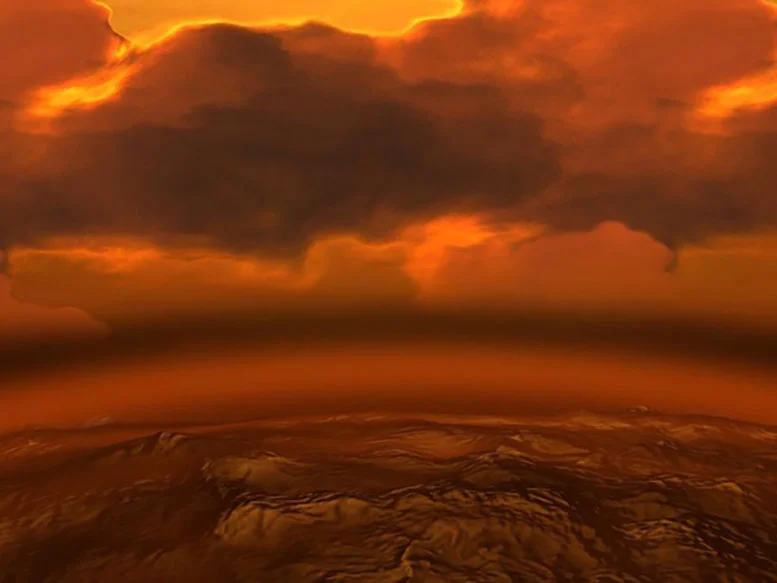
During the planetary impact and ejection process, organic matter not only has to withstand strong impacts, but also physical stresses such as high temperature and severe acceleration. Then, in interstellar or interplanetary space, they have to face the long-term effects of vacuum, extreme temperature differences, and high-intensity radiation. However, existing computer simulations and studies of Earth's meteorite samples show that some organic matter can survive ejections and interplanetary transfers. Once arriving on Venus, these organic matter must be dispersed into or on the clouds of Venus before they can be maintained in a relatively suitable environment for a period of time.
The study pointed out that the temperature and pressure in certain altitude ranges of Venus' clouds are unexpectedly close to the conditions on the Earth's surface, and are therefore considered to be potential "habitable zones" on Venus. Scholars have previously suggested that acid-resistant and radiation-resistant microorganisms may float and inhabit these clouds. In this context, the focus of new research has turned to: whether "fireball meteorites" starting from the Earth (that is, celestial bodies that enter the atmosphere at high speed and form bright fireballs) can produce enough fragments that are small enough to be suspended in the clouds after experiencing ablation, explosion and fragmentation in the atmosphere of Venus.
To this end, the research team adopted the "pancake model" which is widely used to simulate the disintegration process of meteoroids in the atmosphere. This semi-analytical model simplifies the disintegration process of high-speed incident objects in the atmosphere under the influence of drag into a series of steps of "air explosion-lateral expansion-matter spreading". After an extraterrestrial object explodes in the atmosphere (i.e., "air burst"), the huge resistance will spread its fragments horizontally, forming a "pancake-shaped" cloud composed of many fragments and even "cells" that may carry life.
Using the "pancake model" and previous research on material transport, the team estimated the total amount of material delivered to Venus' clouds by fireball meteorites from Earth and Mars. They found that over geological time scales, hundreds of billions of "cells" may have been transported from Earth to the clouds of Venus, with hundreds of billions still theoretically remaining potentially active. On a more intuitive annual scale, the best estimate given by the model is that on average about 100 "cells" are dispersed into the clouds of Venus per Earth year; the total number of "cells" transferred from the Earth to Venus over the past billion years or so may have reached about 20 billion.
The research team emphasized that its model cannot exhaust all the details of the interaction between meteoroids and the atmosphere, and there are huge uncertainties in various parameters and assumptions, which is similar to the dilemma faced by the Drake equation. However, this work shows that, at least in theory, the spread of life or organic germs between Earth and Venus through impact ejections and meteorite transport is entirely possible. In other words, if future astrobiology missions find signs of life in the clouds of Venus, the possibility that some or even all of it originated on Earth cannot be ruled out.