Unknowingly, American ALS patient Casey Harrell has been implanted with an experimental brain-computer interface for more than two years. He has output a total of 1,960,163 words and completed 183,060 conversations with the consciousness-driven device alone. He has become the first patient in the world to use a high-performance invasive voice brain-computer interface at home for a long time.
Harrell was diagnosed with ALS at the age of 42. The disease gradually took away his vocal ability. He could no longer sing to his daughter, tell his favorite jokes, or work normally, and his life world gradually collapsed.
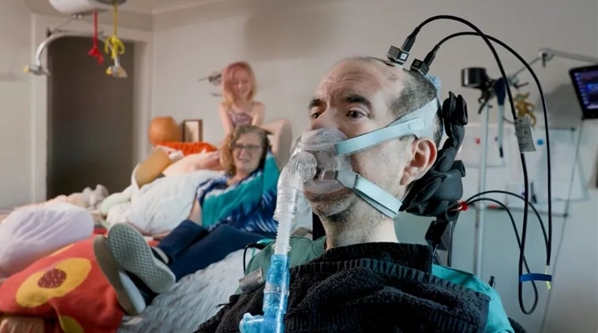
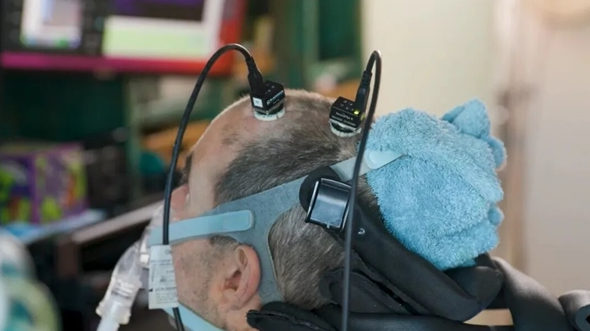
Three years after his illness, he joined the brain-computer interface research project at the University of California, Davis, as a volunteer. The scientific research code was "T15" and four miniature neural harvesting devices were implanted in his brain.
This system captures neural signals from the language area of the brain, decodes them into text by artificial intelligence, and finally converts them into speech output.
The operating threshold of the equipment is extremely low, and there is no need for scientific researchers to be present throughout the process. Harrell's wife only needs to remove the protective cover of the skull interface and connect it to the computer system on the cart to start it.
Data shows that Harrell spent more than 3,800 hours using brain-computer conversations at home in the past two years, with an average speaking speed of 56 words per minute. Although this speed is only about one-third that of ordinary people, it is a leapfrog improvement compared to the output efficiency of 5-6 words per minute of the facial recognition auxiliary device used by Hawking.
Regaining the ability to communicate has completely changed Harrell's life. He can freely chat and tell jokes with his 7-year-old daughter, and make video calls with friends. He can also continue to engage in public welfare work related to climate and disabled people's rights. He can even play interesting sound effects through the system, and his humor is even better than before he fell ill.
The core significance of this case is not only a data breakthrough, but also a verification of the long-term stability and civilian feasibility of brain-computer interface technology: it no longer requires a professional team to accompany it at all times and can be integrated into the daily scenes of ordinary families.
The research team is still continuing to optimize the algorithm, with the goal of achieving complete wirelessness and directly converting EEG signals into speech, skipping the text link.