A recent study published in the journal "Nature" points out that the rate of melting of the Antarctic ice sheet and its contribution to global sea level rise in the next 30 to 50 years is actually more predictable than the scientific community generally believed. This provides a rare and critical time window for countries to formulate medium-term sea level response and coastal planning.
The study was led by Dr. Felicity McCormack, a researcher at Australia's Monash University and project "Securing the Antarctic Environmental Future" (SAEF). It focused on assessing the reliability of existing Antarctic ice sheet numerical models in predicting ice loss in the next few decades, and what this means for determining the path of sea level rise.
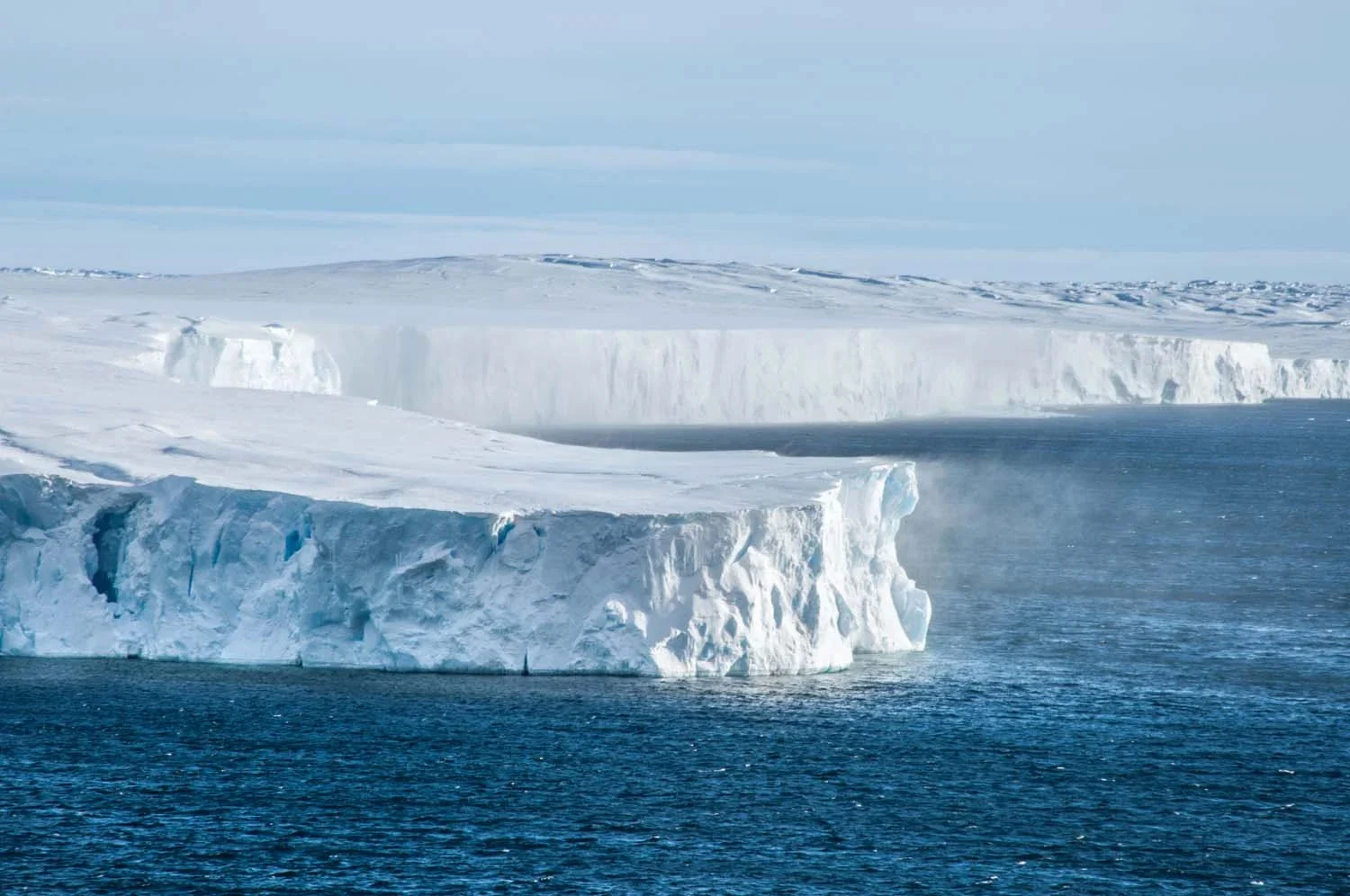
According to relevant reports from the Intergovernmental Panel on Climate Change (IPCC), under high-emission scenarios, if the Antarctic ice sheet collapses on a large scale, the cumulative rise in global sea level may exceed 2 meters by 2100. An increase of this magnitude will have far-reaching consequences: about a quarter of Australian housing may face the threat of flooding, some Pacific island countries will become uninhabitable, and hundreds of millions of people around the world will be forced to relocate. The humanitarian and economic impact it will cause may become one of the most serious crises in human history.
Despite the enormous risks, there is currently significant uncertainty about how sea levels will evolve over the course of this century, much of which stems from the difficulty in accurately predicting the future rate of melting of the Antarctic ice sheet. The IPCC has pointed out under the most pessimistic scenario that Antarctica's contribution to sea level rise is likely to nearly double in the next 30 years. However, before this study, the academic community has lacked a robust estimate of Antarctica's "actual possible contribution" in the next few decades, and this time period is precisely the most critical scale for coastal infrastructure planning and policy formulation.
The new study focuses on the core question of how much ice Antarctica will lose over the next 30 to 50 years, and whether scientists can predict these losses with enough accuracy to provide governments with a basis for decision-making. The research team systematically examined current Antarctic ice sheet models used to project future sea level rise, assessing their predictability on medium-term timescales. The results show that before the middle of this century, the overall melting trend of the Antarctic ice sheet is relatively "moderate" and stable. The results given by various mainstream ice sheet models during this period are highly consistent, making sea level rise projections in the next few decades more reliable.
Dr. McCormack said that if ice sheet models can accurately reproduce the current observed Antarctic ice loss rate, then we can maintain a high degree of confidence in the predictions given by these models in the next 30 to 50 years, and these predictions can be transformed into key references for countries to make sea level planning and policy formulation. She pointed out that accurately understanding how much and how fast sea levels will rise in the future is a prerequisite for long-term planning of coastal cities, infrastructure and communities in various countries. However, the study also found that as the end of the century approaches, the probability of some physical processes that may cause ice melt to suddenly accelerate increases, and the predictability of Antarctica decreases.
The paper specifically mentions that when ice sheets sit on bedrock below sea level, once the ice front begins to retreat, this process is often difficult to reverse, potentially triggering rapid ice loss far beyond what short-term climate forecasts indicate. It is these complex processes involving ice sheet edge stability and feedback mechanisms that create greater "deep uncertainty" about sea level rise in the second half of this century. The research team therefore emphasized that Antarctica's impact on sea level should be split into two time periods: one is relatively predictable in recent decades, and the other is a longer-term period that is deeply affected by non-linear feedbacks.
Dr. McCormack pointed out that this study provides a clear "road map" for future climate and sea level planning. By further improving the ability of ice sheet models to describe key physical processes, especially those that lead to rapid ice sheet retreat, the scientific community can hope to reduce the large uncertainties in long-term forecasts, thus increasing the confidence in judgments about sea level paths during the second half of this century. The research conclusion also shows that in the next thirty years or so, the trajectory of global sea level rise will be relatively "constrained" and easier to predict, making the current period a "golden window" to advance adaptive planning and risk management.
Professor Steven Chown, director of SAEF, emphasized that the findings did not mean that the long-term risk was mitigated, but pointed to a "time period in recent decades when action could be taken with greater certainty". He said that if countries increase investment in observation systems at this time and promote the continuous development and updating of ice sheet models, they can obtain more reliable sea level scenarios for short-term planning. In other words, every step of progress in strengthening Antarctic observation and model capabilities can be directly transformed into more operational basis for planning coastal cities and infrastructure.
The study also specifically discusses implications for the Indo-Pacific region. Professor Chown pointed out that Australia has important advantages in regional scientific research and policy cooperation, and is well-positioned to help neighboring countries, especially Pacific island countries, translate these new results into specific adaptation strategies. For many Pacific Island governments, reliable medium-term sea level forecasts are the basis for decisions on infrastructure investment, community relocation and long-term land use planning. They are also an important issue and responsibility on the regional diplomacy and cooperation agenda.
Dr McCormack added that it was crucial to establish a clear approach to systematically integrating ice sheet model predictions into sea level rise policy frameworks. When models can successfully reproduce the observed characteristics of current Antarctic ice loss, their predictions of ice volume changes in the next few decades can serve as a solid basis for planning and adaptive actions. For longer-term sea level changes, continuous improvement of models and enhanced observations are needed to continuously update and optimize policy references. The research team suggests that when considering Antarctic factors, policymakers should clearly distinguish between the relatively predictable ice loss phase in recent decades and the high uncertainty phase dominated by complex feedbacks in the long term to build a more robust decision-making framework.