Japanese toy manufacturer MegaHouse recently announced a new category of toys "Rubik's Tetris" that combines the two classic puzzle games of Tetris and Rubik's Cube. Alexei Pajitnov, the father of Tetris, and Erno Rubik, the inventor of the Rubik's Cube, participated in the debut.
This is also an official brand collaboration between the two legends in the field of game and puzzle design after their first meeting in December 2025 on their respective representative works.
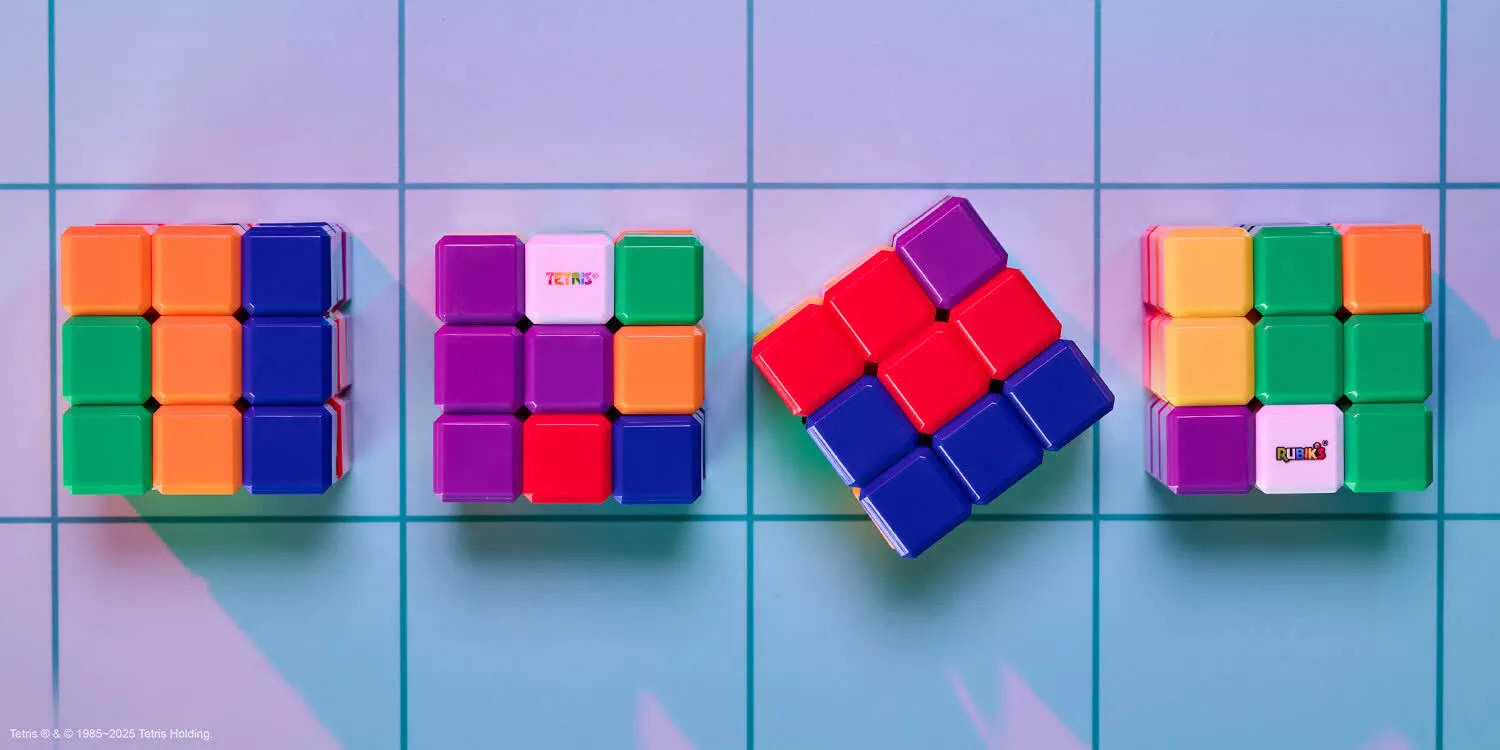
According to a video recently released by MegaHouse, the two design masters exchanged the creative background and influence of their respective works in front of the camera, and tried out this new puzzle that integrates the seven square shapes (tetromino) of Tetris into the 3×3 magic side. In the interview, Pajitnov and Rubik not only reviewed the global popularity of their respective works over the past decades, but also expressed their strong interest and recognition in this new product that combines two classic IPs.
Pajitnov revealed in the interview that if he were to choose ten representative objects for an interstellar spacecraft that would demonstrate human achievements to alien civilizations, he would not hesitate to choose the Rubik's Cube. He also admitted that he was less sure about "whether Tetris also has this symbolic meaning." In contrast, Rubik said that he never expected that the prototype of the Rubik's Cube, which was first produced 52 years ago, would still have such high popularity and cultural status more than half a century later.
Since its inception on the Soviet Union's Electronika 60 computer in the mid-1980s, Tetris has appeared on nearly every major digital platform and continues to reach new generations of players in various versions. The latest collection "Tetris Forever" brings together multiple historical versions on PC and contemporary game console platforms in the form of an interactive documentary to once again sort out the evolution of this classic game.
Similarly, the Rubik's Cube is constantly developing a variety of gameplay and forms, from variations of different sizes and shapes to designs that increase difficulty or lower the threshold in terms of structure and rules. In recent years, electronic Rubik's Cubes with built-in LCD screens have also appeared, combining traditional mechanical puzzles with level challenge mechanisms similar to those in video games, further expanding the expression space of the Rubik's Cube.
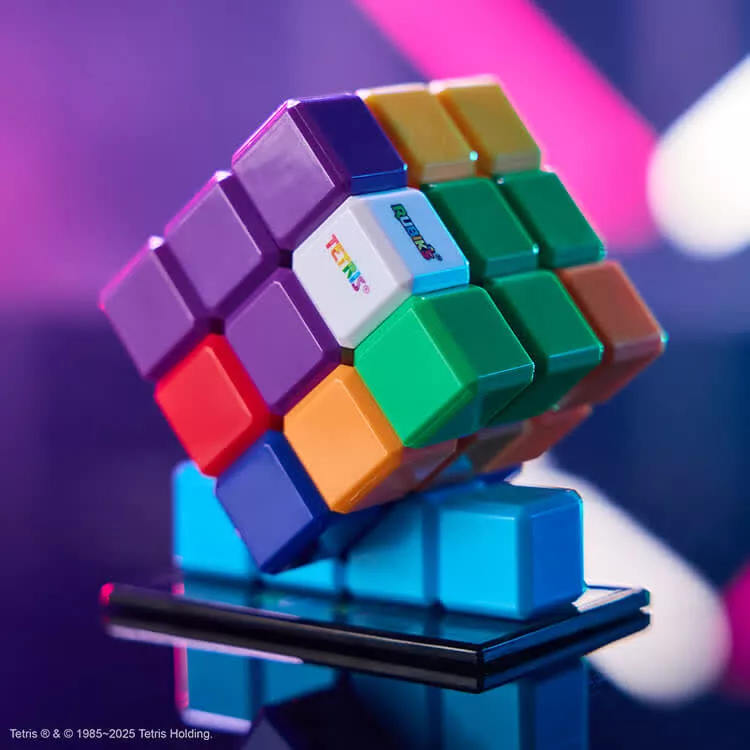
The Rubik's Tetris unveiled this time is an intuitive fusion of the core features of the two: the designer took advantage of the relationship between the 3×3 Rubik's Square and the seven block shapes of Tetris, allowing players to disrupt the blocks and rotate and restore them, so that each side can finally clearly present a different tetromino graphic. Although it is still a traditional 3×3×3 Rubik’s Cube in structure, the solution goal has changed from “single-color return to the surface” to “seven square shapes in place at the same time”, which brings a new experience in terms of visual presentation and puzzle-solving logic.
According to reports, Rubik's Tetris is currently available in multiple retail channels, priced at $15, and is aimed at users who love classic puzzle games and collect special edition toys. With the blessing of the two creators being "in the same frame" in person, this product is not only regarded as a uniquely symbolic cross-border linkage, but is also expected to further consolidate the iconic status of Tetris and Rubik's Cube in the global puzzle entertainment field.