Recently, a number of artificial intelligence startups in Asia have intensively launched a new generation of "Mythos-like" cutting-edge models in the context of the U.S. government's export ban on Anthropic, trying to fill the vacancies left by U.S. AI laboratories in the Asian market.
On Wednesday, Chinese cybersecurity company Qihoo 360 released an AI tool called “Tulongfeng” that it claims can compete head-on with Anthropic’s cybersecurity-specific model Mythos. That model and its more restricted version, the Fable 5, are currently blocked from being made available to non-U.S. users under the Trump administration's export controls because of what the U.S. considers to be extremely capable.
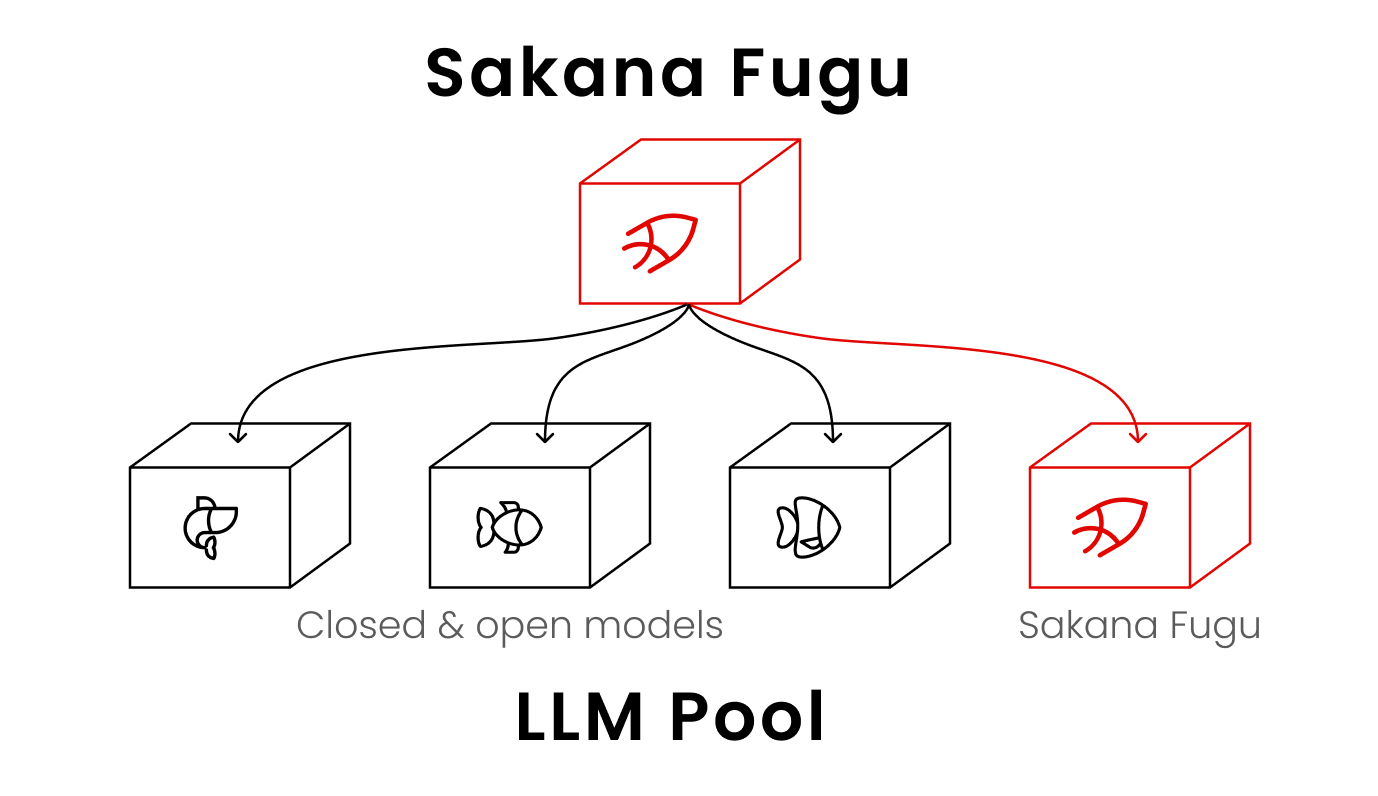
Earlier this week, Tokyo-based startup Sakana AI launched a cutting-edge model called "Fugu" that it claims "stands alongside leading models such as Anthropic's Fable 5 and Mythos previews." This model is specifically designed for AI agent scenarios and can orchestrate access to multiple models through API calls. It is positioned as a new generation of "orchestrated" infrastructure, not just a replacement for a single large model.
The timing of the concentrated debut of these new products is closely related to the continued fermentation of the U.S. government’s export restrictions on Anthropic. Two weeks ago, the U.S. government issued an order requiring Anthropic to suspend providing Mythos and Fable-related access to global customers, which directly restricted Asian companies and institutions from accessing these two tools that are regarded as "cutting-edge security AI capabilities."
Sakana AI emphasized that the timing of Fugu’s release was “completely coincidental,” but the company did not shy away from using the current policy window for marketing promotions. Its official website uses "delivering cutting-edge capabilities without worrying about export controls" as its selling point, delivering a "risk-averse" alternative to Japanese government and enterprise customers.
A spokesman for the company said that Fugu's research and development work began last year, and its related research was published at the ICLR conference this spring. It is one of the core paths for Sakana AI to achieve cutting-edge value. The spokesperson emphasized that the company was confident in the product itself, and that the export ban just "happened" to make the launch receive more attention than expected.
Sakana AI was founded in 2023 by former Google researchers Ren Ito, Llion Jones and David Ha. It focuses on generative AI models for the Japanese context, emphasizing performance under small data sets and adaptation to local language and culture. Fugu is being positioned as a tool to help Japanese businesses and government agencies reduce their reliance on a single U.S. supplier in an environment of tightening export controls, rather than announcing a comprehensive "decoupling" of Asian markets from U.S. AI in the short term.
A Sakana spokesman said "the U.S. model remains very important for Asia," a judgment consistent with co-founder Ren Ito's public statements at last week's G7 summit in Evian, France. He emphasized at the meeting that the current situation should be seen more as a moment "requiring a rebalancing of access rights" rather than a "permanent realignment" in which Asia completely shifts to one side.
In his op-ed for Project Syndicate, Ren Ito called on the U.S. federal government to make "preserving access for allies" a top priority. He emphasized that AI should not become a technology "hoarded" by a few countries, but should be jointly developed and shared by allies under a strict security framework, making "access choice" rather than "ownership" the key to each country's AI sovereignty.
David Ha, co-founder and CEO of Sakana, further elaborated on Fugu’s strategic positioning on social platform In his view, there are huge risks in over-reliance on a single supplier to build national infrastructure, and the sudden tightening of export controls has made this risk obvious.
Ha pointed out that “access to top models can disappear overnight,” so “collective intelligence” needs to be formed by coordinating multiple models and vendors to hedge against systemic risks caused by excessive concentration of power. Fugu uses this as its core design concept to connect various models in an agency manner, allowing enterprises and institutions to maximize their optionality and resilience under the premise of compliance.
Unlike Tokyo's Sakana, who chose to describe Fugu as a "hedge against frontier access," Beijing's 360 took a tougher stance. According to reports, 360 released two security-related AI tools at the same time, among which Tulongfeng is used to automatically discover software vulnerabilities, and another model called Yitianzhen is designed to automate network defense and security incident response.
At the product launch, 360 founder Zhou Hongyi described "vulnerability discovery AI" as a national strategic asset and called for vigilance against the risks of so-called "one-way transparency." He pointed out that if only some actors can use advanced vulnerability detection capabilities, and other countries and institutions are excluded, then the asymmetry of security capabilities will evolve into a new source of geopolitical and cybersecurity threats.
Anthropic had been on a high-growth trajectory before the export ban took effect, disclosing in May 2026 that annualized revenue had topped $47 billion. Although it is unclear how much revenue Asian corporate customers contribute, judging from the situation in recent weeks, at least two companies in Japan and China have taken the initiative to enter this temporarily "vacant" market space.
Industry insiders believe that even if U.S. companies regain the trust of some Asian customers in the future after the ban is lifted, local alternatives have begun to form realistic competitiveness. Local models have natural advantages in terms of language understanding, local regulatory adaptation, and cultural context, and many products use "localization plus compliance" as their core selling point, viewing export controls as an opportunity to promote self-reliance and self-reliance.
As companies such as Sakana and 360 accelerate the launch of AI models for cutting-edge security and enterprise applications, the Asian market is undergoing a round of reconstruction around "access rights", "sovereignty" and "collective intelligence". The U.S. government’s export ban on Mythos and Fable is inadvertently accelerating the region’s diversified layout in cutting-edge AI infrastructure, moving the “Mythos-like” model from conceptual competition to practical implementation.