Margaret Atwood, a Canadian writer and author of "The Handmaid's Tale" and "The Blind Assassin," recently talked about generative artificial intelligence (AI) at the Babell Literary and Cultural Festival in Porto, Portugal, and admitted that she was not satisfied with this technology. In an on-site interview, Atwood recalled her only experience using an AI chatbot. She tried to use Anthropic's Claude to query information about the British detective drama "Father Brown", but found that the other party gave wrong conclusions, which made her question the reliability of current large language models.
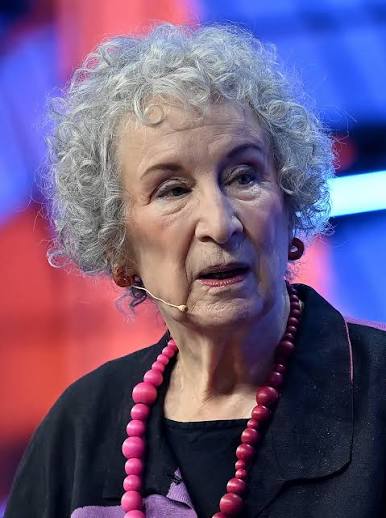
Atwood said Claude was clearly "making things up" in his responses to questions. She pointed out that this is not because the system "intentionally lies", but because it is just a large language model trained on massive amounts of text and lacks the real understanding capabilities of humans. According to her description, Claude seemed to "plunder and splice" information from a large number of TV reviews and movie reviews, but the reviews usually did not directly reveal the plot ending, which caused the model to be "misled" by the training corpus on the key plot points of "Father Brown."
In addition to criticizing the AI tools themselves, Atwood also expresses dissatisfaction with those who become addicted to such technology. She calls these users “opportunists,” believing that they try to take “shortcuts” with the help of AI and “cheat” in an undetectable way, rather than investing the necessary time and energy to personally verify or create content. In her view, technology itself cannot replace human judgment and responsibility. If content production is completely handed over to unverified machines, the risk will ultimately be borne by humans themselves.
Atwood emphasized that current large language models rely heavily on published network materials and crawled text data. This information may be outdated, biased or even wrong. She therefore reminded that both ordinary users and institutions that use them for commercial purposes should not regard machine-generated results as the "ultimate authority" but must conduct manual review and fact-checking. She pointed out that many companies are integrating AI into business processes, but even for the sake of improving efficiency, they must accept the reality that these systems will make mistakes and the quality of the output depends largely on the trustworthiness and integrity of the input data.
When it comes to the fundamental issues with generative AI, Atwood sums up his approach with a simple tech saying: “Garbage in, garbage out.” She believes that if the training data itself is flawed or consists of unfiltered Internet content, then no matter how complex the model structure and the huge parameter scale are, it cannot fundamentally solve the problem of errors and bias. For her, it’s not just a question about the reliability of technology, but a broader reflection on creativity, originality, and the role of the human writer.
At the end of the conversation, Atwood once again reminded the audience that machines are not perfect performers like robots, let alone human beings with morals and experience, but just a set of tools for reading and reorganizing text. She advocates that in the fields of creation, criticism and knowledge production, people need to maintain vigilance and sense of responsibility to prevent the pursuit of truth and accuracy from being sacrificed behind the "convenience" promised by technology.