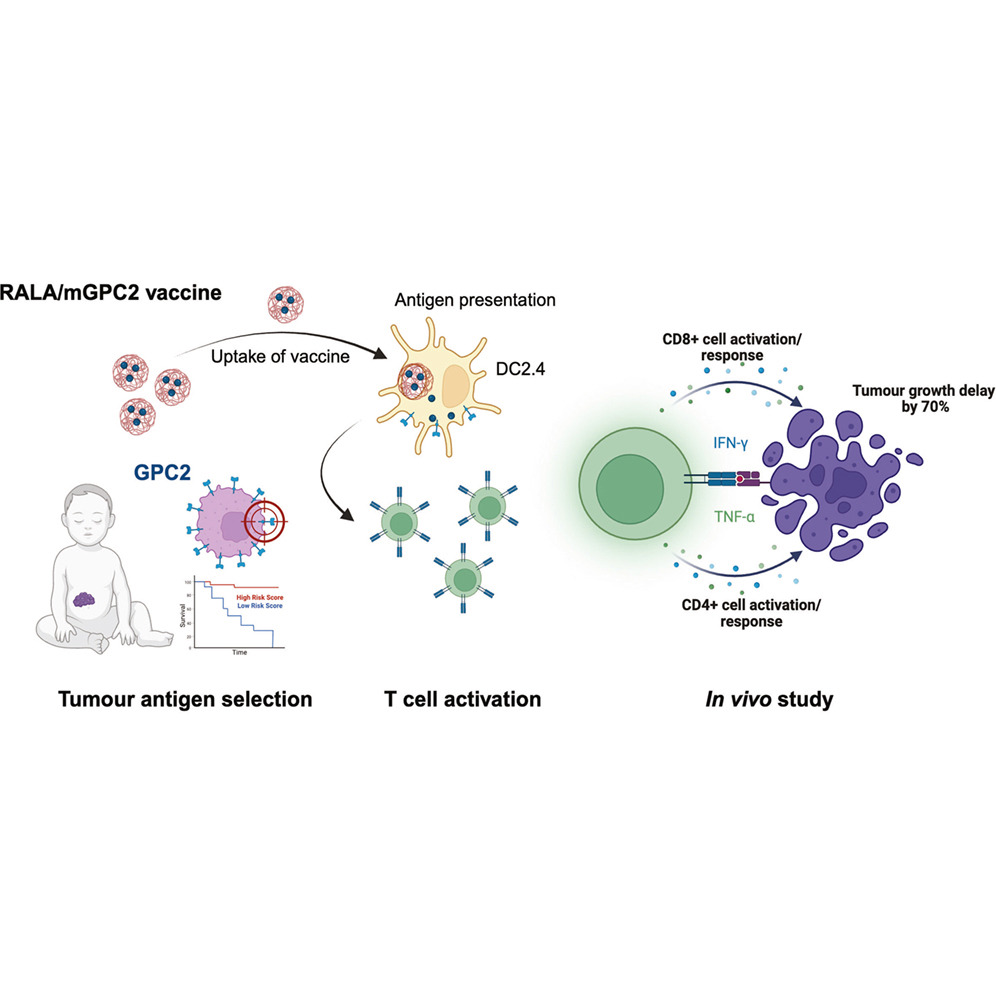
A new preclinical study released recently by the Royal College of Surgeons in Ireland shows that an experimental mRNA vaccine under development has the potential to help the body's immune system recognize and destroy neuroblastoma, a malignant tumor with a high mortality rate in children. The research team observed in animal models that the vaccine could significantly delay tumor growth, delay tumor appearance by about 10 to 11 days, and reduce tumor volume by about 70%.
The success of mRNA vaccines in the prevention and control of infectious diseases during the COVID-19 epidemic has triggered widespread discussion in the academic community: whether the same technical route can also be used to fight cancer. Researchers at the Royal College of Surgeons in Ireland (RCSI University of Medicine and Health Sciences) have taken a crucial step in demonstrating for the first time at the preclinical level that an mRNA vaccine can exert an anti-tumor effect against neuroblastoma.
The research was led by Dr Olga Piskareva, Senior Lecturer in the Department of Anatomy and Regenerative Medicine at RCSI, who and her team designed a protocol for an mRNA vaccine delivered via a peptide vector. In experimental models, the vaccine was able to "train" the immune system to recognize and attack neuroblastoma cells, effectively slowing tumor progression and significantly reducing tumor size.
Neuroblastoma is a highly aggressive tumor derived from immature nerve cells that occurs primarily in infants and young children. Although treatments have improved in recent years, treating high-risk patients and relapsed cases remains extremely challenging, accounting for approximately 15% of all childhood cancer deaths. Around 5 to 10 children are diagnosed with neuroblastoma in Ireland each year, with around 80% of patients having limited or suboptimal response to existing treatment options.
Dr. Piskareva used the "Lego brick" analogy of the plasticity of mRNA technology when talking about the research results. She said that this platform can tailor vaccines for individual patients through the combination of different "modules" to achieve highly precise treatment strategies. She believes that this pilot study shows considerable potential in the development of anti-cancer vaccines for neuroblastoma, bringing new hope to related children and families. She also emphasized that it is still in the early stages of research and development of mRNA cancer vaccines, but this "first milestone" has been successfully completed, laying the foundation for subsequent research.
In terms of technical route, the team adopted a new strategy based on self-assembling peptide nanoparticles to construct this mRNA vaccine. These tiny particles are designed to target the Glypican 2 (GPC2) protein, which is widely found on the surface of neuroblastoma cells and is one of the key targets of this vaccine attack. Since GPC2 is also expressed in a variety of other tumors, similar strategies are expected to be extended to a wider range of tumor types in the future, providing a more versatile technical platform for cancer immunotherapy.
The researchers pointed out that the recurrence of neuroblastoma after initial treatment is one of the most difficult problems in clinical practice. Recurrent tumors often become resistant to existing therapies, making cure significantly more difficult. They believe that continued advancement of research on new treatment strategies, including this mRNA vaccine, will hopefully break through this bottleneck and bring better long-term prognosis to neuroblastoma patients.