The historical eruption records of Italy's Etna volcano show that the same volcano can erupt through completely different underground channels, subverting the geological community's traditional understanding of the consistent stability of the "pipeline system" within the volcano.A recent study led by Cornell University in the United States reconstructed the underground magma activity process of two major eruptions of Mount Etna and found that its internal "pipeline system" was driven by completely different mechanisms at different historical periods. This result is expected to provide more sophisticated technical means for future volcanic eruption risk assessment.
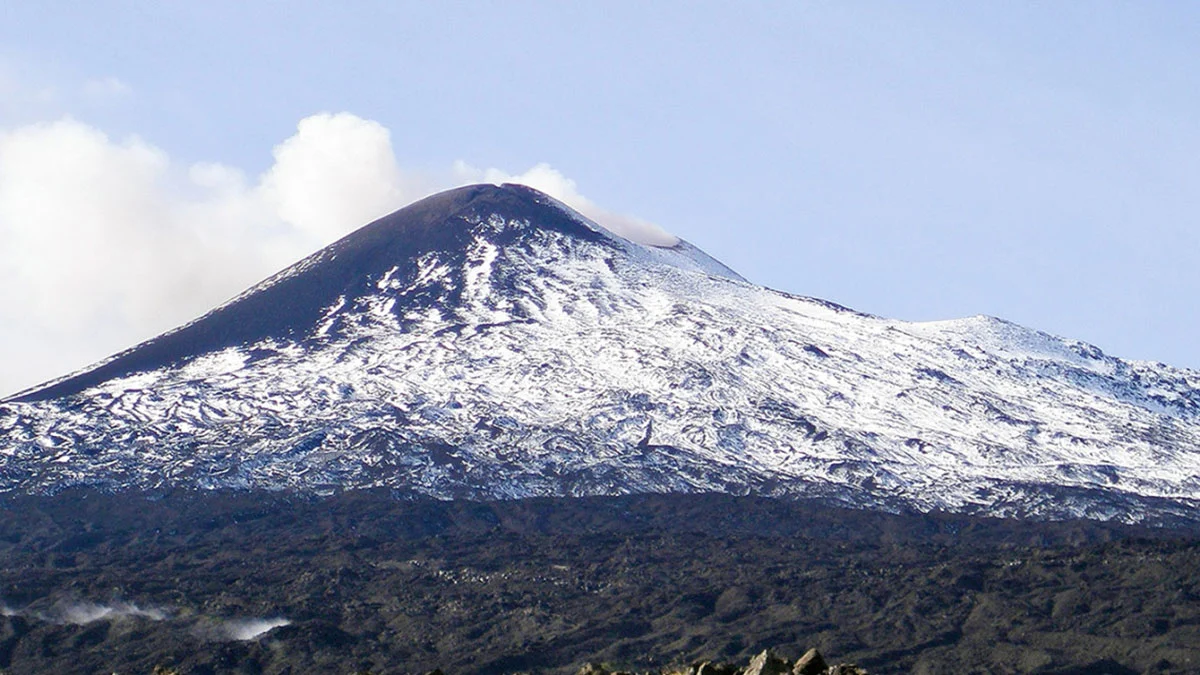
The research team pointed out that the "pipeline system" inside a volcano often extends deep underground and forms a highly complex network. Even for the same volcano, its magma may rise along completely different paths and release pressure during different eruptions. This collaborative project, led by Esteban Gazel, the Charles N. Melos Chair Professor in the Department of Earth and Atmospheric Sciences at Cornell University, chose the Etna volcano, which has a relatively "simple" structure and is dominated by volatile matter, as the object, and systematically analyzed magma crystal samples from two representative eruptions of this volcano in the past.
The research results were published in the journal Geochemistry, Geophysics, Geosystems. The first author of the paper is Maxim Gavrilenko, a former postdoctoral researcher at Cornell University. Gazelle has long been interested in the mechanisms of volcanic eruptions, especially what factors trigger violent explosive eruptions and the dominant role different volatile components play in this process.
The research team emphasized that whether a volcanic eruption is explosive is closely related to the viscosity of the magma and the amount and distribution of volatile gases contained in the magma. Gazelle used a carbonated drink as an analogy: if you open a soda bottle that has not been shaken, it will deflate smoothly; but if you shake it violently and then open the bottle, the bubbles in the bottle will quickly separate and expand, causing a violent eruption. The eruption process of a volcano is similar to this to a certain extent.
Water and carbon dioxide are the two most important volatile components in volcanic magma. The geological community has long regarded water as the key volatile component that dominates volcanic eruption behavior. However, Gazelle's research team proposed in a 2023 study that carbon dioxide can also directly trigger explosive eruptions. This conclusion comes from their new method of using Raman spectroscopy to analyze tiny bubbles in magma crystals.
Using Raman spectroscopy, the researchers were able to measure the carbon dioxide density of micron-sized bubbles within crystal inclusions in the magma, which are only about one percent to one-tenth the thickness of a human hair. Gavrilenko said that after obtaining the density of carbon dioxide, the team converted it into pressure using the equation of state, and then calculated the depth of the magma from the pressure, thereby reconstructing the three-dimensional structure of the volcano's internal pipe system with unprecedented accuracy.
In this study, the team applied this technology to two important eruptions of Mount Etna. The results showed that the same volcano can release magma and gas through completely different "channels" at different historical periods. One of the eruptions that occurred in 122 BC was extremely large. The magma composition belonged to the mafic low-viscosity category, and the eruption type was classified as "Plinian" - this is the most violent eruption grade named after Pliny the Elder, the recorder of the eruption of Mount Vesuvius in 79 AD.
In order to obtain high-quality samples, research collaborators Terry Plank and Bruce Houghton went deep into the Etna volcano field to carry out systematic sampling and conducted sequence analysis and fine measurements of magma crystals. Data show that during this event in 122 BC, the magma initially rose slowly from a depth of about 22 kilometers and stagnated at a shallow level 2 to 5 kilometers above the surface for several weeks, during which it gradually lost some gas and finally triggered an eruption.
The team then compared the new data with samples from another earlier eruption, the Fall Stratified event about 4,000 years ago. The results show that the latter's magma rise process is completely different: magma quickly flows from a deeper mantle layer of about 24 to 30 kilometers to the surface, completing its rise and erupting in only a few hours. The main driving force comes from the significantly higher concentration of carbon dioxide in the magma.
Gazelle pointed out that there are obvious differences in the composition of volatile components between different volcanoes: Some volcanoes located on oceanic islands are dominated by high concentrations of carbon dioxide, while volcanoes in subduction zones are more controlled by water content. Mount Etna is one of the few special volcanoes where two volatiles, water and magma, "compete for dominance." Research results show that when the concentration of carbon dioxide exceeds a certain threshold, the eruption will start rapidly from deeper depths and erupt in a short period of time; when the influence of water is stronger, the eruption process is mainly controlled by the shallow structure, and the magma will stagnate near the surface, degassing, and then erupt.
Currently, Gazelle's team is applying the same method to many volcanoes in Chile, Hawaii and other regions, hoping to build a wider range of fine models of internal pipes in volcanoes. He said that ideally, this kind of analysis should be carried out on every volcano in the world, because this basic data is crucial for establishing physical models of eruptions and improving the volcanic hazard risk assessment system.
In addition to its scientific value, Etna is also interesting on a cultural level. It is regarded in ancient Greek mythology as the burial place of the giants Typhon and Enceladus. Gazelle vividly compared the underground pipe systems of the two eruptions to these two mythical giants: the Plinian eruption in 122 BC corresponded to a slender and winding "Typhon-type" pipe, while the older event was similar to a smaller "Enceladus-type" structure. He admitted that it is difficult not to be attracted by the history, classical culture and local food here while working in Etna.
It is reported that the study "Deep Origin and Shallow Launch for the Etna 122 B.C. Mafic Plinian Eruption" (Deep Origin and Shallow Launch for the Etna 122 B.C. Mafic Plinian Eruption) was funded by the National Science Foundation. The paper was officially published on June 2, 2026, and provided detailed theoretical models and observational data, providing key reference for future global volcanic eruption mechanism research and risk assessment.