The International Space Station recently launched the upgraded NASA Cold Atom Lab. This orbital quantum experiment platform uses a microgravity environment to cool atoms to close to absolute zero. It is used to study a special state of matter called Bose–Einstein Condensate (BEC) and lay the foundation for a new generation of quantum technology. Through this upgrade, scientific researchers will conduct a series of quantum experiments on the space station that are almost impossible to achieve in ground laboratories.
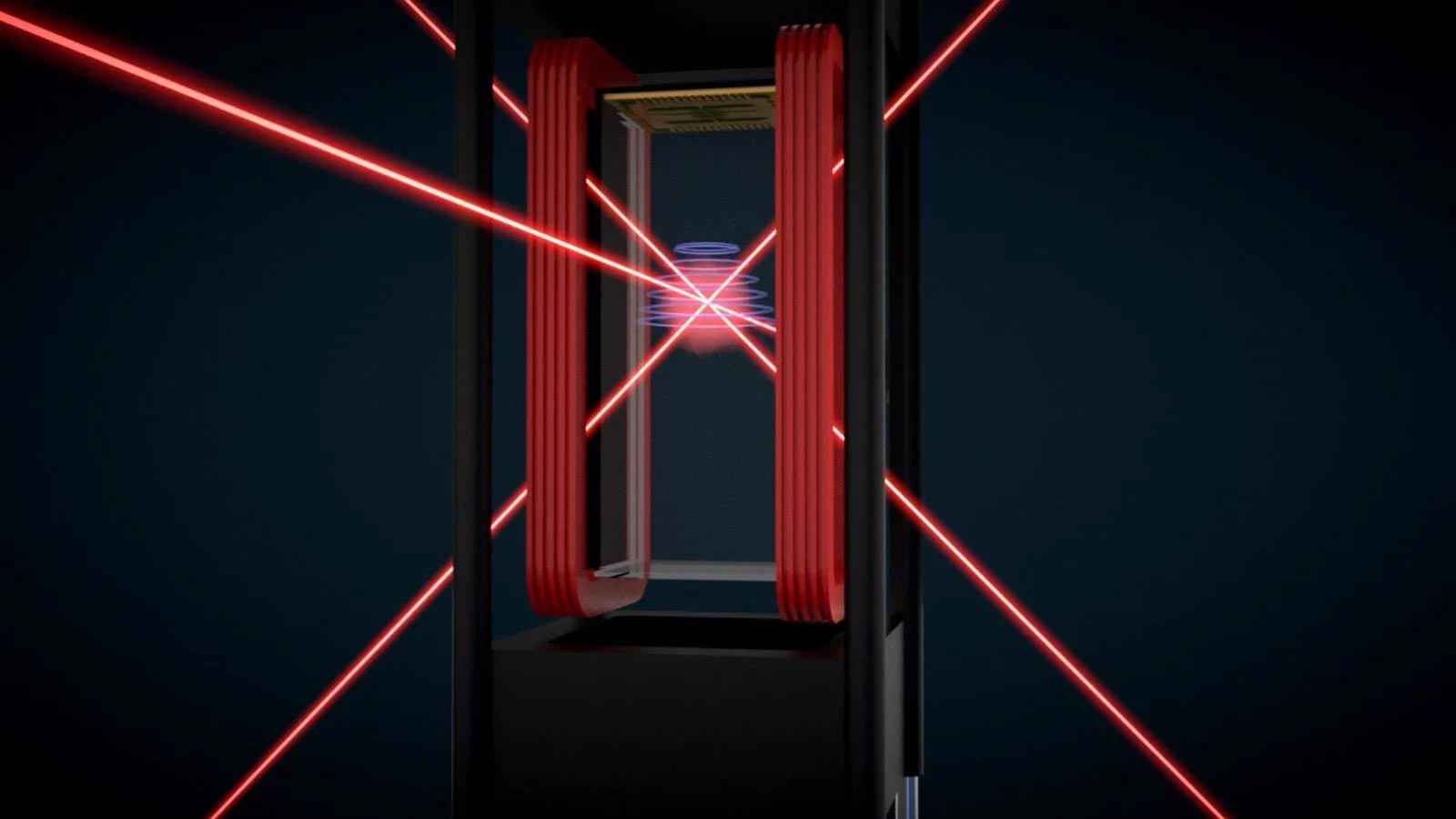
The Cold Atom Laboratory was developed by the Jet Propulsion Laboratory (JPL) in the United States. It is similar in appearance to a small refrigerator. It is installed in the space station cabin and is remotely controlled by the ground team. Under the microgravity conditions of the space station, the laboratory can create and observe ultracold atomic gases at lower temperatures and longer evolution times, so that atomic materials exhibit obvious volatility, can "coexist" in multiple locations, and even "penetrate" each other under certain conditions and other quantum behaviors. When the temperature is below minus 459 degrees Fahrenheit (about minus 237 degrees Celsius) and close to absolute zero, the atomic cloud forms a BEC, which becomes the "fifth state" after solid, liquid, gas and plasma. The whole still follows the peculiar laws of quantum mechanics.
Each experiment starts with metal rubidium or potassium: Researchers heat a strip of metal to about 750 degrees Fahrenheit (about 400 degrees Celsius), forming an atomic vapor in a vacuum chamber. Then, a laser beam tuned to a specific frequency is fired into the vapor, continuously extracting the kinetic energy of the atoms through "laser cooling", causing their speed and temperature to drop rapidly. After the laser cooling is complete, the magnetic field trap takes over, further confining the atoms and continuing to cool them, eventually forming a nearly stationary cloud of ultracold atoms. In a microgravity environment, such "matter waves" can expand larger and float longer. Researchers can also obtain a more abundant observation window for precise measurement of physical quantities such as time, gravity, and motion.
Jet Propulsion Laboratory project scientist Jason Williams pointed out that at the lowest temperatures, matter behaves very differently from our daily experience, with fluctuations dominating and ultracold matter capable of evolving in unexpected ways while providing extremely precise measurement conditions. The upgraded cold atom laboratory is equipped with richer manipulation tools, allowing the research team to explore more deeply the basic laws of the universe. Currently, the facility is supporting five research teams from multiple countries to conduct basic physics research. It is also regarded as a test platform for future space quantum technology, oriented towards earth science missions and deep space exploration applications.
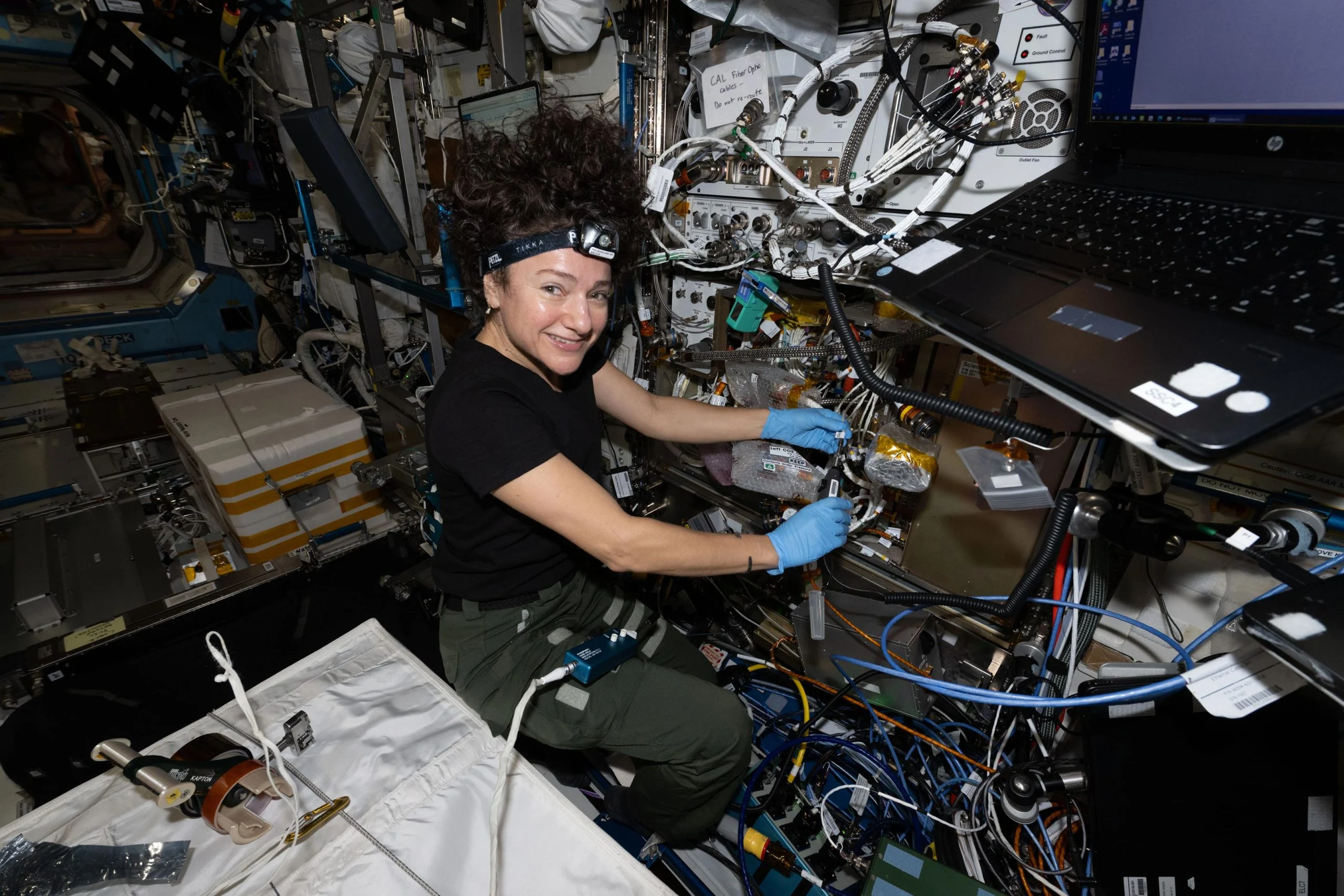
The latest upgraded module was delivered to the space station through a commercial supply flight on April 11 this year. The core is a redesigned science module and the update of key components. Among them, the new magnetic trap structure can change the shape of quantum gas clouds in a larger range, helping scientists study the property changes of atoms under different geometric constraints. At the same time, the improved metal strips provide a more stable and better source of atoms for preparing atomic vapors. Project manager Kamal Udrili said that these improvements further promote human beings' ability to control the "border of the quantum world", extending the reach of extremely low temperatures and the range of controllable quantum states again.
The cold atom laboratory is also the first platform for humans to prepare Bose-Einstein condensates on a regular basis in Earth orbit. It is regarded as an important verification of "the reliable operation of quantum technology in space." Deputy project scientist Ethan Elliott pointed out that the "quantum revolution" of the last century brought about lasers, mobile phones, magnetic resonance imaging and other technologies. Now the team is carrying out the "quantum 2.0" stage on the space station - directly manipulating large-scale quantum states, hoping to breed a new generation of key technologies such as quantum sensing and quantum measurement.
In order to implement these complex experiments on the space station, NASA condensed the lasers, reflectors and control equipment that would have occupied an entire laboratory room into a single rack, and ensured their stable operation in a long-term orbital environment. The Jet Propulsion Laboratory is responsible for the design, construction and operational management of the facility, with Caltech providing overall project management. The Cold Atom Laboratory is part of the Biological and Physical Sciences Department of NASA's Science Mission Directorate. This department uses the unique conditions of space to carry out scientific research that cannot be completed on the ground. It not only provides life support and engineering foundation for future manned exploration of deep space, but also generates new discoveries and new technologies in the process that can benefit life on earth.
Udreary emphasized that this upgrade not only demonstrates NASA's ability to maintain the United States' leading position in the field of space quantum technology, but also paves the way for the maturity of a series of quantum instruments in the future, such as matter wave interferometers used for basic physics, navigation and positioning, time benchmarks, and gravity sensing of the Earth, the moon, and more distant celestial bodies. With the upgraded cold atom laboratory back in operation, this "orbiting quantum laboratory" on the International Space Station is promoting mankind's continued in-depth exploration in the unknown areas of quantum science.