Marcin Yushkevich, a senior software engineer on Red Hat's ARM team, has changed his main development machine to an Ampere Altra-based processor since June 2025, and then uses the Linux on Arm64 version for daily development work. However, after experiencing long-term PCIe controller failures and various toss-ups, the engineer has now given up on Arm processors and switched to AMD processors based on the x86 architecture.
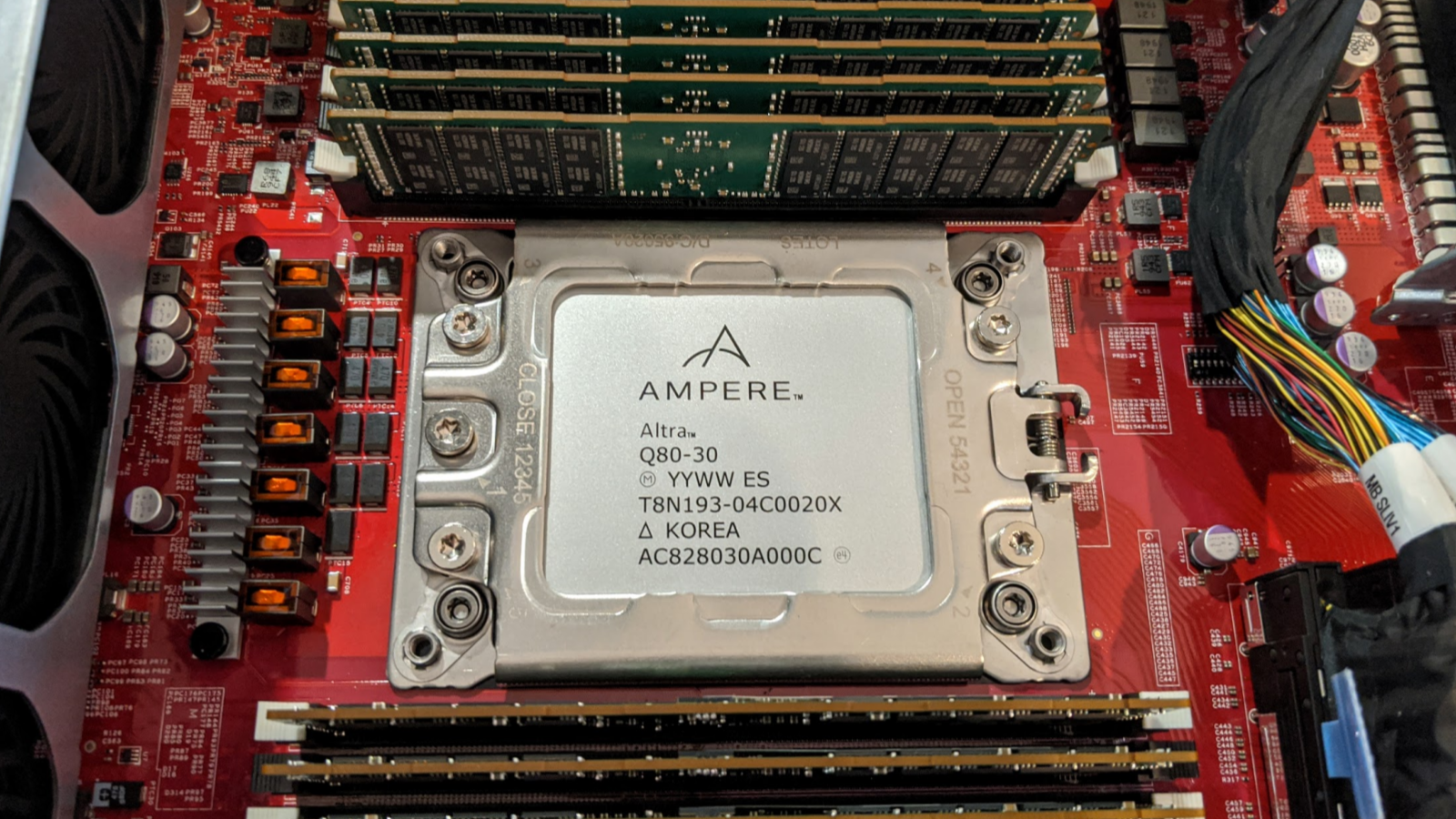
80-core processor performance is very good but only if it is stable enough:
The machine Yushkevich assembled uses an ASRock ALTRA8BUD-1L2T rack, an Ampere Altra 80 core processor and an AMD Ryzen graphics card, and is finally paired with Arm64-based Fedora Linux 42/43/44 for daily boot use. The overall experience is acceptable and can meet the needs of daily development and use, but the problem is that the PCIe controller of the Ampere Altra processor always has problems.
As a professional player, Yushkevich spends time every week repairing the kernel to optimize PCIe controller problems. Even with 80 CPU cores, Yushkevich still feels that the performance of this processor is unsatisfactory, especially the performance in single-threaded tasks is unsatisfactory. Another problem is that in Linux Kernel 7.0 + version, the AMD GPU kernel driver also has problems, resulting in bugs in video playback and games. In the end, Yushkevich decided to abandon the Arm64 desktop system.
It is worth noting that this is not an architectural problem, but a defect/problem specific to the platform itself and the AArch64 Linux desktop system hardware. After more than 11 months of tossing, Yushkevich switched back to the AMD processor he had previously used and switched to a Linux distribution based on the amd64 architecture.
After switching to a 6-core 12-thread processor, the experience returned instantly:
Yushkevich mentioned in his blog that after replacing the Ampere Altra 80-core processor with a 6-core 12-thread AMD processor, although the number of CPU cores was reduced, all operations were normal. Threads could be loaded, music could continue to play, and all games in the Steam library could be played, so Yushkevich no longer had to spend time to deal with PCIe controller and kernel issues.
As a Red Hat engineer who specializes in dealing with ARM architecture, there is nothing we can do when encountering such system-level hardware problems. Currently, NVIDIA has launched the DGX SPARK system based on Arm architecture. Perhaps NVIDIA will do better in terms of compatibility, but DGX SPARK is extremely expensive, and it may be difficult for most developers to purchase the device.