An international study led by Curtin University in Australia recently revealed that a pterosaur wing bone fossil from northeastern Brazil is still extremely well preserved in a three-dimensional form after a geological history of about 113 million years, and retains chemical clues pointing to its ancient lifestyle. This achievement not only provides scientists with a precious window into the ancient world, but also demonstrates the rapid development potential of molecular paleontology in revealing the secrets of life in "deep time".
The object of the study is a wing phalange of a pterosaur. It not only has a clear shape and complete structure, but also has traces of steroid molecules detected in the fossil. This is the first time in a pterosaur fossil. Professor Kliti Grice, the first author of the paper and founding director of the Western Australian Center for Organic and Isotope Geochemistry at Curtin University, pointed out that these chemical signals provide new evidence that pterosaurs may have fed on fish or squid, providing more direct molecular support for their feeding ecology.
Professor Grice said that this fossil can be called a "time capsule": not only is it beautifully preserved, but for the first time, steroid residues at the molecular level have been found in pterosaur bones, providing unprecedented clues for reconstructing its feeding habits and ecological niche. She emphasized that this is the first time that molecular evidence has been successfully extracted from pterosaur fossils, which demonstrates the power of molecular paleontology methods and means that similar biomarkers are expected to be identified in more paleontological fossils in the future.
In paleontology, it is extremely rare for organic molecules to be preserved in fossils, especially for substances like steroids that are easily destroyed over geological timescales. Professor Grice pointed out that this discovery not only refreshes the understanding of the preservation limits of biomarkers, but also challenges the existing view that "oxygen mainly plays a destructive role" in the traditional fossil preservation mechanism.
The research team proposed that under certain circumstances, oxygen does not only accelerate the degradation of organic content. The ancient microbial community may play a "protector" role in the fossil formation process through a series of oxidation reactions. During the formation of this pterosaur fossil, the oxidation process in the environment worked together with ancient microorganisms to promote multi-stage mineralization around the bones, allowing the bone structure and organic molecules to be sealed in the rock and preserved intact over hundreds of millions of years.
According to the research team's deduction, the pterosaur sank to the ancient seafloor after death, and then a "perfect storm" of chemical, microbial activity and environmental conditions unfolded. Microorganisms, including sulfur-oxidizing bacteria, began to break down the soft tissue and lipid material, triggering mineral precipitation around the bone in the process, rapidly enveloping it and insulating it from further damage, creating the conditions for subsequent abnormal preservation.
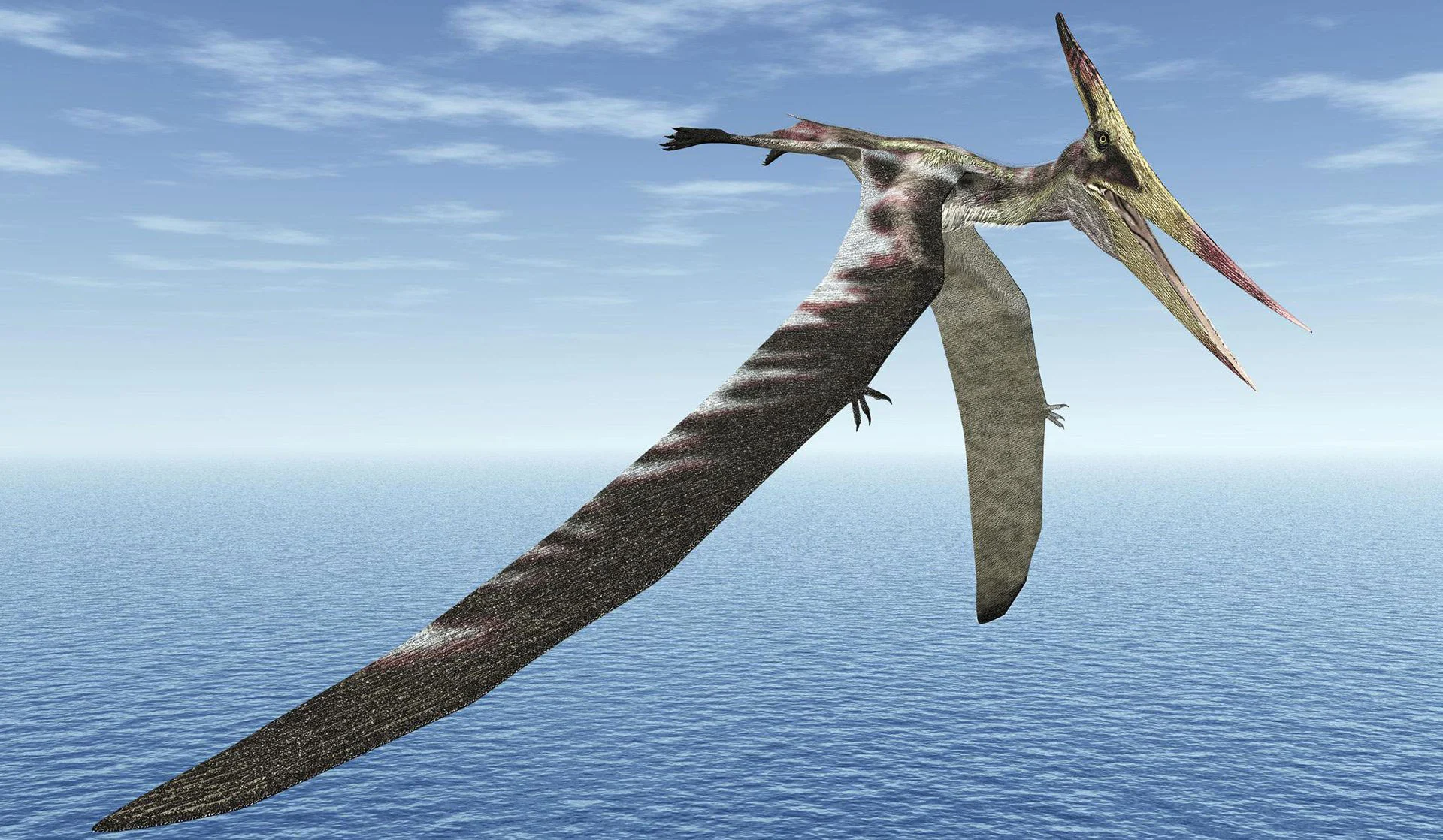
Pterosaurs are a type of flying reptiles that lived at the same time as dinosaurs. They are also one of the first vertebrates on earth to achieve active flight. Some species have a wingspan of up to 12 meters. Similar to contemporary birds, pterosaurs have a hollow skeletal structure. Under certain sedimentary environments, this feature is conducive to the careful preservation of bones during the fossilization process, thus forming a so-called "specific buried fossil library."
Professor Grice pointed out that this research points to an abnormal preservation path that has not been systematically recognized before: during the diagenesis process with changing redox conditions, microbial-driven oxidation and mineralization processes jointly shape the final appearance of the fossils. This discovery also provides a new framework for explaining the formation mechanism of abnormally intact fossils in other areas, suggesting that similar microbial-chemical cooperative preservation mechanisms may exist in many fossil origins around the world.
The research further strengthens an emerging understanding: tiny microbial communities play a key role in fossil preservation, and their activities not only determine whether soft tissues can be reconstructed, but also affect whether molecular-level information is preserved. The team believes that this special burial and preservation mode, which is promoted by microorganisms and environmental conditions, is expected to be summarized as a new global "Lagerstatten" (specific buried fossil library) formation mechanism.
The related paper is titled "Multi-staged mineralization and biomarker preservation in a 113-million-year-old pterosaur bone via redox shifts in diagenesis" and was published in the journal iScience on June 18, 2026. This research work was supported by the Laureate Professorship Fund awarded to Professor Grice by the Australian Research Council (ARC), which provided important impetus for research on molecular paleontology and fossil preservation mechanisms.