Nvidia was revealed earlier this year to be planning to launch a GeForce RTX 5050 desktop graphics card equipped with 9GB of video memory to alleviate the memory shortage problem in the entry-level product line. Subsequently, industry rumors claimed that the development of the project had been put on hold, and the latest news showed that the 9GB version had been completely cancelled.
The whistleblower MEGAsizeGPU revealed on the social platform
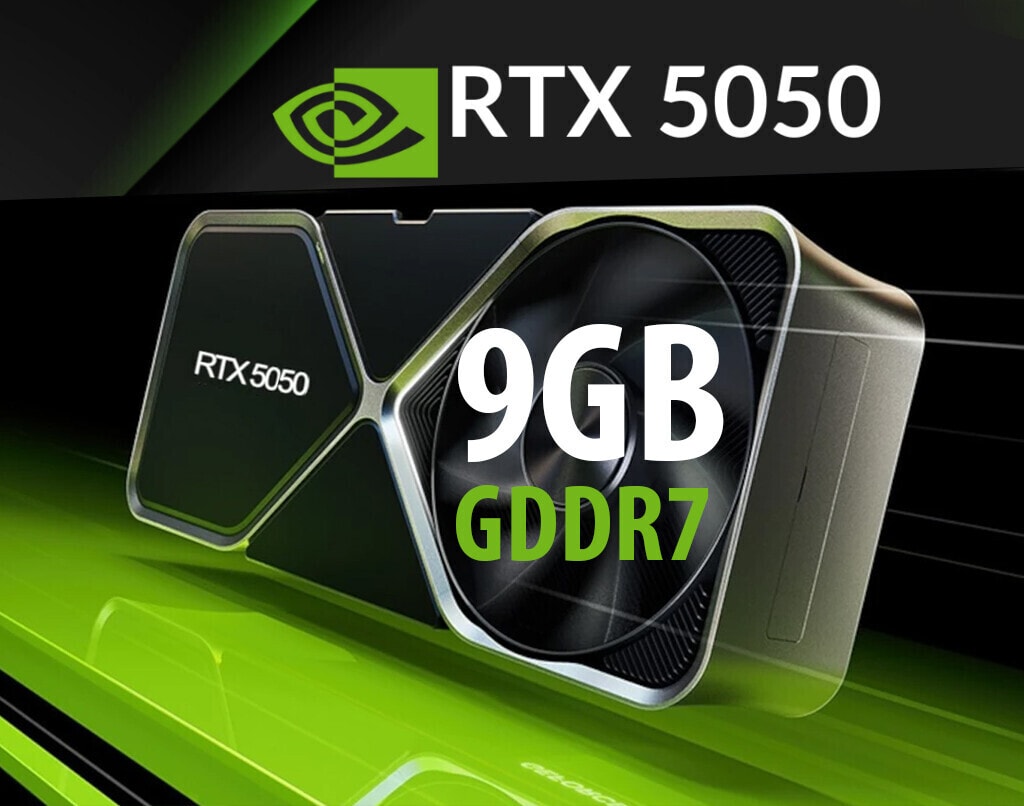
From the perspective of solution design, the emergence of RTX 5050 9GB was originally intended to reduce the amount of video memory particles in the low-end market, while slightly increasing the video memory capacity and bandwidth. The current RTX 5050 uses 8GB 20 Gbps GDDR6 memory, with a 128bit bit width, and a total memory bandwidth of approximately 320 GB/s. The planned 9GB version uses three GDDR7 memory chips, each with a capacity of 3GB. The total capacity reaches 9GB and the bit width is reduced to 96 bits. However, the speed of a single memory is increased to 28 Gbps, so that the total video memory bandwidth is expected to reach approximately 336 GB/s. The bandwidth is increased by approximately 5%, and the video memory capacity is increased by approximately 12.5%.
Previously leaked information stated that the RTX 5050 9GB version will use the GB206 core, while the existing GDDR6-based RTX 5050 8GB version uses the GB207 core, but both have 2560 CUDA cores. In this context, Nvidia is trying to optimize the number of memory particles and cost on entry-level graphics cards through GDDR7 technology, and on the other hand, it is trying to avoid internal competition with the upcoming RTX 3060 12GB. Based on current revelations and industry reports, as the RTX 3060 12GB returns to the market, the RTX 5050 9GB project that has not yet been officially announced has been cancelled, which has become part of Nvidia’s current product strategy adjustment in the low-end and mainstream range.