The executive team of South Korea's Samsung Electronics visited the headquarters of Lenovo Group. A person close to the cooperation between the two parties said that during the visit of Samsung's high-level team, the content of the exchange between the two parties may involve issues such as memory chip supply, AI hardware collaboration, and long-term cooperation mechanisms. However, as of press time, Lenovo Group and Samsung have not yet made a public response to the specific cooperation content.
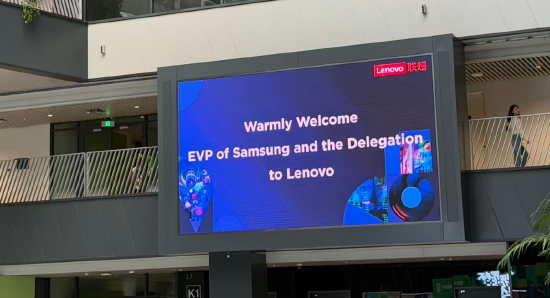
This high-level exchange of visits takes place against the backdrop of continued tension in the supply and demand pattern of global memory chips. Since the beginning of this year, as the demand for AI servers, AI PCs and high-end smart terminals has increased, the prices of storage products such as DRAM, NAND Flash and HBM have continued to attract market attention. For large terminal and server manufacturers, memory chips are no longer just a cost item, but a key variable that affects product delivery capabilities, supply chain stability and profitability flexibility.
Lenovo Group is in the stage of joint expansion of its AI PC and AI infrastructure businesses, and its supply chain capabilities are becoming an important dimension for the capital market to re-evaluate the company. Some insiders believe that if Lenovo further deepens long-term supply cooperation with major international storage manufacturers such as Samsung, it will help it obtain stronger supply chain guarantees in the delivery of AI PCs, AI servers and enterprise AI infrastructure.
Samsung is one of the world's major memory chip manufacturers and has a strong market position in the fields of DRAM, NAND Flash and high-bandwidth storage. For Samsung, Lenovo, as an important global terminal and server customer, is also a downstream partner that cannot be ignored in the AI hardware cycle.
However, whether the above news will eventually be implemented into a long-term supply agreement remains to be further disclosed by both parties.