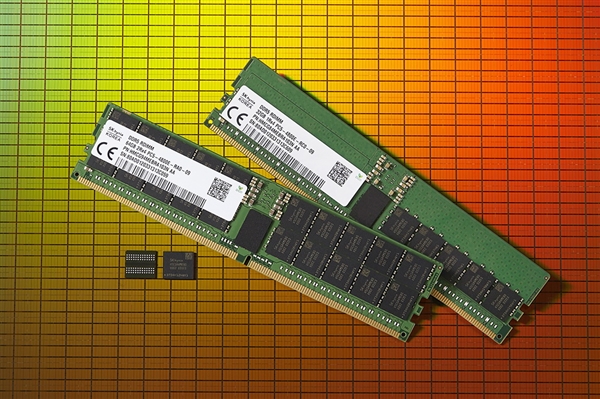
The current storage market is so magical. The spot market prices of DDR3 and DDR5 particles are inverted, and the quotation per unit capacity of DDR3 has surpassed that of DDR5. According to statistics from TrendForce, the average quoted price of DDR3 512MB particles is US$12.341, equivalent to approximately US$24.682 per GB, and the average quoted price of DDR5 2GB particles is US$46.833, equivalent to approximately US$23.416 per GB. After calculation, DDR3 is 5.41% more expensive than DDR5 per GB.
In fact, this is not the first time that similar inversions have occurred. At the end of June last year, the price of DDR4 particles also exceeded that of DDR5.
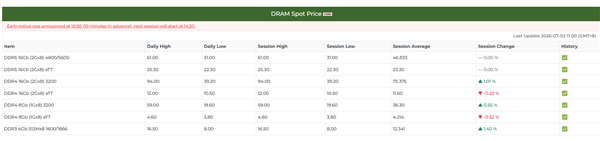
The logic behind it is not complicated. As the price of DDR5 continues to rise, it has forced the industry to shift to DDR4, DDR3 and even lower-grade DDR2. The sudden increase in demand for low-generation memory has led to extremely hot market prices in this part of the market, and the market quotations are completely out of touch with the actual market prices.
However, TrendForce pointed out that although the prices are very high, the actual transaction volume is not large. It is basically sellers selling each other to maintain the market. In this case, the reference significance of market quotations has been greatly reduced.
In sharp contrast to the popularity of DRAM, NAND flash memory continues to be weak. A TrendForce report shows that the spot price of 512Gb TLC wafers fell another 1.03% to US$19.862 this week (June 29).
Although suppliers are adjusting their quotations to optimize inventory, buyers have reached the limit of tolerance for the current price, and their willingness to stock up is extremely low, and the overall price lacks upward momentum.