The U.S. Federal Aviation Administration (FAA) is paving the way for the return of commercial supersonic passenger transport. It has systematically revised the regulatory framework for supersonic civil aviation aircraft for the first time in more than half a century. The core is to reconstruct standards based on noise performance and replace various restrictive clauses that have been almost equivalent to "de facto bans" since 1973.
In 1973, the FAA added Section 91.817 to Part 91 of Title 14 of the Code of Federal Regulations (CFR), which adopted extremely stringent regulations to almost completely prohibit non-military aircraft from flying at supersonic speeds in the United States on the grounds of "restricting supersonic flight noise." The practical effect of this set of rules is that civilian supersonic flight cannot find any realistic exemption path, and is thus completely "caged" over the United States.
In public narratives, the reason for the ban at that time mainly pointed to the sonic boom harassment caused by supersonic flight: when the pressure wave in front of the aircraft nose accumulates and breaks the sound barrier, it will be perceived as an extremely harsh double muffled sound on the ground, causing obvious trouble to residents along the route, especially dairy and poultry farmers, and also triggered strong opposition from environmental groups. At that time, the daily flights of U.S. military aircraft had already made residents in many areas disgusted with sonic booms. This became an important social background for promoting comprehensive restrictions on civilian supersonic flights.
However, the real story does not stop at the level of noise and public opinion. In the 1960s, the U.S. government and large aviation manufacturers had invested approximately US$1 billion in an attempt to build the country's first supersonic passenger aircraft. The Boeing 2707 prototype was established as a result, becoming a key project for the United States to compete for the lead in supersonic civil aviation. However, in 1971, the U.S. Senate voted to terminate financial support for the project, and subsequently the entire U.S. domestic supersonic civil aviation research and development system was cut off across the board.
Against this background, the direction of regulation has taken an emotional turn. At that time, outside the United States, only the Concorde, jointly developed by Britain and France, and the Soviet Union's Tu-144 project, which had made intermittent progress, were still promoting civilian supersonic passenger aircraft. Among them, the "Concorde" is regarded as the most commercially threatening opponent: This aircraft model often appears in the livery of the world's mainstream airlines, as if to announce to the market that the Concorde will define a new standard for supersonic passenger transportation just like the Boeing 707 did for the jet airliner era.
With domestic projects in the United States cut in half and the industry losing its voice, environmentalists and the U.S. aviation industry formed a subtle alliance on the front against civilian supersonic flight, and jointly promoted and wrote strict regulatory provisions that would come into effect in the future. As a result, Concorde was commercially effectively excluded from the key aviation market of the United States. Due to the FAA's benchmark status in the global aviation regulatory system, relevant standards also caused "spillover effects" at the international level, compressing the global operating space of civilian supersonic passenger aircraft.
Over the next half century, supersonic civil aviation almost stagnated. The Tu-144 was officially terminated in 1983 after about ten years of idle operation. The total number of Concorde fleets has never exceeded 20. It is only operated by British Airways and Air France on a few transoceanic routes, and it has never been able to form a scale effect sufficient to dilute costs. At the same time, the technical and economic challenges surrounding sonic boom control and related structural, aerodynamic and operating costs have long been viewed as insurmountable walls.
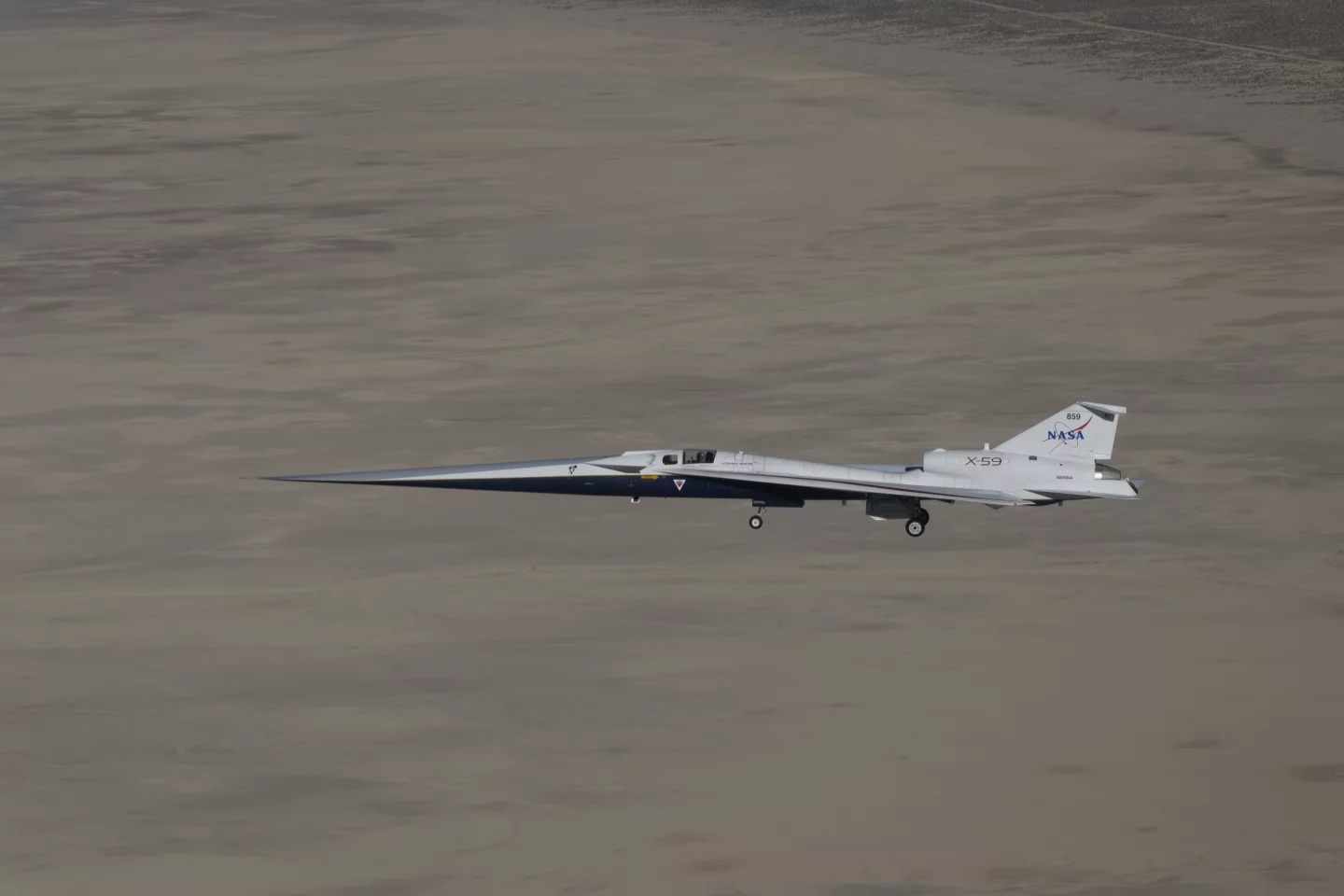
Today, advances in aeronautical engineering and flight control are reshaping the feasibility boundaries of supersonic passenger aircraft. A number of companies and the National Aeronautics and Space Administration (NASA) are developing a new generation of fuselage and wing layouts that redistribute the shock wave along the entire length of the fuselage and guide it upwards, resulting in only a slight muffled sound on the ground similar to "a car door closing", instead of a sonic boom in the traditional sense. With the deepening understanding of aerodynamics and the introduction of real-time airflow data monitoring and automatic speed adjustment technology, the new design is expected to dynamically optimize speed and attitude based on the atmospheric conditions in different areas along the flight path to minimize the impact of noise.
However, technological breakthroughs cannot automatically move the market. The real gate is still in the hands of regulators. No matter how advanced the supersonic passenger aircraft is, it will not be able to enter commercial operation if it is "vetoed" by one vote. To this end, the FAA has launched a systematic review of existing regulations. The goal is to eliminate the hostile provisions formed during the Cold War and build a new set of compliance standards with "absolute noise performance" as the core based on the latest engineering results. In other words, the future regulatory logic will change from "congenitally denying supersonic speed" to "as long as the noise standards are met", opening up institutional space for a new generation of supersonic passenger aircraft.
The technical basic data for the new regulations will mainly come from NASA’s X-59 experimental aircraft test flight project. This experimental supersonic prototype is regarded as a technical verification platform for "low-boost design". Its flight test results will be used to calibrate acceptable noise baselines and operating boundaries, providing empirical support for the noise and operation certification standards of supersonic passenger aircraft. The FAA expects to formally finalize relevant technical noise standards and operational certification details around mid-2027, laying a regulatory foundation for the return of commercial supersonic passenger transport to U.S. skies.