Affected by unusually dry weather and a severe shortage of snow, the water level of the San Carlos Reservoir, a large reservoir in Arizona, has dropped to less than 1% of its total capacity. The local ecological environment has been severely damaged, and tens of thousands of fish have died due to lack of oxygen in the water.
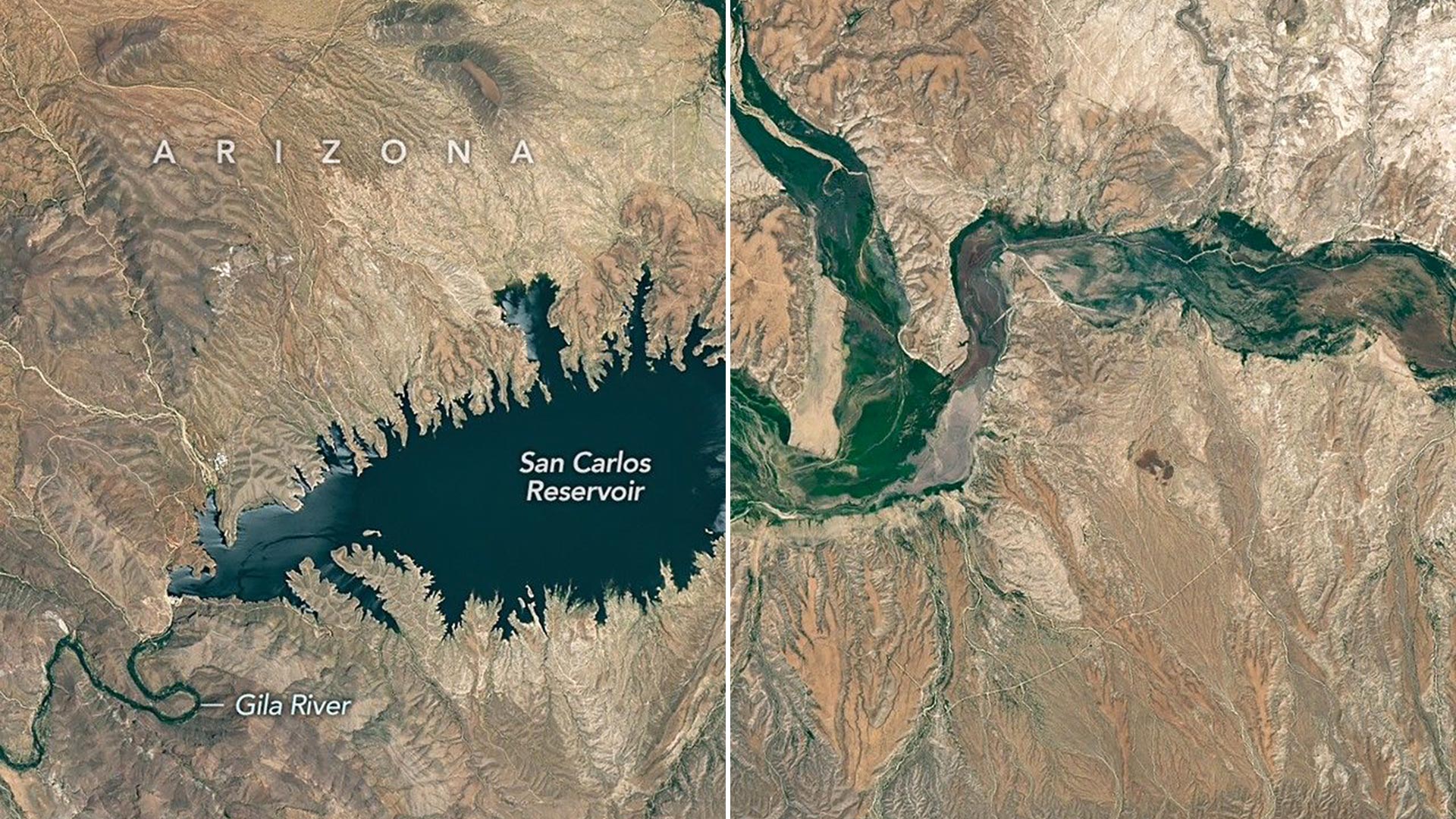
San Carlos Reservoir is formed by the water storage of Coolidge Dam. It is not only one of the largest reservoirs in Arizona, but also an important water resource pillar for local agricultural production, community water use and wildlife survival. The reservoir relies primarily on winter snowfall in the Mogollon Mountains and Black Range in southwestern New Mexico and is replenished by runoff from spring snowmelt. However, in 2026, the region's winter snowfall will be only 2% of the historical median from 1991 to March 2020. Because there is no snow to melt at the source, the river runoff in April this year was only 39% of the normal level. After meeting the necessary water needs of downstream farmland, the reservoir water storage capacity was quickly depleted.
According to images collected by NASA Earth Observatory using Landsat 9, as of May 22, 2026, the San Carlos Reservoir has only 389 acre feet of water left, which is less than 1% of the total capacity. Compared with the abundant scene in June 2023 when the reservoir remained at about 60% capacity, now a large area of the bottom of the reservoir has dried up, leaving only a small amount of water traces in the river.
As the water level continues to drop, the oxygen content in the reservoir plummets, causing severe hypoxia. Affected by this, almost all native and stocked fish species such as largemouth bass, black crappie, bluegill, and channel catfish that originally thrived in the reservoir died. The San Carlos Recreation and Wildlife Management Department announced the indefinite closure of the reservoir on June 5, warning that the large amount of rotting dead fish was not only causing environmental pollution, but could also pose a health threat to anyone trying to enter the area for fishing or boating.
Despite the seriousness of the situation, it is not unusual for the San Carlos Reservoir to dry up historically. The reservoir has been completely depleted at least 20 times since it was first constructed in 1930. Looking back on the severe drought of 1976, more than 5 million fish died and it took the ecosystem five years to recover.
Currently, the upper reaches of the Gila River are still in a severe drought state. Meteorological experts pointed out that the future recovery of reservoirs will be greatly dependent on summer rainfall. According to the seasonal forecast released by the National Oceanic and Atmospheric Administration (NOAA) in May this year, the probability of above-average rainfall in the region this summer is between 33% and 50%. As the El Niño phenomenon intensifies in the equatorial Pacific, the meteorological department still has certain expectations for the region to receive rainfall during the summer monsoon season to alleviate drought conditions.