Recently, a new study from the University of California, Irvine (UC Irvine) challenged the scientific community's long-standing traditional understanding of the "functional blindness" of Greenland sharks. This longest-lived vertebrate on earth can live up to 400 years. Researchers have found that not only do they not go blind, but they have evolved a special DNA repair mechanism that can protect the retina from damage over long periods of time, thereby maintaining vision.
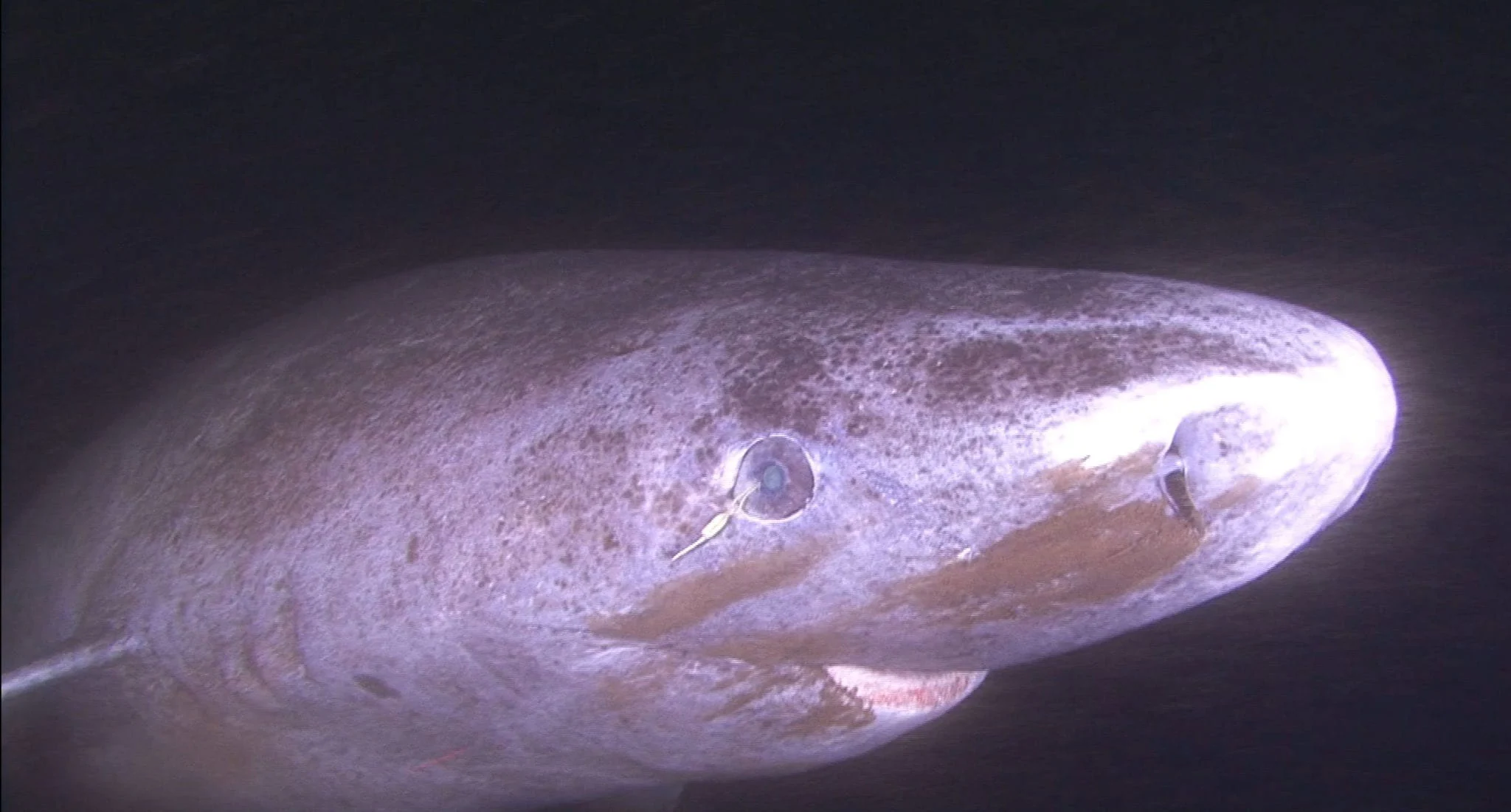
Greenland sharks inhabit the deep and murky Arctic waters. Because of their appearance and the fact that they often have parasites attached to their eyes, scientists used to speculate that they lived blindly. However, Dorota Skowronska-Krawczyk, associate professor of physiology and biophysics, became suspicious after looking at a large amount of imaging data. She noticed that these sharks moved their eyes to track light as they swam. To verify this observation, the research team conducted in-depth anatomical and physiological analyzes of shark samples collected near Greenland's Disko Island between 2020 and 2024.
Emily Tom, the PhD student who led the study, worked with these giant shark eyeballs in the lab. Using histological analysis and special examinations of visual function, the research team found that the samples showed no signs of retinal degeneration. Crucially, rhodopsin, a protein critical to maintaining vision in low-light environments, remains active in shark retinas and is precisely tuned to blue light.
This discovery provides a new perspective on understanding the mechanism of extreme longevity in organisms. The researchers pointed out that if Greenland sharks can maintain retinal tissue in a healthy state for centuries through specific mechanisms, then these mechanisms may provide new research directions for human vision protection, especially for the treatment of common age-related eye diseases in humans such as macular degeneration and glaucoma.
The research results were published in the journal Nature Communications on January 5, 2026, opening a new chapter in cross-species longevity and tissue health research.