On July 16, Xpeng Motors held a brand day event and MONA L03 global launch conference in Munich, Germany. According to Agence France-Presse, He Xiaopeng, chairman and CEO of Xpeng Group, said in an interview that day that the company is accelerating its expansion into the European market and is currently studying the possibility of using factories with high idle capacity of German car companies for production.
"There are many countries in Europe that have the potential to host a large number of factories," he said. "Of course, most of these factories are still in Germany at the moment."
But He Xiaopeng also emphasized that discussions on potential new cooperation projects in Europe are still at an early stage.
He revealed that Xpeng Motors is currently cooperating with Austrian automobile OEM Magna Steyr to produce cars in Europe, and hopes to further increase investment in Europe in the future.
"We are happy to cooperate with many companies, including Volkswagen," he told the media. "We hope to have not only one factory in Europe in the future, but many different types of factories, and simultaneously carry out R&D projects in different fields - some focus on cars, some focus on robots, covering various different businesses."
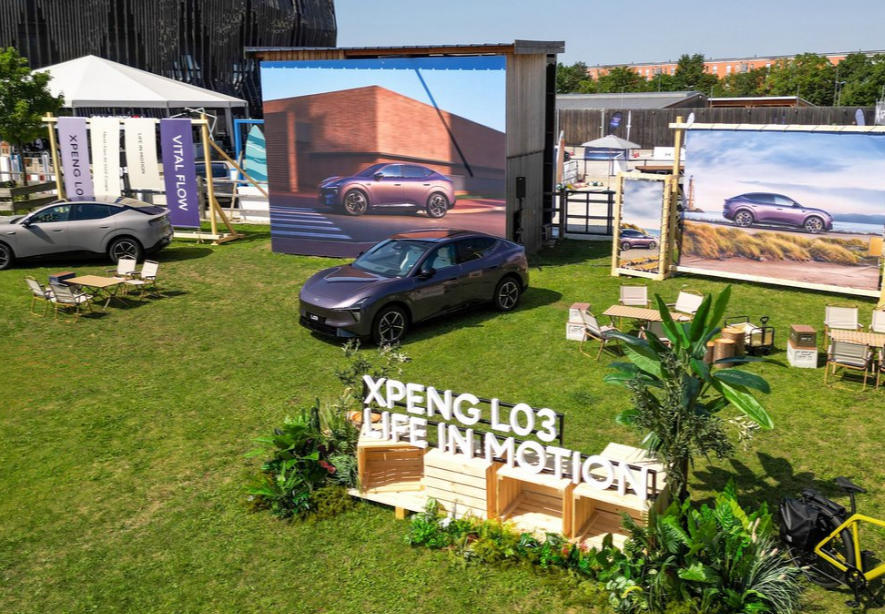
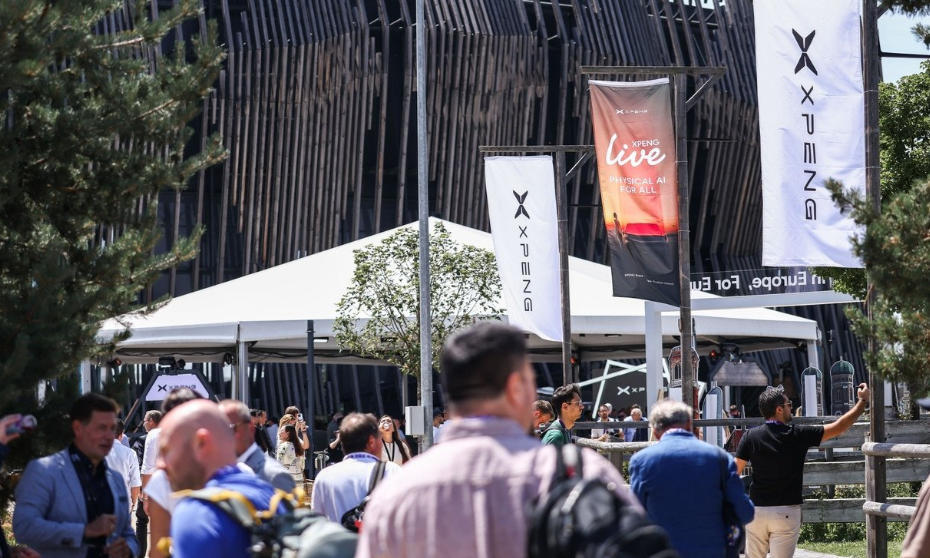
On the 16th, Xpeng Motors held a brand day in Munich Xpeng Motors X account
In recent years, the German automobile industry has continued to be under pressure due to factors such as U.S. tariffs, declining profit margins for pure electric vehicles, and fierce competition from Chinese companies. To avoid costly and controversial plant closures, local automakers have been seeking ways to absorb excess production capacity.
Recently, Volkswagen CEO Bluhm said that the company may need to close four factories in Germany and plan to conduct large-scale layoffs. In April this year, he also proposed that Volkswagen factories in Europe may produce cars for Chinese partners in the future.
According to reports, Volkswagen currently holds 4.99% of Xpeng Motors' shares, and the two parties are also cooperating in the Chinese market to develop new models for local consumers.
On July 15, local time, German Chancellor Mertz said that he did not object to Chinese automakers taking over troubled German auto factories. However, he pointed out that this can only be used as an "emergency plan" and cannot fundamentally solve the structural problems facing the German automobile industry.
According to data from dataforce, an automobile market research organization, in May this year, Chinese brands such as BYD, Geely and Chery accounted for nearly 11% of the European automobile market, compared with less than 3% a few years ago.
Xpeng Motors' performance in the European market has also maintained rapid growth. In the first half of this year, the company delivered 31,000 vehicles in Europe, nearly doubling year-on-year, with deliveries in the German market nearly tripling.
In fact, not only German car companies, but other European car manufacturers have also been strengthening cooperation with Chinese companies in recent years.
In May this year, European car giant Stellantis announced that it would deepen its strategic partnership with China's Leapmotor. Specific cooperation includes: opening one of its factories in Spain to Leapmotor, and the two parties will also jointly produce an electric vehicle.