TSMC Chief Financial Officer Huang Renzhao said in an interview that the client continues to show a "several-year super wave of demand" and TSMC is racing against time to increase the production capacity of its Arizona factory. At present, the artificial intelligence industry is facing a sustained structural demand explosion. TSMC has increased its U.S. chip manufacturing layout, added a huge investment of US$100 billion, and significantly expanded its investment scale in Arizona.
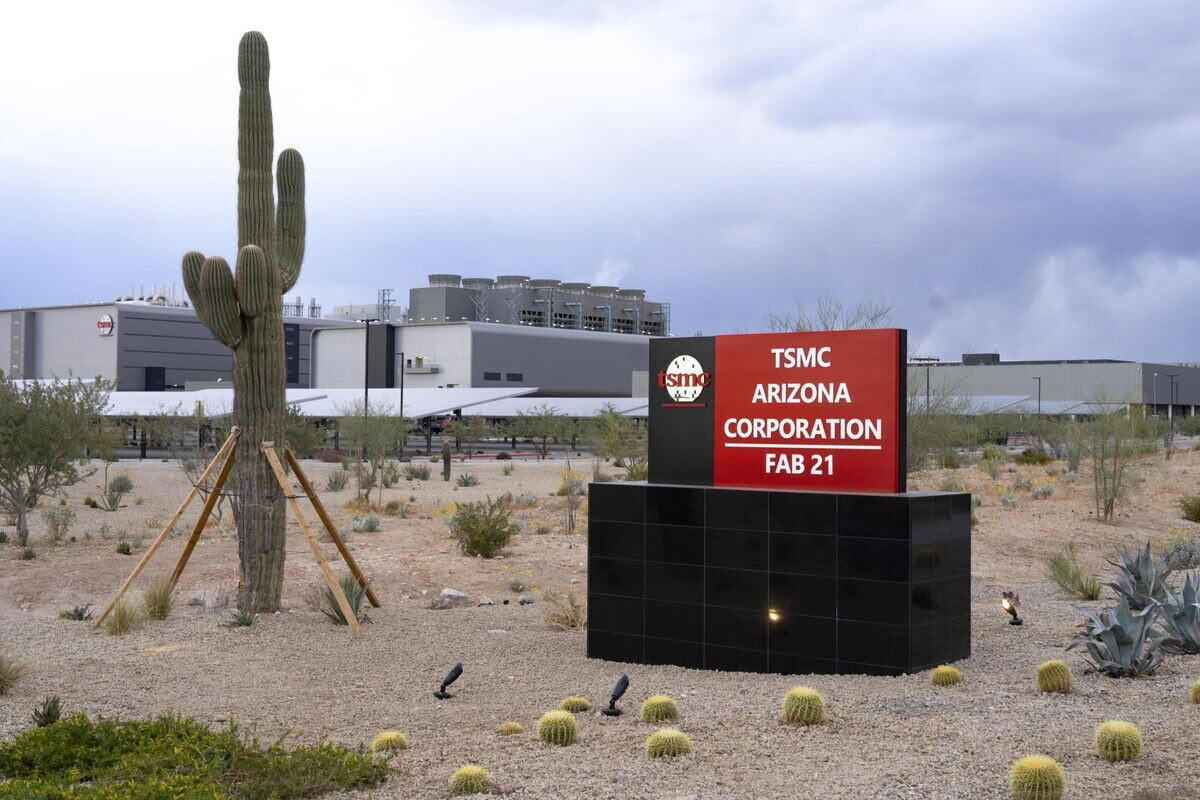
After the implementation of this new investment, TSMC's total planned investment in Arizona has risen to US$265 billion. This large-scale production expansion plan driven by the demand for artificial intelligence has also prompted the company to raise its full-year capital expenditure forecast, setting the range at US$600 billion to US$640 billion.
Huang Renzhao said that this additional investment relies on strong customer orders in the US market and strong support from the US government.
"We are facing sustained, long-term strong industry demand, and we have no intention of losing market share to other competitors." Huang Ren said, "As long as the long-term development trend of artificial intelligence remains unchanged, we will continue to create profitable growth for shareholders."
Huang Renzhao said that in order to cope with the surge in customer demand, TSMC is making every effort to optimize its advanced process production capacity, including rapidly upgrading its 5-nanometer production line to a more cutting-edge 3-nanometer process to meet customer needs.
The nanometer value represents the size of a single transistor on a chip. The smaller the transistor size, the more transistors can be integrated on a single chip. Generally speaking, the smaller the process nanometer value, the stronger the chip performance and the higher the energy efficiency.
Talking about the progress of TSMC's U.S. factory construction, the CFO revealed that the first phase of the factory using the 4-nanometer process has been officially put into operation.
"In the next few quarters, the production capacity of this factory will continue to expand." Huang Renzhao said that the 2-nanometer process has achieved revenue contribution in the second quarter of this year and will become the company's new growth engine in the third quarter.
Huang Renzhao also admitted that the construction cost of wafer fabs in the United States is 4 to 5 times that of Taiwan. Although the short-term profit dilution effect will intensify as the scale of overseas production expands, this overseas expansion will ultimately further promote the ecological improvement of the domestic semiconductor industry chain in the United States.
Talking about the investment direction of this US$100 billion in new funds, Huang Renzhao said: "This investment will cover both front-end wafer manufacturing plants and back-end advanced packaging plants."
On the day the financial report was released, TSMC’s stock price closed up more than 1%; however, the stock fell 7% last Friday, and the stock price has risen approximately 48% this year.
Talking about the company's stock price performance, Huang Renzhao said that TSMC cannot influence the financial market trend. "What we can do is focus on consolidating the company's own operating fundamentals." He added that although the cost of various parts and components in the entire industry has risen sharply, TSMC's strategic layout of focusing on the high-end market has made it minimally impacted.
This wafer foundry company is laying out various future growth tracks. Talking about the development prospects of physical artificial intelligence (physical AI), he said that TSMC's recent establishment of an image sensor joint venture with Sony is one of the company's strategic moves to lay out specialized chip technology and help customers achieve long-term business growth.