One of the reasons why Apple was so late to launch the foldable iPhone Ultra is that the company was dissatisfied with the obvious creases and overall durability of early foldable models. From the launch of the first Android folding screen phone to Apple finally launching its own folding screen product, Apple waited for six years. The screen of the first-generation Galaxy Fold was extremely fragile. Since then, Apple has been waiting for folding screen technology to mature.
In order to overcome the core problem of creases, Apple also specially sent its own engineers to participate in the process to assist Samsung in jointly promoting the optimization of screen technology. Now Samsung has completely solved this problem and met Apple's stringent standards.
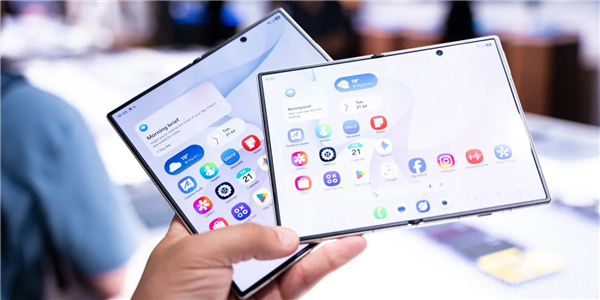
The Korean company's latest foldable Galaxy Z Fold8 series gives us an early look at what the iPhone Ultra display might look like. Although the screen ultimately used in the iPhone Ultra may not be 100% identical to the panel used in the Galaxy Z Fold8 Ultra, the two are very likely to be highly similar in display quality and crease control.
In fact, this isn’t the first time we’ve seen this panel. As early as January this year, Samsung briefly showed off a prototype of this folding screen. Compared with the previous generation products, the crease control of the Samsung Galaxy Z Fold8 series has been significantly improved, and the crease has become extremely inconspicuous. Even under the most demanding light conditions, this crease is difficult to see clearly.
Next, the iPhone Ultra equipped with a Samsung panel will be officially released soon. The machine is equipped with a 5.3-inch external screen and a 7.6-inch internal screen. The crease control is expected to be close to that of the Samsung Galaxy Z Fold8 series, ranking first in the industry.
The new products will be officially launched in September, together with the iPhone 18 Pro series.