At the 2026 International Congress of Mathematicians in Philadelphia, Jacob Tsimerman became one of the new Fields Medal winners. At the press conference after the award ceremony, the 38-year-old Canadian mathematician announced a major adjustment in his career direction: he will join OpenAI to engage in artificial intelligence safety research.
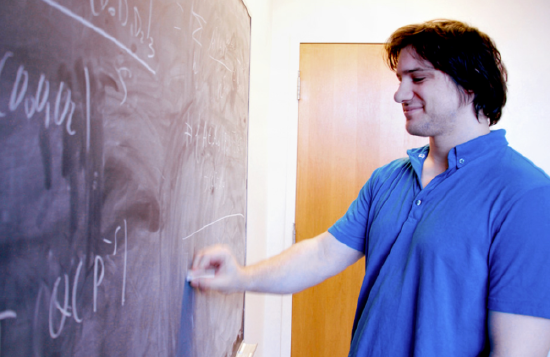
The decision contrasts with Zimmerman's public stance a year ago. In July 2025, he participated in writing the "Classification Framework of Potentially Destructive Disaster Scenarios of Artificial Intelligence", sorting out the multiple possible paths for high-level artificial intelligence to lead to human extinction. At that time, he publicly believed that the probability of such extreme risks should not be underestimated and called for a moratorium on cutting-edge artificial intelligence research and development. At the same time, he admitted that geopolitical competition and corporate commercial competition would most likely make it difficult for the global R&D moratorium agreement to be implemented. Even though he frequently issues risk warnings, Zimmerman has already used large language models on a regular basis in his daily work, relying on AI to speed up literature review and complete preliminary verification of theorems.
The rapid iteration of artificial intelligence capabilities has changed his research ideas. Earlier this year, Levonte Alperger, a former doctoral student of Zimmerman and a mathematician working at Anthropic, stated that with the help of AI collaboration, the team found a counterexample to the century-old Jacobi conjecture. Soon after, OpenAI disclosed that its internal reasoning model independently proved the existence of a counterexample, overturning the 80-year-old unit distance conjecture. Zimmerman was invited by OpenAI to serve as an external verification expert and determined that the proof process derived by AI was logically rigorous and capable of being directly published in top mathematics journals. Continuous progress made him realize that artificial intelligence is transforming from a computing aid to an active participant in rigorous mathematical discovery.
Zimmerman realized that no matter how controversial the security field was, cutting-edge AI research and development would not stop, so the research focus shifted from "preventing the birth of risks" to "aligning and controlling risks." He pointed out that as the capabilities of autonomous AI systems continue to become stronger, safety cannot be fully guaranteed by actual measurement verification alone; mathematical proof can build a more stable constraint system to control multi-agent AI systems. OpenAI has been deeply involved in model alignment, logical reasoning, and mathematical verification for a long time, which is highly consistent with his major.
This career choice also reflects changes in the overall landscape of academia. Zimmerman announced that he would no longer recruit regular mathematics doctoral students. The reason is that once machines steadily surpass humans in rigorous logical reasoning, the survival of traditional mathematics research career paths is in doubt. OpenAI has not announced his specific position, nor has it stated whether he will retain his teaching position at the University of Toronto; but his appointment confirms that the industry increasingly needs mathematicians who are deeply involved in mathematical logic to develop high-level AI capabilities and verifiable safety regulations. This move also represents a mainstream pragmatic shift in the academic community: the scientific research community is no longer obsessed with halting technological development, and instead prioritizes building a mathematical system that can control AI.