Meta recently officially announced a major upgrade to its Meta AI assistant. Driven by the underlying Muse Spark 1.1 multi-modal reasoning model, the upgraded Meta AI is evolving from an auxiliary tool that can only answer simple questions, write drafts, or generate pictures in the past to a fully automated intelligent assistant that can proactively plan, conduct in-depth research, and automatically perform complex tasks.
The biggest highlight of this update is that it significantly reduces users’ repeated prompt word interactions. Meta AI can now independently formulate an execution plan based on a simple command provided by the user and continue to run in the background. For example, in the home remodeling scenario, it can learn the user's aesthetic preferences, search Facebook Marketplace within a limited budget, and automatically generate a visual collage; when formulating a half-marathon training plan, it will not spit out a large amount of text at once, but will build a weekly routine plan based on the user's free schedule, and regularly send the latest training schedule to the chat box every Monday morning.
When faced with complex topics, Meta AI has the ability to collect and summarize information across web pages, and can even directly organize and transform research results into presentations. In the process of generating long reports, presentations or fitness plans, users do not need to passively wait for them to be completed. They can interrupt at any time and request to change the language style, delete specific chapters or adjust the focus of research, and AI will make corresponding adjustments in real time.
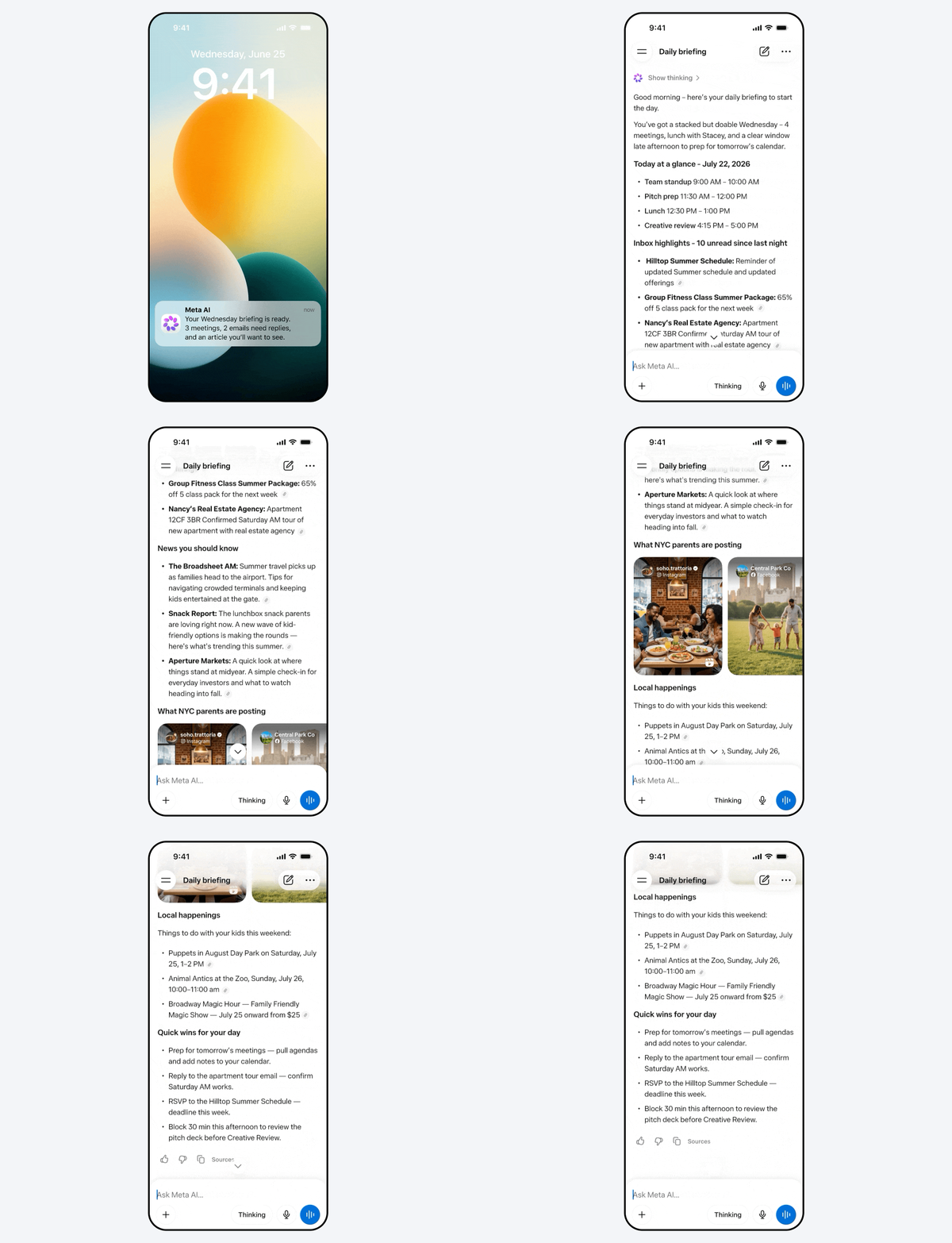
In addition, the assistant can be linked with the user's calendar to automatically check schedule conflicts and organize important updates, and send daily briefings according to the time points set by the user. All training plans, presentations and visual collages are saved to the Meta AI application and meta.ai's central control panel, while the system still retains the incognito chat mode to ensure the security of private conversations. Currently, this series of new features have been launched in some markets through the Meta AI application and meta.ai web page, and are planned to be promoted to more platforms and regions such as WhatsApp in the next few weeks.