Astronomers have captured the gravitational wave signal produced by the strongest black hole collision in history through the US Laser Interferometer Gravitational Wave Observatory (LIGO). This discovery provides the most solid observational evidence to date to verify Einstein's general theory of relativity and Hawking's black hole theory.
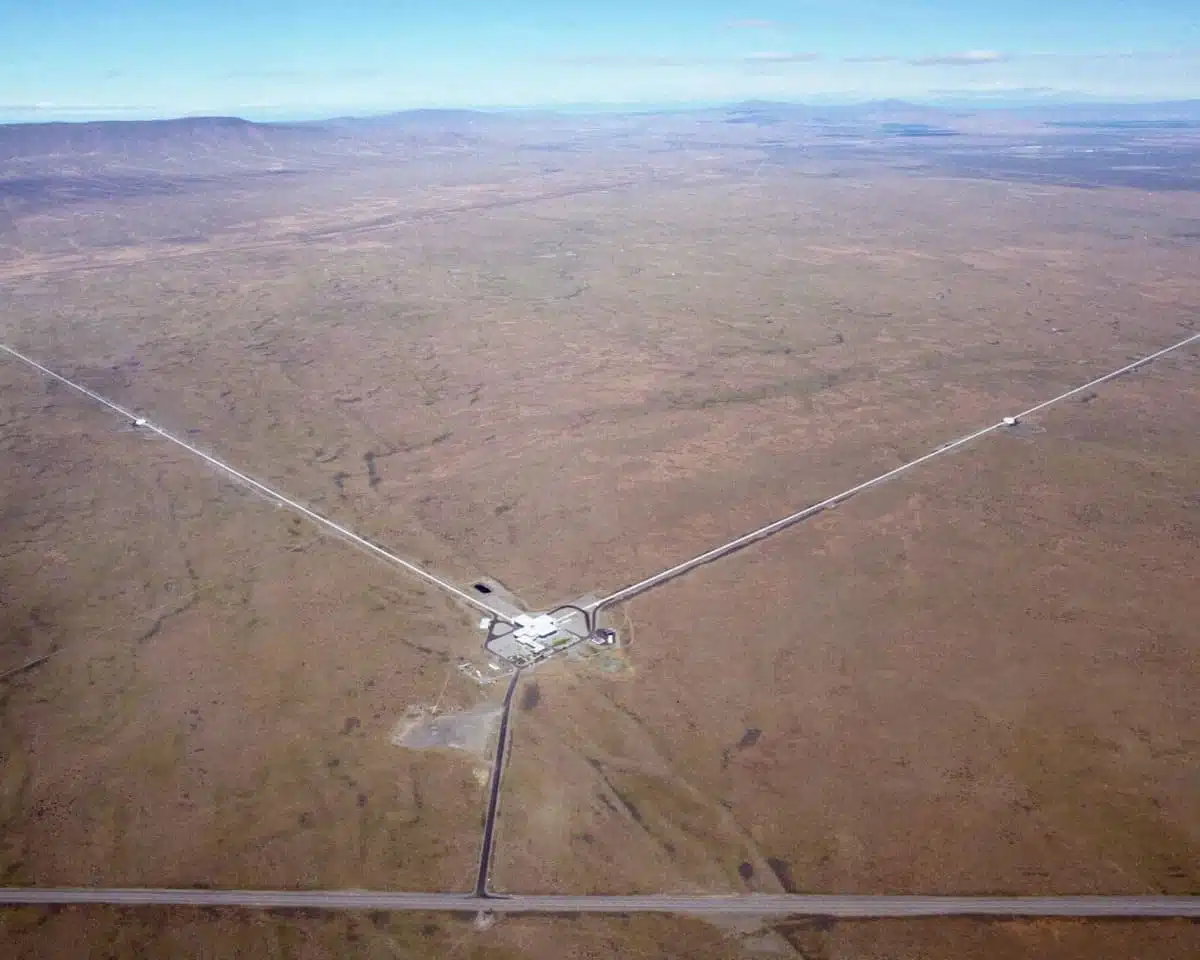
This gravitational wave event occurred deep in the distant universe, when two black holes with masses 33.6 and 32.2 times that of the Sun spirally merged. In January 2025, two LIGO detectors located in Louisiana and Washington State in the United States jointly recorded this extremely high signal-to-noise ratio signal. Thanks to a threefold increase in sensitivity in recent years, LIGO clearly captured details that were previously difficult to observe.
The merged new black hole undergoes a brief "ring down" phenomenon with a frequency of 247 cycles per second and lasts for about 10 milliseconds. By analyzing the main oscillations and overtones in the ring oscillation, the researchers verified the prediction in general relativity that black holes are determined by only two parameters: mass and spin, and confirmed that their frequency and decay rate are mathematically related.
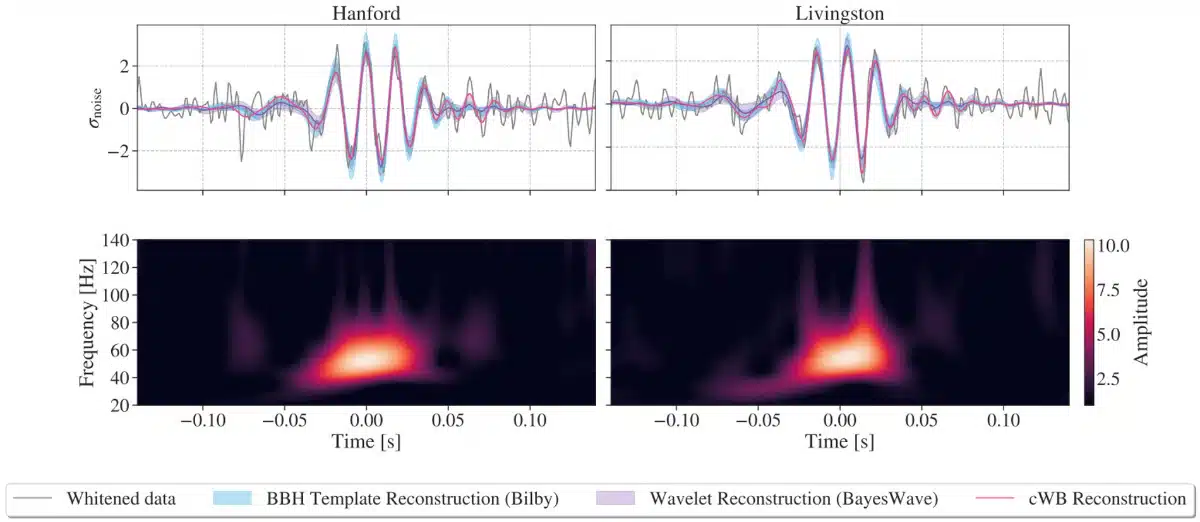
Analysis shows that the event horizon area of the merged black hole has increased to approximately 400,000 square kilometers. Although the total mass of the system has been reduced due to gravitational wave radiation, the event horizon area is still larger than the sum of the areas of the two original black holes, directly verifying Hawking's theorem that "the surface area of a black hole never shrinks."
Although the analysis tries to avoid introducing theoretical presupposition bias, scholars point out that further model-independent tests are needed. In the future, as LIGO's sensitivity continues to improve, scientists are expected to detect more vibration modes, thereby more precisely testing general relativity and even exploring its scope of application.