
Abstract:
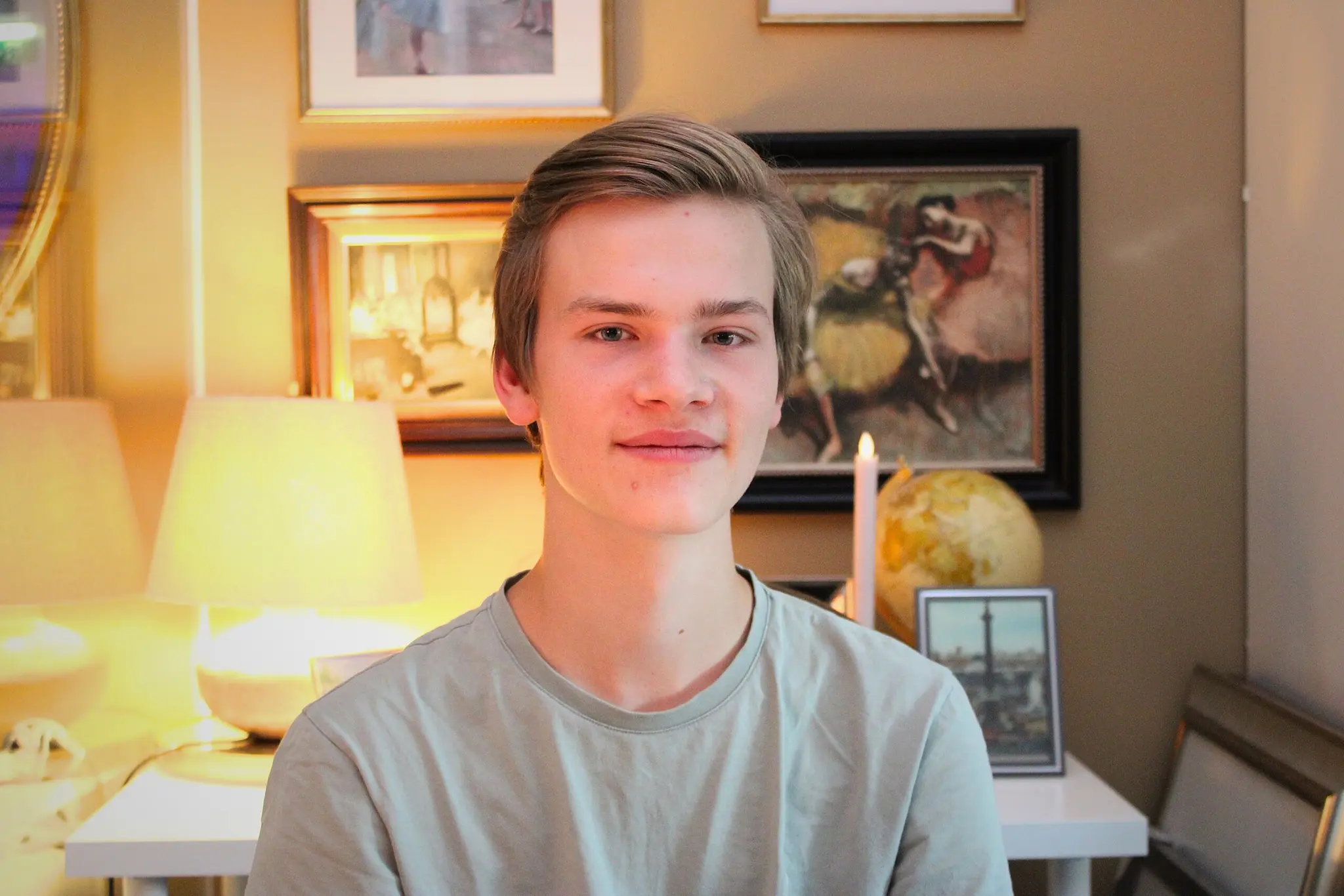
As AI vendors such as Perplexity have launched the "Teammates" multi-agent collaboration function, Stanislaus Hees, a 14-year-old developer from Salzburg, Austria (part of Teydra Lab) has launched a completely open source alternative that runs locally -
OpenAutark
. The core root of OpenAutark comes from the German "Autark" (self-sufficient, independent).
Hiss said that when using Claude Code and OpenAI Codex before, he often encountered the problem of limited functions of a single platform and difficulty in cross-ecological collaboration. Dissatisfied with being bound by a single AI vendor, he decided to develop OpenAutark himself and build a local multi-agent desktop platform that supports multi-model hybrid collaboration.
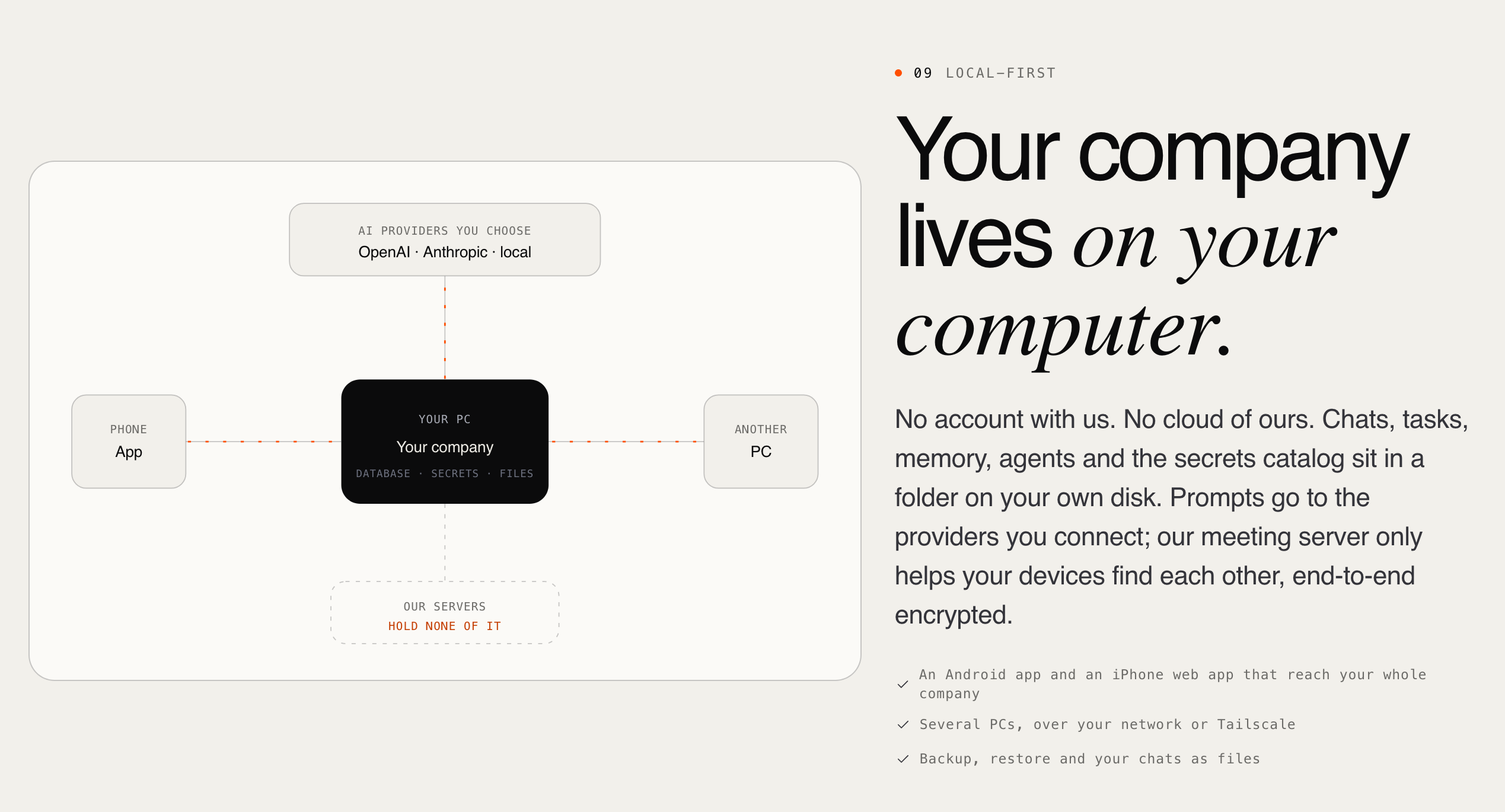
In today's context where AI is deeply embedded in production processes, most systems are highly dependent on cloud closed models and third-party APIs, facing the risk of network outage, data outflow, and computing power kidnapping. The core purpose of OpenAutark is to build an "open, self-sufficient and resilient" open source autonomous AI agent and automated workflow infrastructure:
1. Localization and Private Environment Autonomy (Digital & Compute Autarky): Provide enterprises and individual developers with a local/private cloud Agent operating environment that does not need to rely on public cloud closed-source APIs at all times, allowing agents to continuously drive business logic in offline or intranet-restricted networks.
2. Pluggable extension and tool protocol standards: In conjunction with Teydra's existing extension ecosystem (such as Teydra-Extensions), it provides a standardized sandbox and calling interface for local models to connect to various external APIs, file systems, databases, and desktop automation (Proactive Agents).
3. Deterministic and proactive human-in-the-Loop control (Human-in-the-Loop): Avoid the illusion of black box models and establish transparent decision-making paths, audit trails, and human-machine takeover (Takeover) mechanisms in the workflow, so that automated behaviors are always under control.
Main vision of the project
1. Defend “digital sovereignty” and extremely stringent data privacy compliance
In the context of the EU GDPR and increasingly stringent data compliance requirements in various industries, there are always compliance shortcomings when sending sensitive business secrets, internal communications, and core code to third-party public cloud APIs. The core value of OpenAutark lies in implementing "Autarky" to the software engineering level. It allows organizations to run a complete multi-agent collaboration chain on local servers or trusted private clouds. Sensitive data does not leave the intranet during the entire task execution life cycle, providing a worry-free intelligent base for finance, government and enterprise, medical and proprietary technology research and development.
2. Break the supplier lock-in of large models and significantly reduce marginal call costs and downtime risks
Relying on a single cloud LLM provider is not only costly but also subject to single points of failure from rate limits, service outages, and API policy changes. OpenAutark abstracts the model layer and execution layer, enabling the system to seamlessly schedule local quantitative models (such as open source models driven by llama.cpp, Ollama, and vLLM) and external cutting-edge large models. For daily automation tasks that are high-frequency, highly cyclical, and highly repetitive, enterprises can rely on low-cost local computing power to achieve closed loops and use expensive public cloud APIs to their advantage, resulting in long-term TCO (total cost of ownership) optimization of several times or even dozens of times.
3. Promote AI from "passive dialog box" to "active autonomous workflow"
Most current AI applications are still stuck in the passive response stage of "user questions - model generation". What the Teydra system (including its Proactive Agent Workforce series) explores is a proactive digital workforce (Proactive Workforce) with autonomous perception, schedule linkage, and multi-step task orchestration. OpenAutark provides an open source standard and basic execution engine for this advanced form: the agent is no longer just a chat window, but can independently monitor events in the background, analyze task dependencies, call tool execution, and proactively confirm with humans at key nodes, greatly releasing the energy and time of knowledge workers in repetitive and tedious tasks.
4. Provide a set of "anti-fragile" standard base for the open source Agent ecosystem
The open source community is currently filled with a large number of fragile Agent Demos with complex dependency environments. Many projects will completely collapse once the network is disconnected or specific API changes are made. If OpenAutark is based on the principles of modularity, lightweight and high self-sufficiency, it will establish an "anti-fragile" engineering paradigm for the community: developers can quickly package, share and reuse private tool sets (Extensions) based on a unified protocol, without having to reinvent the wheel for different underlying models. This kind of standardization and independence is a key step for the open source AI tool chain to move from "geek toys" to "production-grade infrastructure".
Core functions and technical features
Multi-agent team collaboration
: The application adopts a division of labor and collaboration architecture, with the manager agent uniformly distributing tasks. Each sub-agent has an independent role, memory and task list, and supports work handover between agents.Cross-vendor and local model support
: Allows agents to seamlessly switch between Anthropic, OpenAI, and local open source large models.Local operation and privacy protection
: All agent calculations are completed on the user's personal computer, and the cloud service is only used to connect the user's different devices to ensure data privacy.Automated practical testing
: In recent developments, Heath’s team of agents has begun assisting in the development of the software itself, even automatically helping him find and handle media press contact requests that he had previously missed.Agreements and tariffs
: Fully free, based onApache 2.0
License open source.Supported platforms
: Comprehensive coverage of Windows, macOS, Linux and Android operating systems.Current limitations
: The project is in its early stages, and the number of agents running concurrently is limited by the memory (RAM) capacity of the device.
Related resource links:
OpenAutark official website
GitHub source code repository
Latest client download address
Comments