
Abstract:
The latest exposure of Apple's A20 Pro chip solder joint design shows that the next-generation self-developed flagship processor planned to be used in the iPhone 18 Pro series will usher in a number of key architectural upgrades, focusing on a significant jump in graphics processing capabilities and data throughput bandwidth.
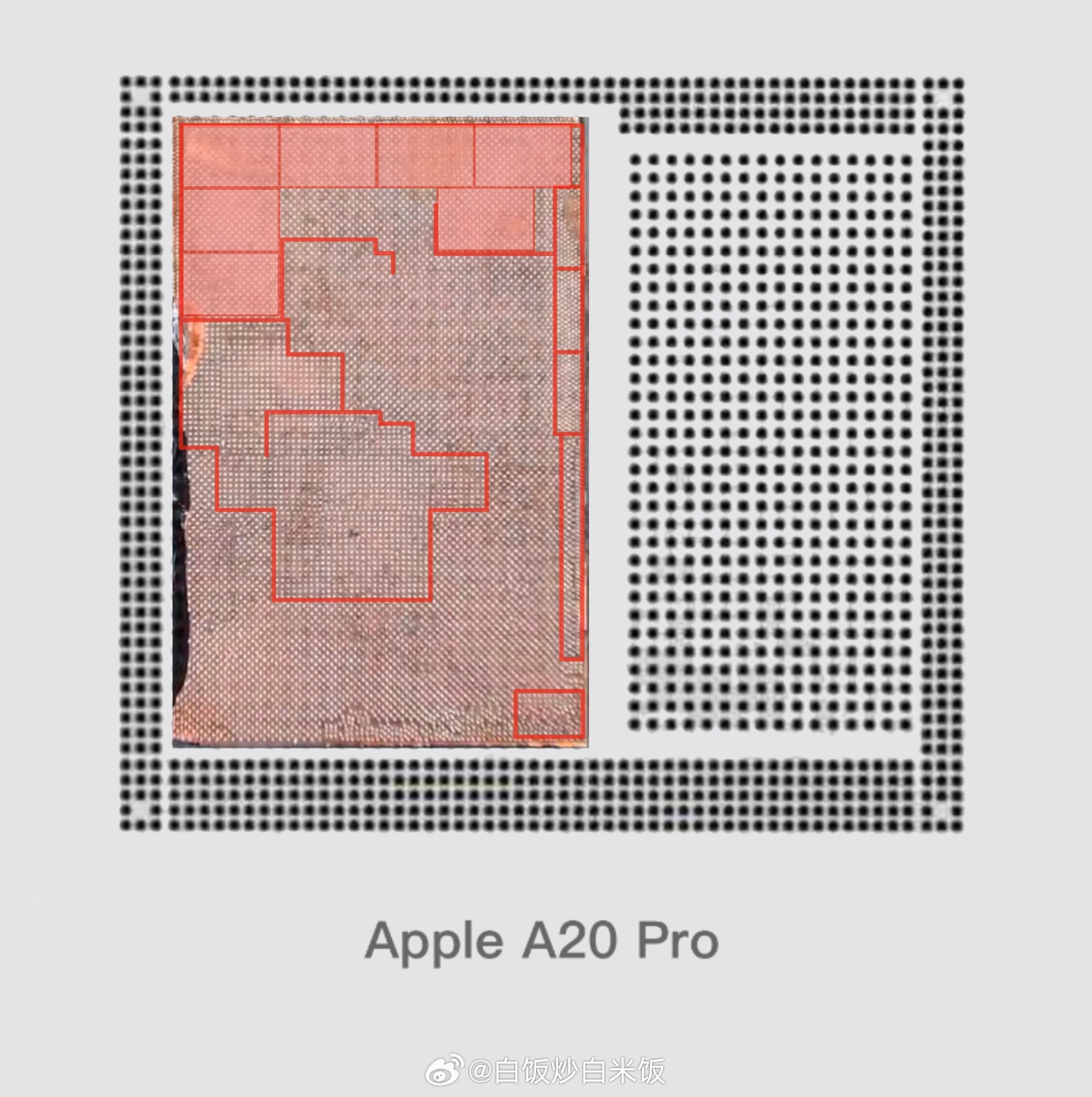
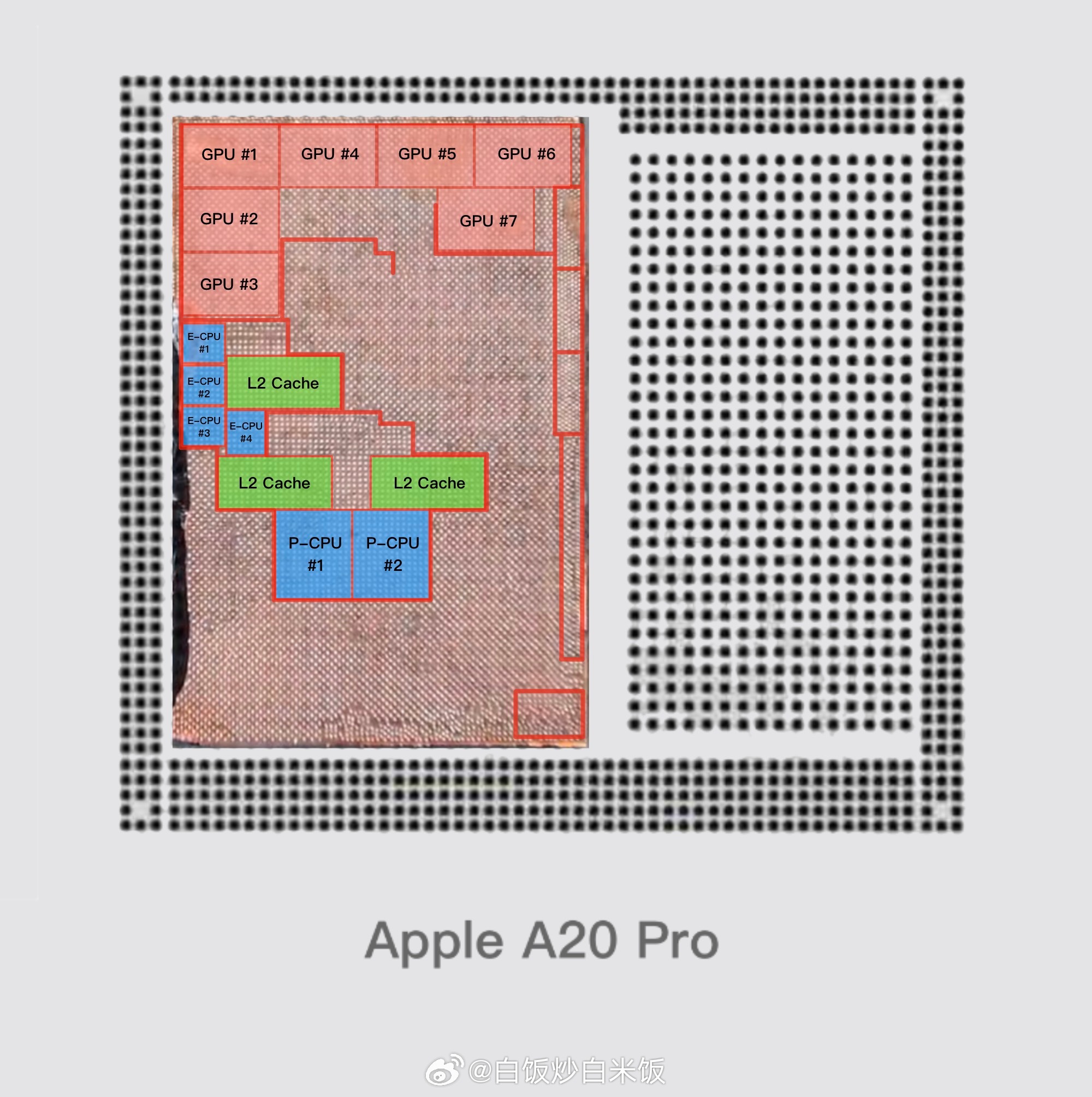
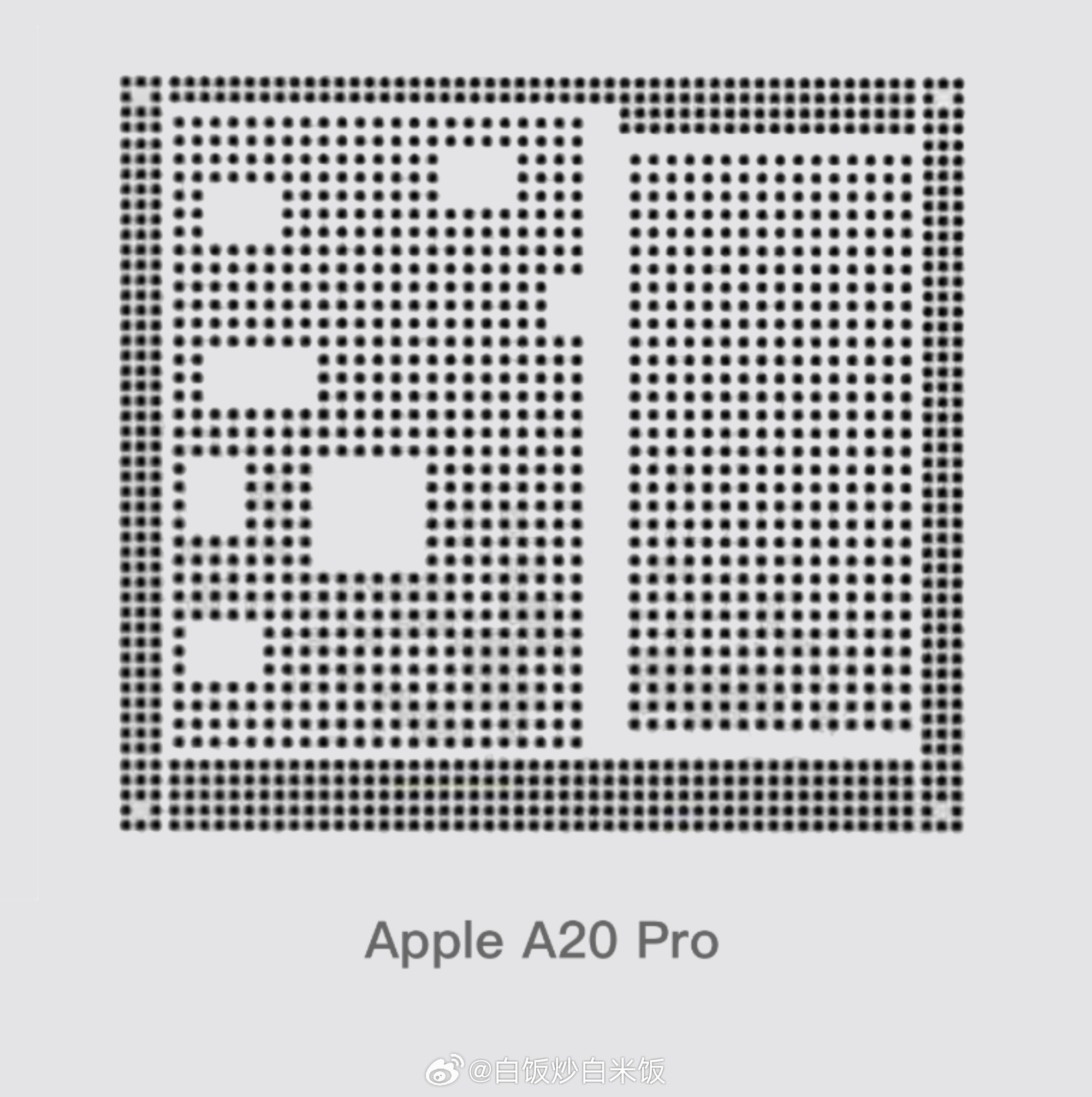
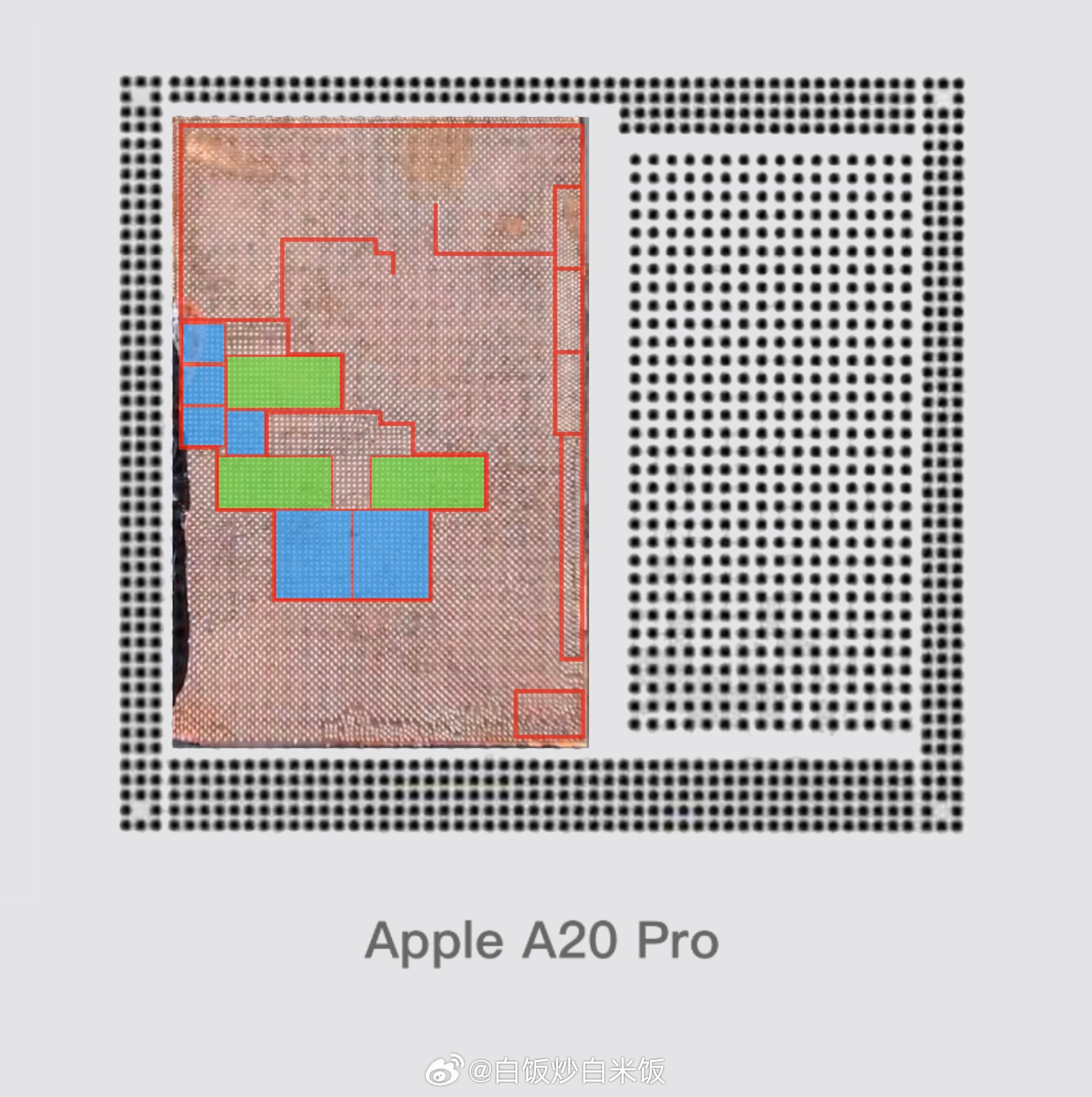
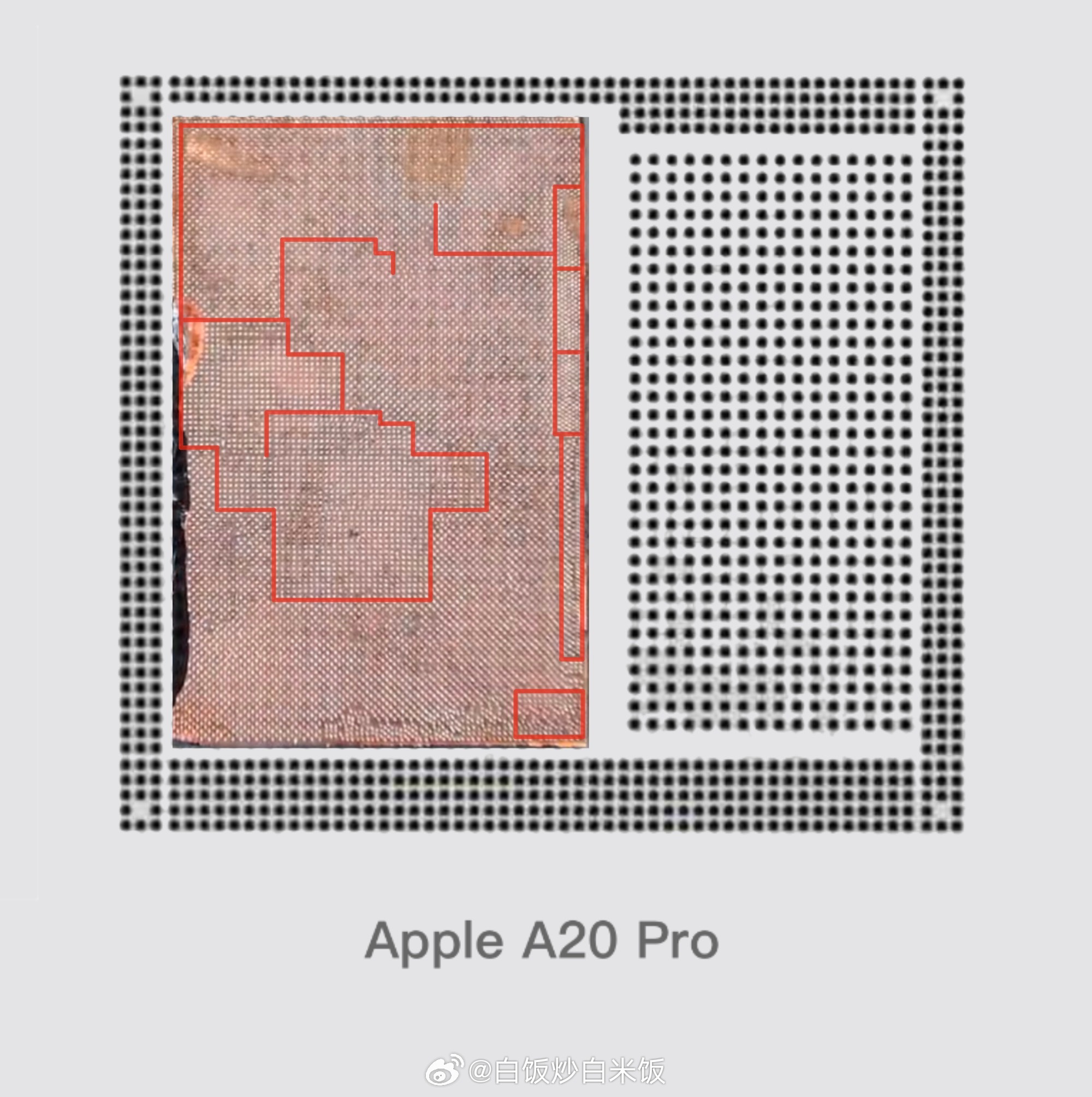
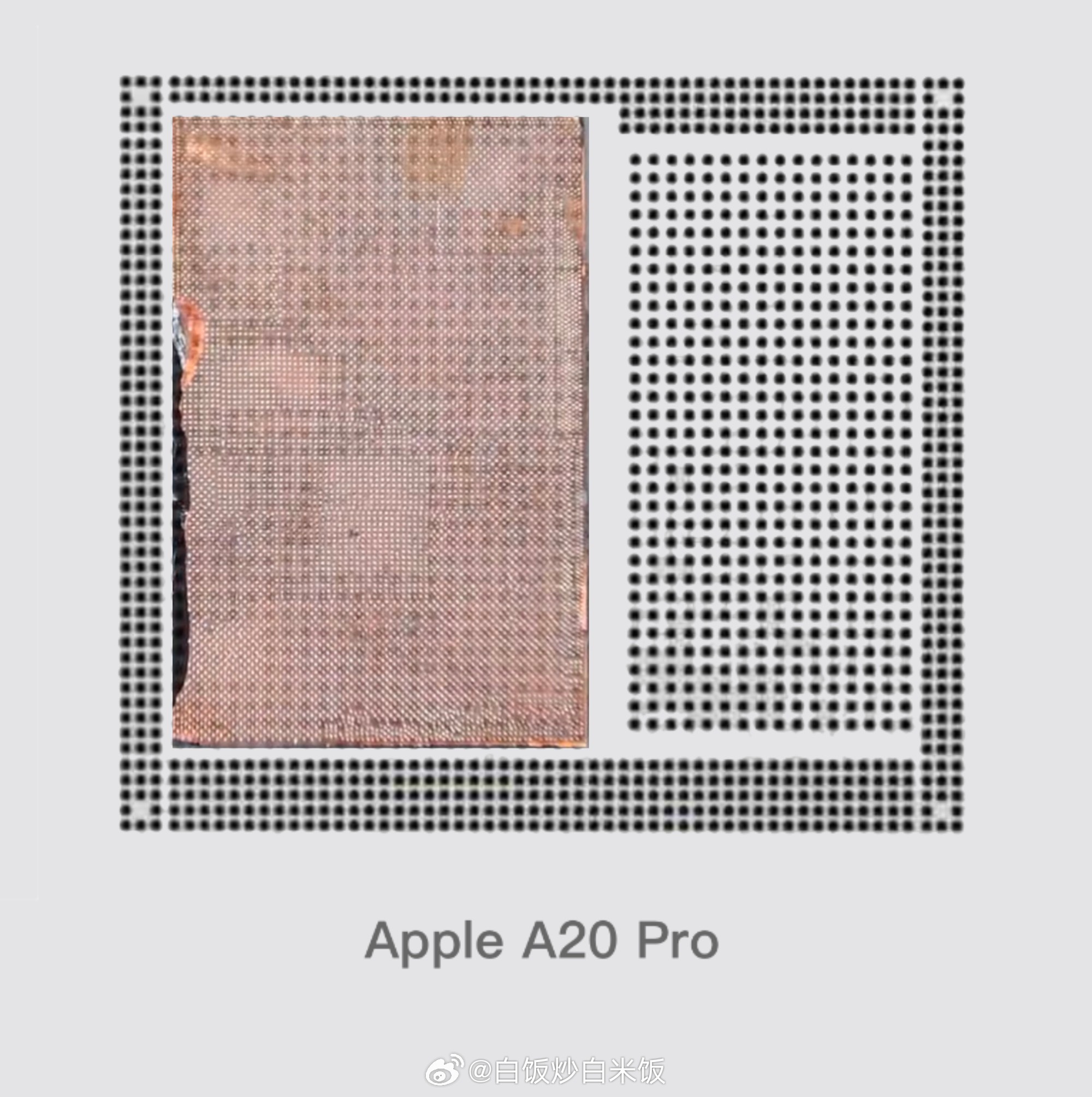
According to an in-depth analysis of the chip pinout and circuit structure diagram by industry insiders, the A20 Pro is expected to be equipped with a 7-core GPU for the first time, an increase of approximately 16% from the 6-core configuration of the previous generation A19 Pro. In the general computing part, the chip still maintains a 6-core CPU architecture, consisting of 2 high-performance cores and 4 high-energy-efficiency cores. It is worth noting that the capacity of the second-level cache (L2 Cache) shared by the four energy-efficiency cores has been expanded from 6MB in the previous generation to 8MB. The larger-capacity cache will effectively accelerate the response efficiency of the device in processing large data sets and daily background tasks; while the two performance cores continue to share the 16MB L2 cache.
The more critical technological evolution occurs in the memory subsystem. Leaked information shows that although the A20 Pro has not yet adopted the next-generation LPDDR6 standard and continues to use the LPDDR5x specification, its memory bit width has been significantly widened from the traditional 64-bit to 96-bit, an increase of 50%. Graphics card performance is highly limited by the memory bandwidth bottleneck on the mobile terminal. This change directly brings about a theoretical increase of up to 50% in memory data transmission bandwidth. The analysis pointed out that combined with the increase in the number of cores, the lifting of bandwidth bottlenecks, and possible architectural fine-tuning and frequency optimization, the actual graphics processing performance of the A20 Pro is expected to achieve a leap-forward improvement of 20% to 30%.
In terms of product matrix deployment, the market speculates that the complete 7-core GPU design will be fully released in the iPhone 18 Pro and iPhone 18 Pro Max models; the folding screen version, which is limited by the ultra-thin body and strict heat dissipation requirements, may adopt a single-core shielding solution to ensure temperature control and energy efficiency performance.
As on-device artificial intelligence (Apple Intelligence) becomes the core of the ecosystem, Apple is accelerating the transfer of its underlying architecture experience from the M series chips of the Mac product line back to the A series mobile platform. The A20 Pro's radical stacking of large bandwidth, graphics computing power, and local neural computing capacity is not only intended to provide stronger computing power support for the next generation of complex 3D games and heavy graphics applications, but also to meet the stringent requirements of future devices to efficiently deploy, train, and run high-parameter end-side AI large models offline.
Comments