
Abstract:
Between scrolling, checking notifications, and sending and receiving messages, smartphones can often be hard to put down. A survey of U.S. adults conducted by the Pew Research Center from May 26 to June 1, 2026, showed that just over half of U.S. adults believe they spend too much time on smartphones; about one-third think they use it for just the right amount of time, and only 3% think they use it too little.
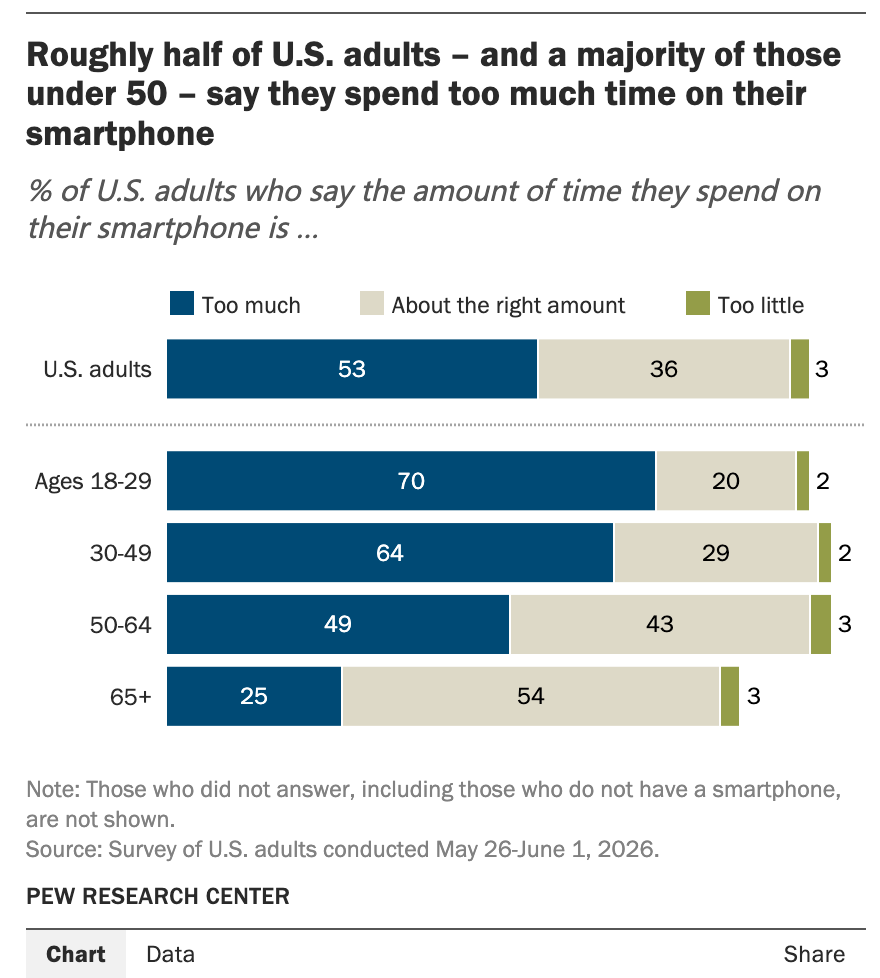
There are obvious differences in the views of different age groups on this issue. About 70% of adults aged 18 to 29 believe they spend too much time on their smartphones; about two-thirds of those aged 30 to 49; about half of those aged 50 to 64; and about a quarter of those aged 65 and above. Overall, 53% of U.S. adults think they use it too much, 36% think it’s just right, and 3% think it’s too little. Non-responders, including those without smartphones, were not included in the statistics.
While many Americans feel that their phones take up too much time, not everyone is taking action to reduce their use. The survey shows that in the past 12 months, 45% of American adults have tried to reduce the time they use smartphones, and 46% have not tried.
People who believe they spend too much time on their phones are more likely to try to use them less. Among this group, 62% said they had done so in the past year.
However, there is a gap between wanting to reduce usage and actually doing it. Among those who tried to reduce their cell phone use, 25% thought they had been "very successful" or "extremely successful", 52% thought they had been "somewhat successful", and 23% thought they were "less successful" or "not at all successful."
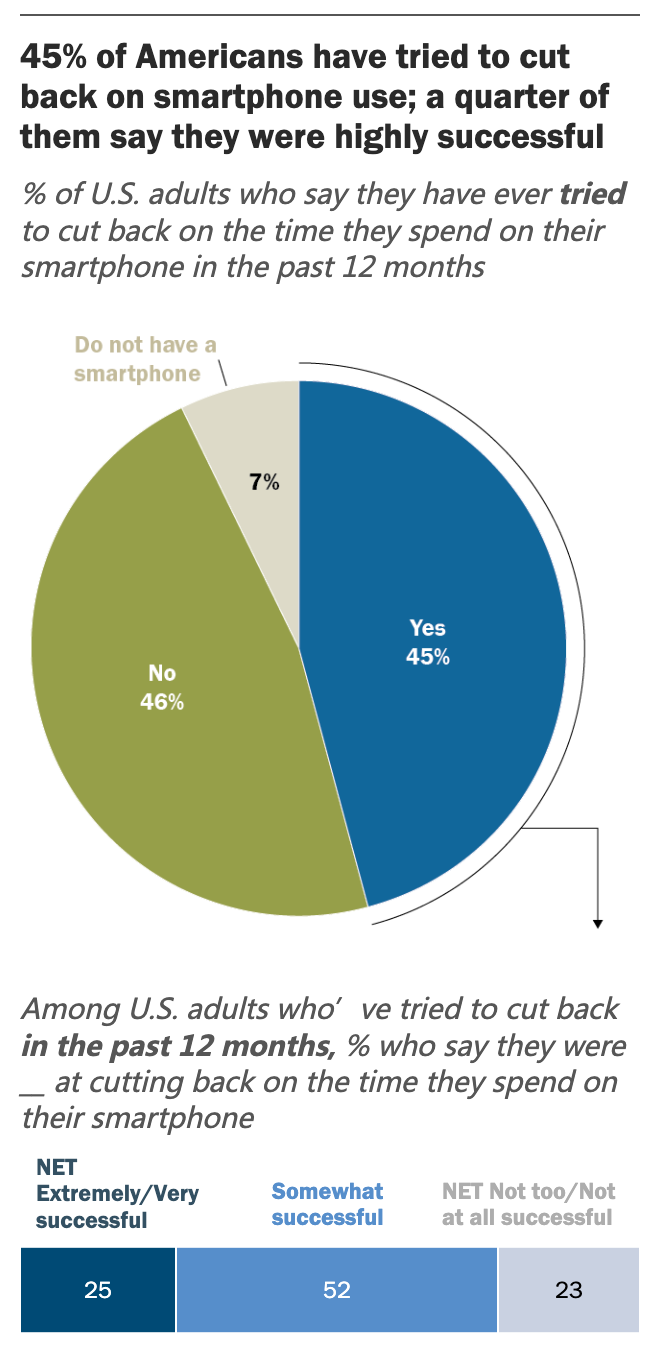
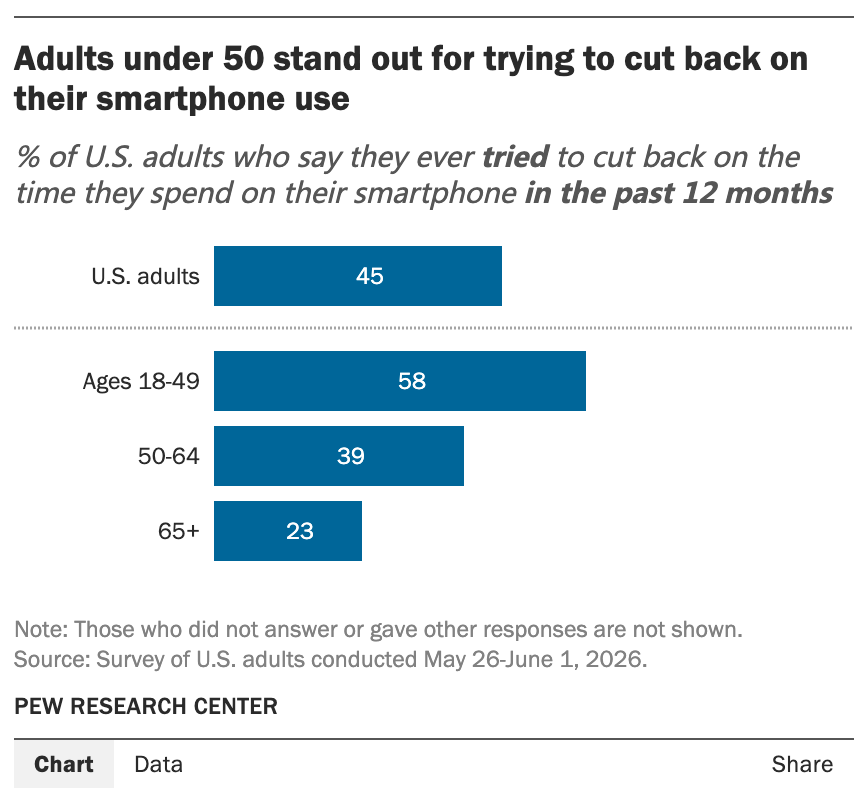
Adults under 50 are more likely than older adults to try to reduce smartphone use. About 60% of people aged 18 to 49 said they had tried to reduce their use; about 40% of people aged 50 to 64; the proportion was even lower among people aged 65 and above. As for the success of reducing use, differences between age groups were not clear.
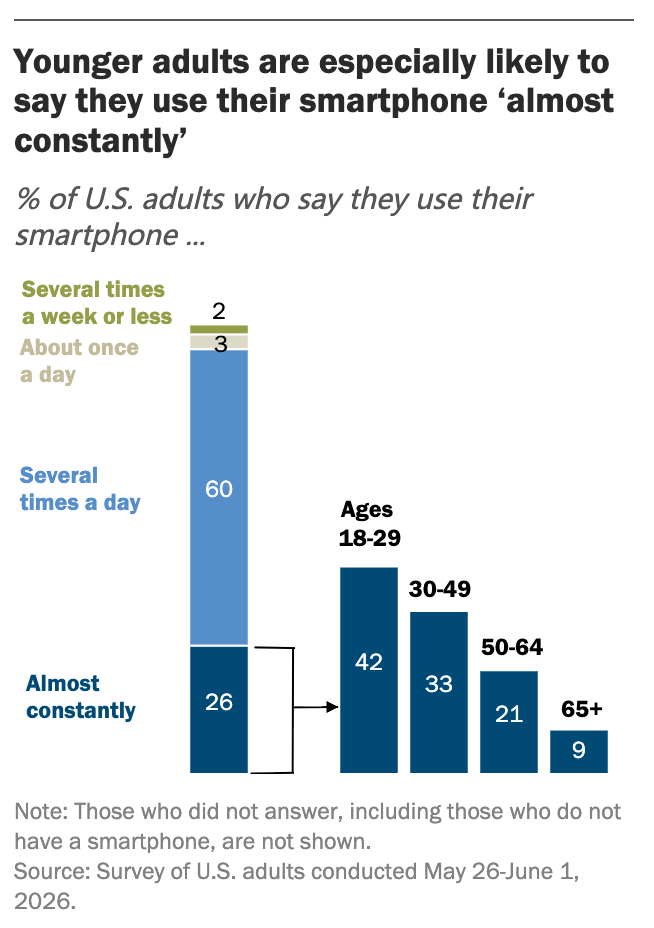
Despite concerns about screen time, smartphones remain a common device in Americans' daily lives. About a quarter of American adults say they use smartphones almost all the time, and another 60% say they use them multiple times a day.
Young people are especially prone to forming high-frequency usage habits. 42% of adults aged 18 to 29 said they use smartphones almost all the time; 33% of those aged 30 to 49; 21% of those aged 50 to 64; and 9% of those aged 65 and older. Overall, 26% of U.S. adults use smartphones almost all the time, 60% use them several times a day, 3% use them about once a day, and 2% use them several times a week or less. Non-responders, including those without smartphones, were not included in the statistics.
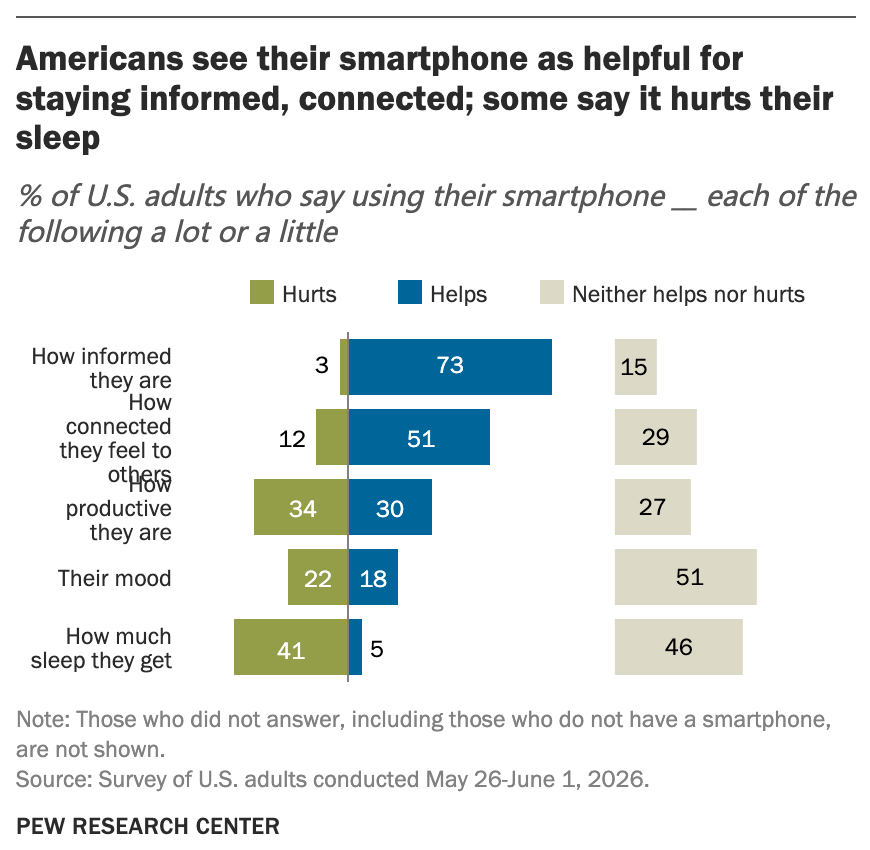
When asked about the impact of smartphones on their lives, Americans see both benefits and negative impacts.
Most people believe smartphones play a positive role in accessing information and maintaining social connections. About three-quarters of adults say that using smartphones helps them learn more information; about half think that smartphones help them stay connected with others. Relatively few people think that mobile phones harm these two aspects of life.
Americans are more divided when it comes to workplace productivity. The proportions of people who think smartphones are helpful, harmful, and neither helpful nor harmful are relatively similar.
When it comes to mood, roughly the same proportion of Americans think their smartphones help improve their mood as they think it hurts them. However, the largest group of adults, about half, believe that mobile phones will neither improve nor harm their mood.
Sleep is the most obvious negative impact respondents believe smartphones have. 41% of adults said that using smartphones would reduce their sleep time, and only 5% believed that mobile phones would help increase sleep; and nearly half said that smartphones had no impact on sleep.
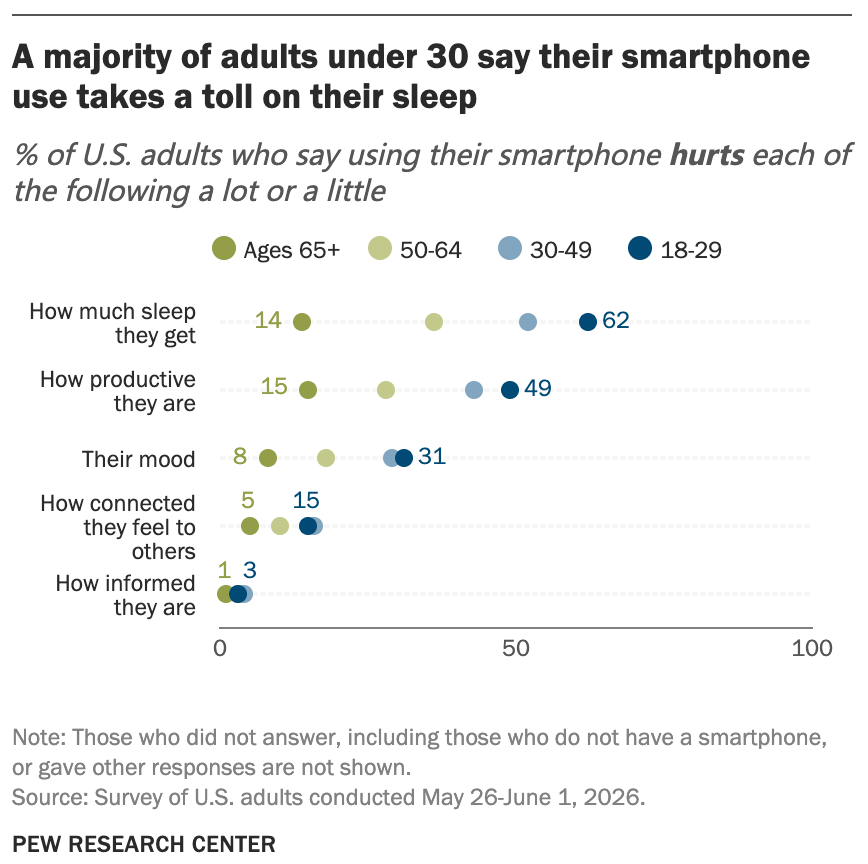
Age is once again an important factor in opinion. Among adults aged 18 to 29, 62% believe that smartphones harm their sleep, the only age group in which more than half of respondents hold this view. About half of people aged 30 to 49 also believe that mobile phones affect sleep; about 30% of people aged 50 to 64; and more than 10% of people aged 65 and above.
Age differences show similar trends when it comes to productivity. Adults aged 18 to 29 are most likely to believe that smartphones make them less productive.
There were relatively small age differences in whether smartphones affected mood, connection with others, and access to information. However, adults under 50 are more likely than those aged 50 and over to say their smartphones harm their mood.
The survey questions, data summary and survey methods used in this analysis were all released by the Pew Research Center. The survey targets American adults, and the survey period is from May 26 to June 1, 2026.
Comments