
Abstract:
As online games continue to develop, the underground industry surrounding cheating software, plug-in hardware and stolen accounts is also growing. Activision recently released a detailed report on the global video game cheating economy, citing research from threat intelligence company Intorqa, saying that the annual economic scale of the global game cheating industry may reach US$5.1 billion to US$13.8 billion, with a median estimate of approximately US$8.5 billion.

Activision stated that with the upcoming launch of "Call of Duty: Modern Warfare 4" on October 22, game cheating is no longer just a problem for a few players to purchase plug-in software, but has gradually formed a complete underground industry involving plug-in subscriptions, plug-in revisions, cheating hardware, account transactions, account development, ban avoidance tools and dealer networks. There are many links behind the entire industry, including hackers, plug-in developers, dealers, and distributors, and a relatively mature business model has been formed.
According to recent research by Intorqa, the global game cheating industry is mainly composed of two major revenue sources. Part of it comes from plug-in software subscription services, and the other part comes from various supporting tools and services formed around cheating. Research estimates that the plug-in subscription business of 15 popular games alone generates approximately US$3.5 billion in annual revenue; account transactions, power-leveling services, hardware ID disguise tools and other related tools contribute at least another US$5 billion in revenue.
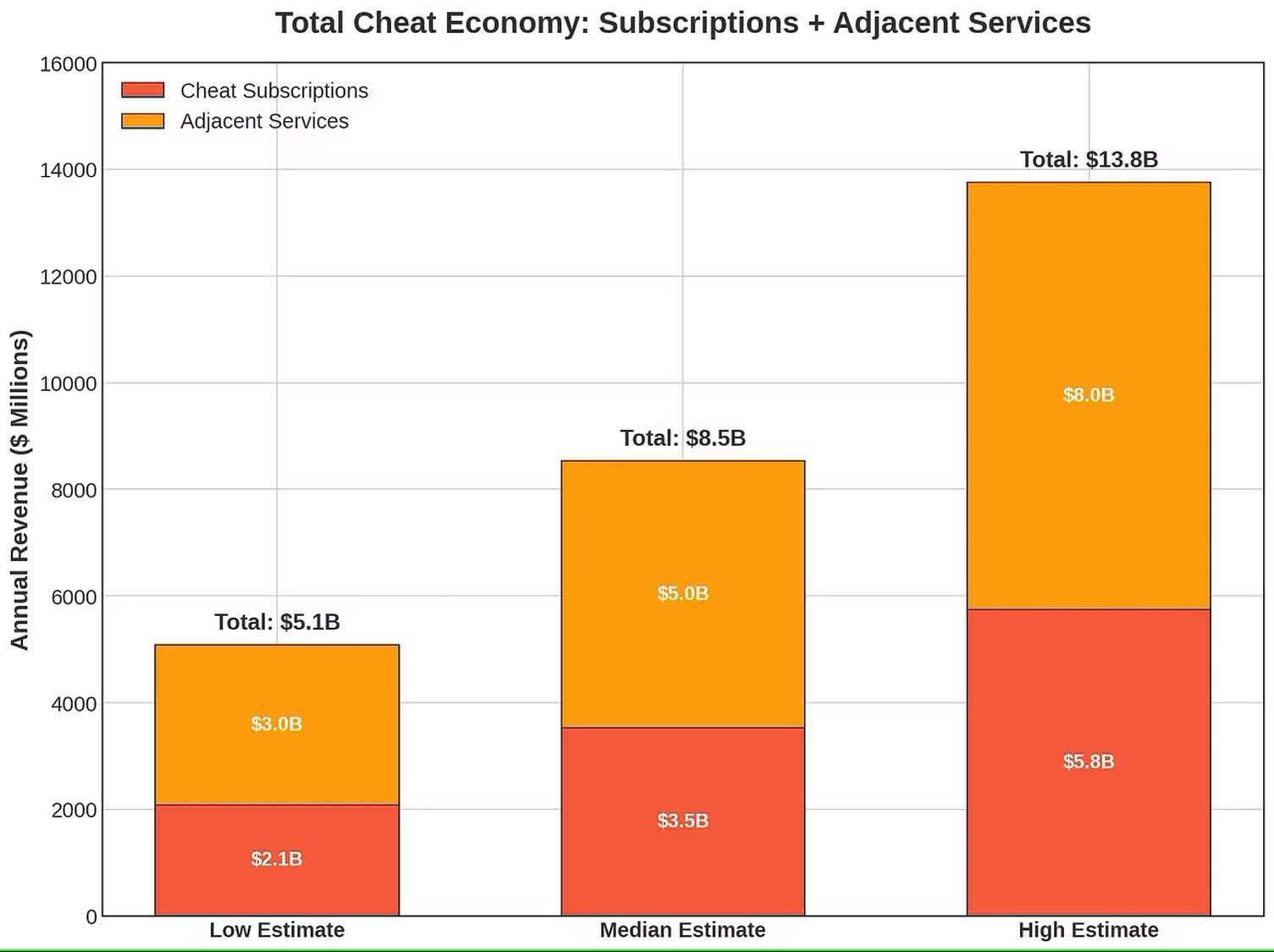
This means that the plug-in industry is no longer limited to the traditional "download a cheat program." Today's cheating ecosystem involves a complete business system from software to hardware to accounts and ban avoidance. Some plug-ins even adopt a subscription system, and users need to pay monthly or periodic to continue using them.
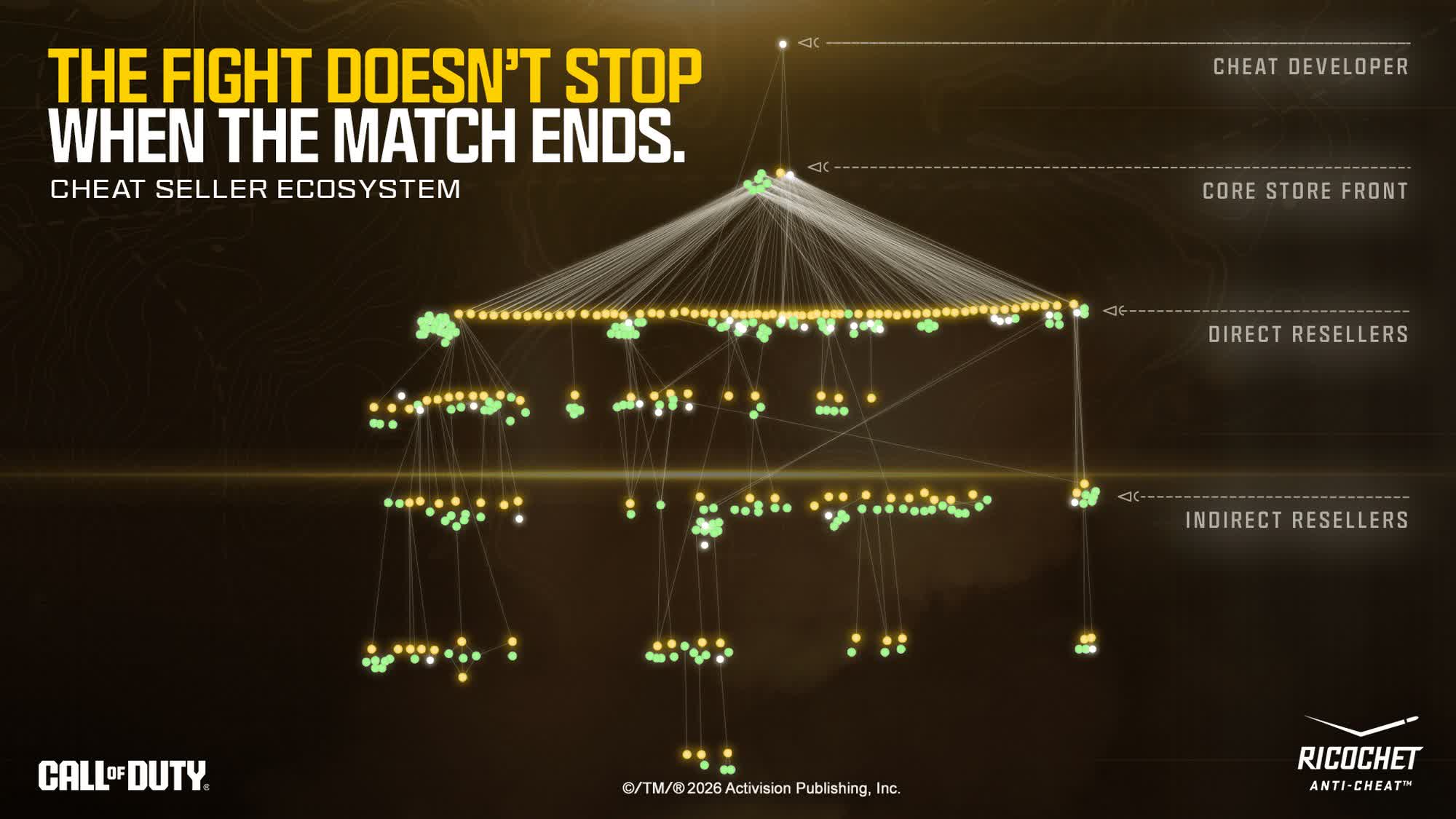
Activision stated that its actions against cheating have not only targeted individual cheating players, but have begun to extend to the entire industry chain. In the process of cooperating with U.S. federal and local law enforcement agencies, Activision has assisted in cracking down on 375 plug-in dealers, issued more than 80 legal notices to relevant operators to cease infringement or related activities, and shut down 31 major plug-in suppliers.
In August this year, Activision also released a law enforcement video showing the process of an alleged "Call of Duty" cheat maker receiving a cease and desist notice at his residence in Ohio, USA. Activision hopes to weaken the cheating industry at its source by taking legal action against cheat developers and sales networks.
Activision said that cheating in online multiplayer games is becoming more and more complex, and it requires a lot of time and cost to detect, investigate and completely remove cheating. Therefore, its Ricochet anti-cheating system will not try to simply "catch one cheater and end it." The current strategy is to combine fraud detection, account security, TPM 2.0 mandatory requirements, in-depth investigations and legal actions to simultaneously combat the cheating ecosystem from multiple levels.
According to Activision, the modern game cheating industry mainly revolves around three pillars: software and hardware cheats, alternative accounts, and tools for circumventing bans. Its anti-cheating system therefore takes measures in these three directions, and at the same time cooperates with law enforcement agencies in an attempt to further destroy the cheat development and distribution network.
The cheating tools currently on the market are far more complex than traditional automatic targeting software. Common types include auto-aims, perspective plug-ins, so-called "brute force plug-ins," unlocking tools, and cheating hardware that directly accesses system memory through DMA. In addition, there are some external devices that can modify or simulate game input, including devices such as Cronus, XIM, and Titan.
Among them, DMA cheating hardware has attracted particular attention from game manufacturers. This type of device can use direct memory access technology to bypass some traditional software detection mechanisms and separate the cheating process from the computer system running the game. Therefore, it is more difficult to detect than ordinary software plug-ins.
Another important business in the cheating industry is account trading. Activision noted that ongoing cheating bans have created significant demand for alternative accounts. After some cheaters' accounts are banned, they need to purchase new accounts to continue playing. Therefore, there are a large number of stolen accounts, long-term registered accounts, and accounts that have completed ranking or unlocked progress in the underground market.
In the past two years, one in three players said their gaming account had been hacked, according to data cited by Activision. Stolen accounts therefore not only become the result of cybercrimes, but also gradually become a commodity in the cheating industry chain.
Some accounts will also go through the so-called "account maintenance" to accumulate game time, rankings and unlocked content in advance, and then sell them at a higher price to players who want to directly enter a high-level game environment. At the same time, power leveling services have also become an important part of this market. Players can pay to have others improve their level, complete rankings or unlock game content on their behalf.
In addition to accounts, ban avoidance tools have also formed an independent market. After being banned, plug-in users can purchase hardware ID camouflage tools or other evasion services to try to make the game server think they are using another device and re-enter the game.
Activision stated that it is currently dealing with such hardware camouflage tools through a combination of "behavioral detection" and "technical detection". In August this year, Activision implemented more than 70,000 new hardware bans for related behaviors.
Compared with traditional software plug-ins, this ban evasion technology brings greater challenges to game manufacturers. Plug-in developers not only need to study how to prevent cheating from being discovered, but also need to constantly study the banning mechanisms of game manufacturers and develop new tools to bypass these restrictions. Therefore, there is actually an ongoing technical confrontation between game manufacturers and plug-in developers.
Activision believes that this industrialization trend means that anti-cheating work can no longer rely solely on the detection program in the game client. As plug-in developers have more and more funds, technical personnel, and distribution channels, game manufacturers must also respond through server-side detection, hardware security mechanisms, account security, manual investigations, and judicial means.
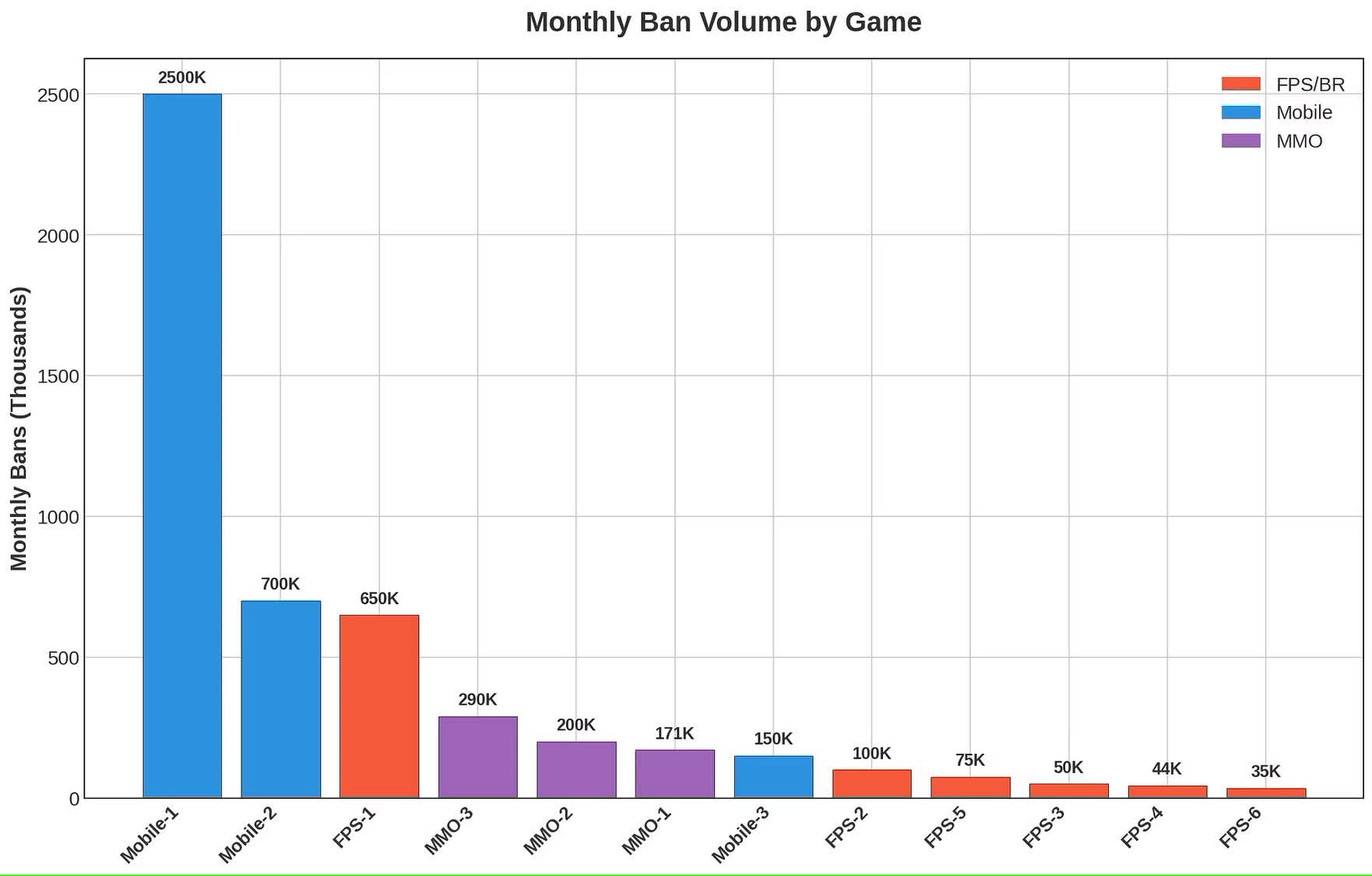
Judging from the data released by Activision this time, global game cheating has formed an underground economic activity with a scale of billions of dollars. If the highest estimate given by Intorqa is adopted, the annual economic scale of the entire industry may even reach 13.8 billion U.S. dollars, and the median estimate has reached about 8.5 billion U.S. dollars. This scale means that game cheating is no longer just a problem that affects the gaming experience of a few players, but has formed an industry chain with complete links such as development, sales, distribution, account trading, and ban avoidance.
For massively multiplayer online games like Call of Duty, this type of industrialized cheating is particularly problematic. The larger the number of game players and the stronger the competition, the higher the economic benefits brought by cheating, which will also further stimulate the demand for cheating software and related services. Activision’s focus this time on cheat suppliers, dealers, account transactions and ban avoidance tools also shows that its anti-cheating strategy is shifting from simply identifying cheating players to trying to combat the entire cheating economic system.
Comments